Bookshelf Styling · THE GUIDE
Organize Architectural Sketchbooks and Drawing Pencils on Studio Shelving
Architectural studios require functional shelving that protects past reference material while keeping everyday graphite drafting tools readily accessible. Hardbound black sketchbooks present a uniform, graphic look, but heavy cloth bindings can sag or warp if leaning unevenly against flimsy dividers. Pairing these dense volumes alongside a weighted cylindrical stoneware vessel creates a structured workstation aesthetic. This guide outlines how to align uniform spine heights, balance ceramic weight alongside paper rows, manage pencil retrieval without tip breakage, and maintain an organized, dust-free drafting shelf using non-permanent arrangements.
Jump to the checklist ↓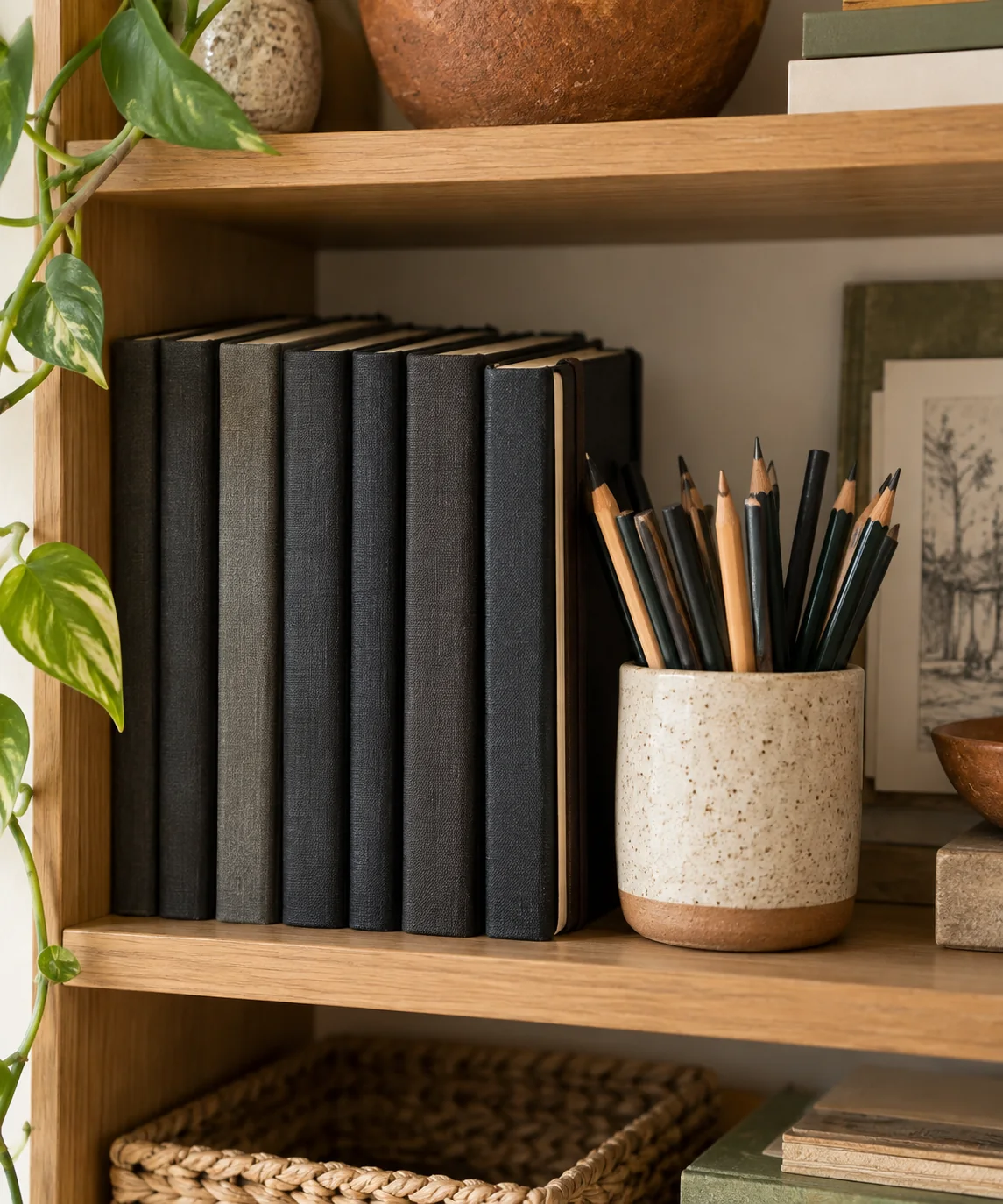
Balancing Book Mass and Upright Storage
Hardbound architectural sketchbooks often contain heavy paper stock, resulting in substantial cumulative mass along a shelf run. When shelving these volumes upright, place them squarely against a rigid vertical divider or bookcase gable. Allowing heavy volumes to lean at an angle exerts continuous torsional stress on spine stitching and can permanently warp covers. If the sketchbooks do not span the entire width of the compartment, support the outer book with a heavy, flat-faced bookend before introducing tool containers or decorative objects.
Selecting and Positioning Ceramic Tool Vessels
A sturdy stoneware vessel provides practical container storage alongside sketchbooks. Choose a container featuring a broad, untapered base and sufficient wall thickness to prevent tipping when reaching for pencils quickly. Position the vessel at a functional distance from the books so tools can be removed and replaced without catching against cover cloth or transferring graphite smudges to paper edges. Verify that the shelf has adequate depth to accommodate both the vessel and comfortable hand clearance.
Organizing Drafting Implements
Sort graphite pencils and drafting markers point-up or point-down depending on practical studio preference. Storing pencils point-up allows rapid identification of lead grade markings stamped near the ends, though it requires care to prevent accidental finger contact. Storing pencils point-down shields delicate points from accidental impact, provided the container bottom is cushioned with a cut disc of felt or dense cardstock. Avoid overcrowding the vessel so implements can be grasped smoothly without snagging neighboring points.
Managing Negative Space and Visual Weight
Studio shelving functions best when layout choices balance tool density with open space. Grouping sketchbooks of consistent height creates a clean, predictable line across the shelf, while a curved ceramic pot softens the linear block. Step back from the workstation to evaluate the distribution of visual weight. If dark sketchbook spines dominate one side, leave open margin on the opposite end rather than filling every gap with miscellaneous supplies, maintaining an organized working zone.
Studio Dust and Surface Maintenance
Graphite dust and drafting residue inevitably circulate in active work areas, settling on horizontal surfaces and exposed book edges. Clean the shelving periodically using dry, non-abrasive methods. Gently sweep dust from book head edges with a soft drafting brush or microfiber duster, moving outward toward the room rather than pushing debris into the recess behind the books. Periodically empty the tool vessel to remove graphite fragments, wiping the interior clean before replacing drawing tools.
YOUR STARTING POINT
A little checklist.
Original editorial guidance. Images are AI-generated concepts, not photographs of completed projects. Our sources and approach.
Questions to consider
Can I store mechanical drafting pencils alongside wooden graphite pencils?
Yes, provided the vessel is not crowded. Grouping similar tools together prevents metal barrels from bumping against softer cedar casings and keeps fragile lead sleeves from tangling during retrieval.
What if my sketchbooks vary slightly in height?
Organize them in a graduated sequence from tallest to shortest against the upright support. This maintains clean sightlines and prevents shorter bindings from catching beneath the protruding edges of taller neighbors.
How do I prevent the stoneware container from scratching the wood shelf?
Affix self-adhesive felt or silicone protective pads to the unglazed foot ring of the ceramic vessel. This cushions contact, softens handling noise, and reduces the likelihood of scuffing wood or painted shelf finishes over time.