Entryway Organization · THE GUIDE
Organize Clean Indoor Slippers on a Slatted Bamboo Tier
Maintaining a clean home starts at the threshold, where street shoes give way to indoor house footwear. For shoes-off households, managing indoor slippers for residents and visiting guests requires clear visual guidance without creating floor sprawl. A low-profile slatted bamboo tier introduces order immediately adjacent to the entryway mat. Natural bamboo offers water resistance and structural lightness, while open slats promote air circulation around stored footwear. Implementing a dedicated slipper tier signals household customs clearly, keeps clean pairs separated from outdoor grit, and preserves a tidy, orderly entrance.
Jump to the checklist ↓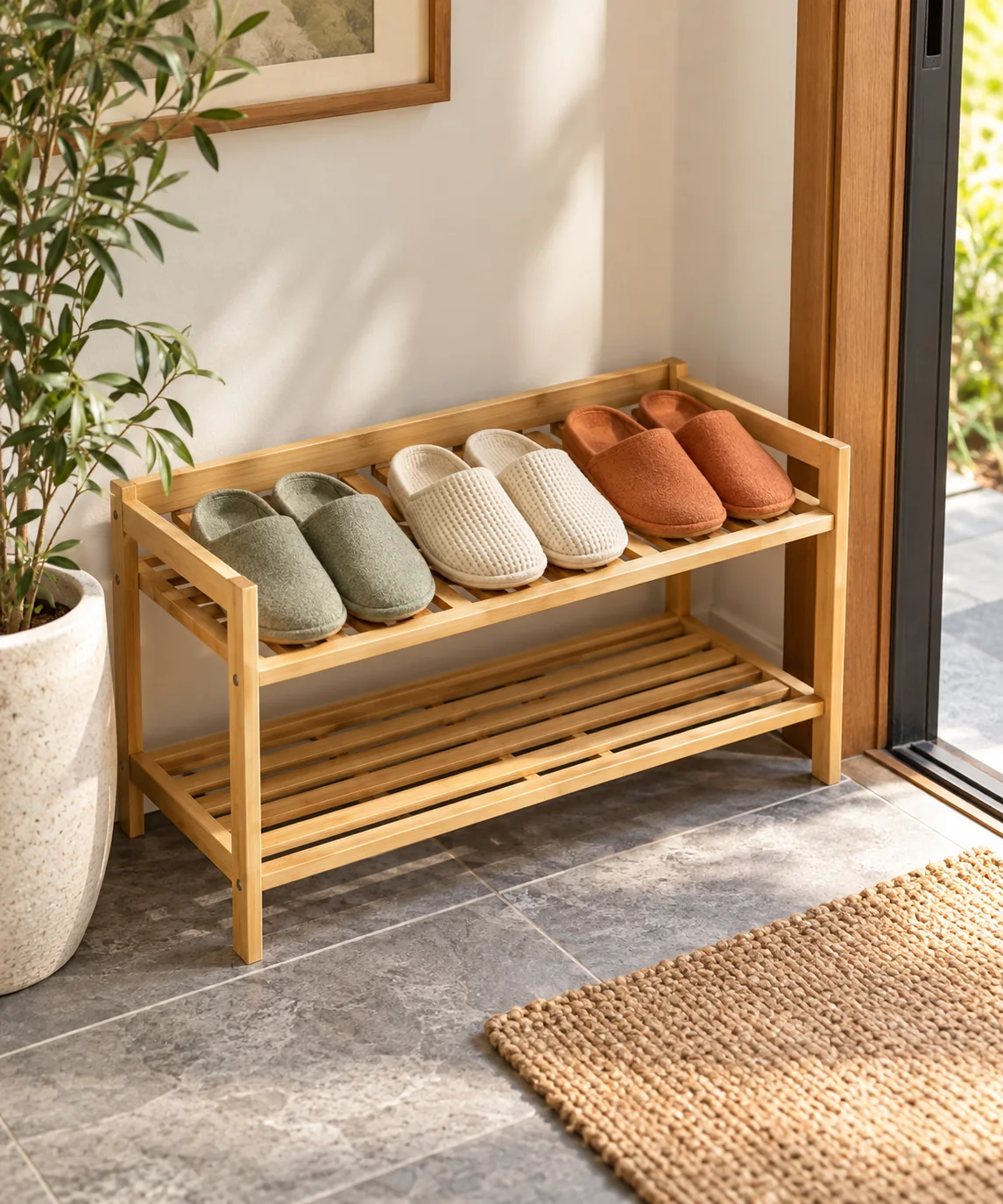
Positioning the Tier Near the Threshold
Place the bamboo slipper rack adjacent to the entry threshold, establishing an intuitive dividing line between outdoor footwear and indoor house shoes. Visitors and household members should be able to step out of street shoes and directly into slippers without placing bare socks or clean footwear on unwashed entryway floors. Maintain an unobstructed walking path alongside the stand that complies with your home's natural traffic flow and any relevant building corridor dimensions. Positioning the unit flush against a baseboard away from the primary door arc keeps the pathway open and prevents the door from clipping the rack.
Leveraging Slatted Design for Air Circulation
Enclosed shoe boxes and solid shelving can trap ambient moisture and stale odors, especially in homes where indoor footwear is worn throughout the day. Slatted shelving facilitates passive air circulation around both the uppers and soles, helping breathable textiles like felt, boiled wool, and waffle-knit cotton dry naturally between uses. When evaluating a slatted rack, ensure the slat spacing is close enough to support soft, flexible slipper soles without allowing them to sag through the gaps, maintaining neat alignment across each tier.
Segregating Resident and Guest Footwear
Establishing a clear visual separation between household slippers and guest footwear helps avoid confusion at the front door. Designate the top tier for clean, ready-to-wear guest pairs in flexible, neutral sizes so visitors feel readily accommodated upon arrival. Reserve the lower shelf for daily family footwear, slip-ons, or lightweight house clogs. Maintaining this predictable separation keeps guest options immediately visible, simplifies arrival routines, and ensures visitors do not inadvertently wear personal family slippers.
Choosing Low-Profile Footwear Styles
Overly bulky novelty slippers or heavy, rigid outdoor clogs can crowd a compact two-tier stand and disrupt tidy organization. Select low-profile, structured felt slides or nesting textile slippers that fit comfortably within typical entryway shelf clearances. Symmetrical, uniform house shoes create an orderly, intentional appearance across open slats. Choosing machine-washable or easily wiped footwear styles also simplifies ongoing hygiene, keeping the entryway presentation fresh and guest-ready over extended seasons.
Cleaning and Material Maintenance
While finished bamboo performs reasonably well in moderate indoor humidity, prolonged contact with wet street boots or melting slush will damage the wood fibers, cause joint separation, and invite surface mildew. Keep saturated outdoor footwear on a separate waterproof tray with raised edges rather than resting them on or above the bamboo tier. Maintain the rack by dusting the slats periodically and wiping down the frame with a lightly dampened cloth, followed immediately by a dry towel to protect the bamboo finish.
YOUR STARTING POINT
A little checklist.
Original editorial guidance. Images are AI-generated concepts, not photographs of completed projects. Our sources and approach.
Questions to consider
Can this rack also hold wet outdoor boots?
No. Slatted bamboo is intended for dry indoor footwear. Melting snow or wet mud from outdoor boots can stain the wood and soil the clean slippers stored on lower tiers.
How many pairs can a two-tier rack typically hold?
A standard twenty-four-inch wide two-tier rack comfortably holds four to six pairs of adult slippers without crowding, depending on whether the footwear is slim cotton slides or thicker felt.
How do I communicate slipper use to first-time guests?
Placing the tier directly at the threshold with slippers visible and aligned naturally prompts guests to swap footwear without requiring awkward verbal reminders at the front door.