Laundry Space Organization · THE GUIDE
Organize Cleaning Rags with Color-Coded Wire Baskets
Reusable cleaning cloths are practical household workhorses, yet they quickly become disorganized when tossed loosely into utility cupboards. Mixing microfiber glass towels with heavily soiled utility cloths can lead to cross-contamination and fabric wear. Storing thoroughly dried cloths in open wire baskets makes sorting intuitive while keeping distinct textile categories visible and accessible on laundry shelving. Wire containers maintain visual clarity across different rag types, helping household members select the appropriate cloth for mirrors, food areas, or general maintenance tasks without disarranging surrounding supplies.
Jump to the checklist ↓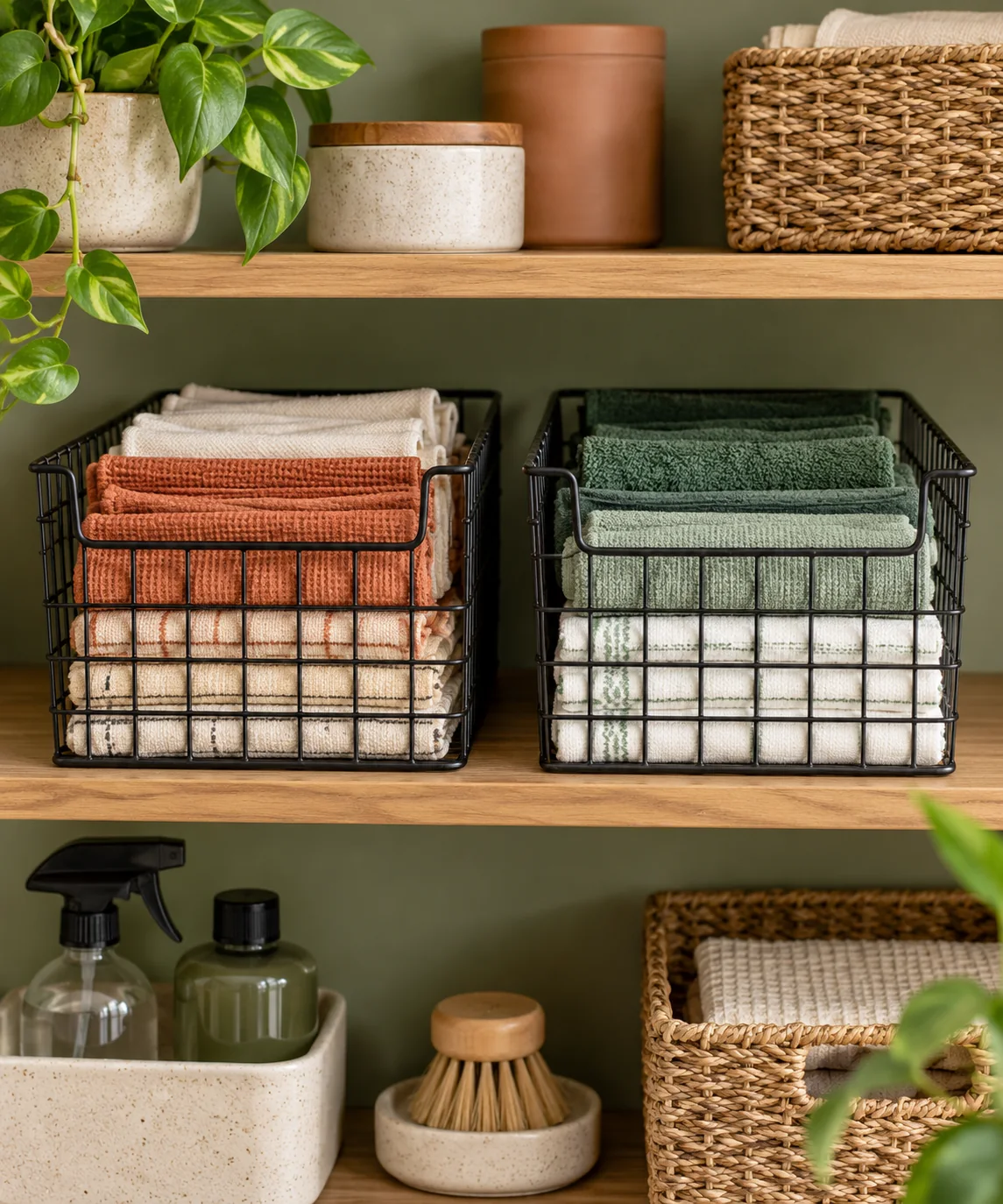
Establishing Distinct Functional Categories
Effective rag organization starts by defining practical categories for each cloth type. Separate your supply based on cleaning tasks: lint-free microfiber for mirrors, screens, and polished fixtures; absorbent cotton weaves for kitchen surfaces and food prep zones; and durable terry towels for utility scrubbing, floors, or mechanical cleanup. Keeping heavy-duty utility cloths separated from kitchen towels reduces the risk of transferring grit or chemical residues to food-contact areas. Assigning consistent colors to each task—such as blue for glass and yellow or white for counters—provides an immediate visual cue that simplifies sorting for everyone in the home.
Selecting Wire Baskets and Shelf Spacing
Open wire bins provide two immediate advantages on utility shelving: full visibility of stock levels and sturdy structural containment. Select powder-coated steel or wire bins with a grid weave tight enough to prevent smaller cloths from slipping through the openings. Before choosing containers, measure your shelf height against the bin profile, ensuring adequate clearance above the basket rim so cloths can be removed comfortably without having to pull the entire bin forward. Rectangular or square bins generally optimize shelf depth and surface area more efficiently than tapered or circular designs.
File-Folding for Accessible Retrieval
Piling cloths loosely into bins hides inventory and makes individual removal messy. A compact file-fold method keeps baskets organized: fold each dry cloth lengthwise, fold it into thirds across its width, and arrange the cloths upright in parallel rows. This filing technique displays your available supply at a glance and allows you to remove a single cloth without pulling adjacent towels out of place. For bulkier floor rags, loose rolling or stacking in a dedicated bin helps distinguish them quickly from precision microfiber.
Laundering and Separation Guidelines
Preserving cleaning cloths requires laundering different textile types according to their fabric requirements. Microfiber comprises synthetic polyester and polyamide filaments that easily trap loose lint shedding from natural fibers. Launder synthetic microfiber in separate cycles from heavy cotton terry towels to prevent lint transfer. Always ensure cloths are completely dry before placing them into storage bins, as enclosed or folded damp fabrics can develop persistent mildew odors. Follow manufacturer wash temperature guidelines and avoid fabric softeners, which leave residues that coat fibers and impair absorbency.
Auditing Inventory and Retiring Worn Cloths
Cleaning cloths naturally degrade after repeated cycles of chemical exposure, friction, and hot-water washing. Periodically review your storage bins to inspect the condition of each textile. Microfiber cloths that have lost their texture or begin shedding fibers can be downgraded to exterior utility tasks or discarded. Similarly, inspect cotton towels for fraying borders or thinning fabric. Maintaining a manageable supply per category keeps wire baskets from overflowing and ensures that cloths remain neat, accessible, and ready for use.
YOUR STARTING POINT
A little checklist.
Original editorial guidance. Images are AI-generated concepts, not photographs of completed projects. Our sources and approach.
Questions to consider
Why use wire baskets instead of enclosed solid bins?
Wire baskets provide direct visibility of remaining stock without requiring lids to be removed. The open grid allows you to monitor inventory levels quickly from across the utility space.
Can I store slightly damp cleaning rags in wire baskets?
No. Cloths must be completely dried before storage. Storing damp textiles in stacks or folded rows can encourage mildew, sour odors, and bacterial proliferation, regardless of basket ventilation.
Can fabric softeners be used when washing cleaning cloths?
Fabric softeners should generally be avoided for cleaning textiles. Softener additives leave a coating on fabric fibers that diminishes water absorbency in cotton towels and compromises the lint-trapping properties of microfiber.