Rental-Friendly Decor · THE GUIDE
Organize Cleaning Tools Using an Over-the-Door Pocket Organizer
Utility closets and laundry corners frequently lack sufficient shelf depth for tall spray bottles, spare sponges, and dusting wands. Installing rigid wall shelves often violates rental lease agreements by leaving large anchor holes in drywall or hollow-core doors. A fabric or heavy-duty canvas over-the-door pocket organizer reclaims broad vertical surfaces without mechanical fasteners. Suspended entirely from flat metal bracket hooks, this versatile layout separates delicate microfiber towels from coarse scrub brushes, organizing daily household supplies in plain view while keeping floor space completely clear for vacuums or mop buckets.
Jump to the checklist ↓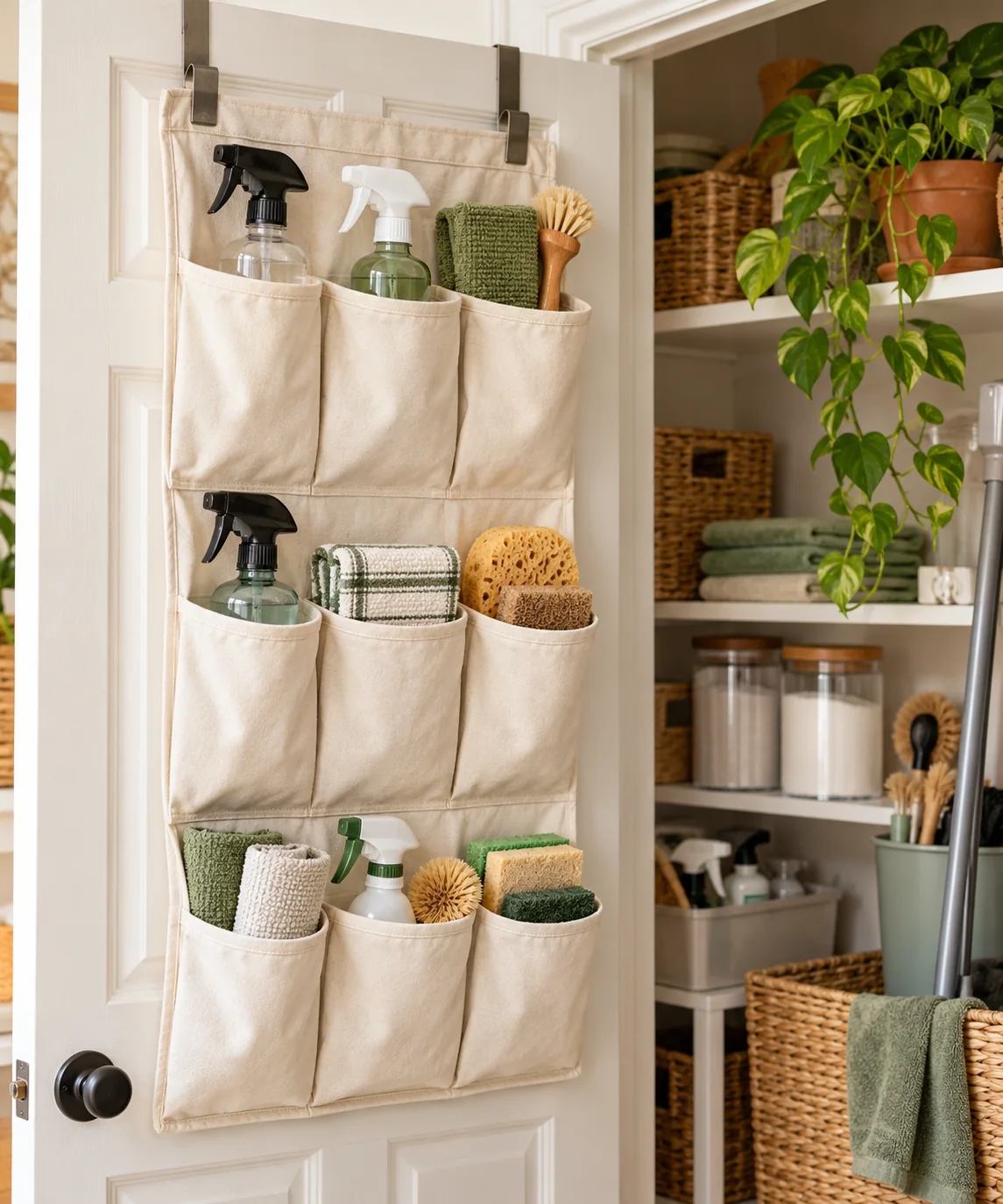
Bracket Clearance and Door Fitting
Before purchasing a hanging organizer, check the clearance between the top edge of your door and the frame casing. Place a coin flat on top of the door and gently close it; if the door sticks, rubs, or catches on the coin, over-the-door metal brackets will likely pinch the frame and prevent proper latching. Choose models equipped with thin, low-profile brackets, and apply thin felt tape or adhesive craft foam to the inside of each hook to prevent metal edges from scuffing rental paint.
Material Selection and Load Considerations
Select durable woven canvas or heavy polyester fabric with reinforced box-stitched seams rather than lightweight clear vinyl, which tends to tear under the rigid plastic corners of spray bottles. Keep overall weight conservative to avoid pulling on door hinges, sagging brackets, or warping light hollow-core doors. Distribute liquid cleaners sparingly across the organizer rather than filling every single pocket with full-capacity spray bottles, checking that the door still swings freely without catching.
Zoned Vertical Pocket Distribution
Arrange cleaning supplies by weight and handling frequency to keep the hanging organizer balanced. Store lightweight items like microfiber dusting cloths, lint rollers, and replacement mop pads in the upper rows. Place intermediate items, including rubber gloves, grout brushes, and dry scouring sponges, across the middle pockets. Reserve a few lower pockets for upright spray bottles and liquid concentrates, keeping heavier loads closer to the bottom to reduce swaying when the door moves.
Preventing Moisture and Chemical Damage
Never insert damp sponges, wet scrubbing pads, or used cleaning rags directly into fabric organizer pockets. Lingering moisture within an enclosed closet promotes mildew growth and can stain or weaken canvas stitching over time. Allow damp cleaning tools to air-dry completely on an open sink rack before storing them away. Additionally, verify that trigger spray nozzles are twisted to the off position before placing bottles into pockets to guard against accidental leaks.
Sway Control and Everyday Maintenance
Opening and closing closet doors causes suspended pocket organizers to swing outward and tap against the door face. Anchor the lower corners against the door panel using removable, damage-free hook-and-loop strips designed for easy release upon move-out. This gentle tension holds the organizer flat and quiet. Every few months, empty the compartments and run a vacuum attachment inside each pocket to collect loose dust and lint, spot-cleaning stains with a damp cloth.
YOUR STARTING POINT
A little checklist.
Original editorial guidance. Images are AI-generated concepts, not photographs of completed projects. Our sources and approach.
Questions to consider
Can an over-the-door pocket organizer hold long-handled brooms?
Pocket organizers are intended for handheld tools, cloths, and bottles. Long broom handles are too tall and awkward for fabric pockets; keep brooms in a freestanding corner caddy or a floor-based utility stand instead.
Can hanging filled cleaning bottles damage residential closet doors?
Lightweight hollow-core doors and standard interior hinges are not built for heavy loads. Avoid filling every pocket with full liquid bottles, and inspect the top door hinge regularly to verify screws remain snug and the door swings true.
What should I do if a cleaning spray leaks inside a fabric pocket?
Remove all contents, take the organizer off the door, and rinse the affected pocket with warm water. Blot with an absorbent towel and allow the fabric to dry completely in a well-ventilated area before returning bottles to storage.