Laundry Space Organization · THE GUIDE
Organize Delicates Washing Bags on Open Wall Pegs
Mesh delicates bags frequently end up crumpled inside washing machine drums, shoved into dark utility cabinets, or trapped under heavy hampers. Mounting a dedicated peg rail on a nearby laundry wall creates an organized staging zone for sorting and storing clean, dry wash bags. Keeping these bags readily visible streamlines sorting fine knits, hosiery, and structured garments before wash cycles begin while keeping countertops clear. When planned away from appliance electrical controls and moisture-sensitive surfaces, open peg storage keeps wash bags accessible, organized by size, and ready for immediate household use.
Jump to the checklist ↓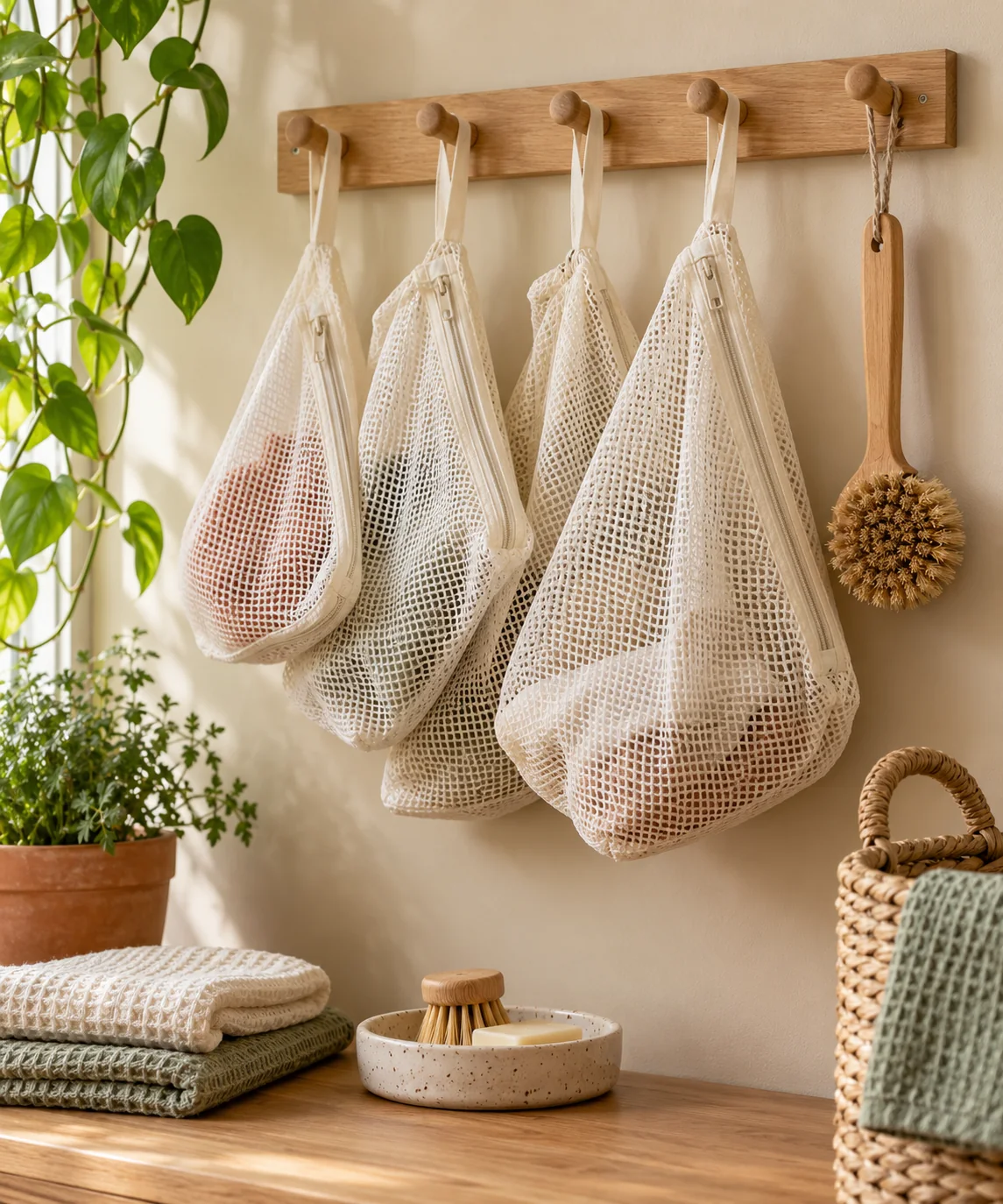
Choosing a Safe Wall Location Away from Controls
When selecting a wall location for a laundry peg rail, avoid mounting directly above electronic control panels, digital displays, or appliance cord connections. Water droplets from recently unloaded items can drip into sensitive switchgear, potentially damaging appliance circuitry or creating electrical hazards. Instead, position the rail along an adjacent side wall, inside an open utility alcove, or over a standard folding bench. Check that the lowest hanging bag clears appliance lids, front-load doors, and utility shutoffs, ensuring unobstructed access during routine laundry tasks.
Managing Moisture and Wall Finish Protection
Although mesh wash bags spin relatively light in modern washing machines, hanging damp synthetic textiles directly against standard painted drywall can trap moisture and foster localized mildew. Reserve open peg rails primarily for fully spun or dry bags, or install a sealed, wipeable backer board—such as sealed beadboard, composite paneling, or semi-gloss scrubbable paint—behind the hanging zone. If bags emerge wet after gentle cycles without high-speed spin extraction, dry them flat on a laundry drying rack or clothesline before returning them to wall pegs.
Categorizing Peg Placement by Bag Size and Mesh Gauge
Designate specific pegs across the rail to organize mesh bags by physical dimension and fabric construction. Assign individual hooks for compact, micro-mesh pouches designed for hosiery and undergarments, while reserving separate pegs for medium zippered envelopes and large knitwear bags. Separating bags by size allows household members to drop items directly into the appropriate pouch prior to wash day. This visual system reduces friction during sorting and prevents delicate silk or lace items from being mistakenly placed into wide-mesh bags intended for heavier items.
Securing Hardware and Maintaining Smooth Contact Points
Exposed metal zipper pulls, plastic sliders, and drawstring cord locks can scratch painted walls or catch on neighboring netting. Before hanging any mesh bag, slide the zipper completely shut and tuck the pull tab under its elastic guard sleeve. For drawstring pouches, bundle excess cord loosely rather than letting long loops dangle. Inspect wooden pegs periodically for rough grain or splinters that might snag delicate polyester mesh, wiping the rail down with a clean, dry cloth to remove airborne detergent dust and lint accumulation.
Evaluating Mounting Anchors and Weight Limitations
Peg rails are intended for lightweight accessory storage rather than heavy utility hanging. Secure the rail into wall studs where possible, or use hollow-wall anchors matched to your specific wall substrate (such as drywall or plaster) and rated for the combined weight of the rail and stored items. Check the peg rail manufacturer's hardware specifications and avoid hanging wet towels, heavy laundry hampers, or saturated garments from the pegs. Regular inspection ensures mounting screws remain firmly seated without loosening or pulling away from the wall over time.
YOUR STARTING POINT
A little checklist.
Original editorial guidance. Images are AI-generated concepts, not photographs of completed projects. Our sources and approach.
Questions to consider
Can I hang damp delicates bags directly against painted drywall?
Hanging damp mesh against untreated drywall can trap moisture against the wall surface, potentially peeling paint or encouraging mildew growth. Ensure bags are spun thoroughly before hanging, or mount a sealed, moisture-resistant backer board behind the rail to protect the wall.
Where is the safest place to mount a laundry peg rail?
The safest position is on an adjacent utility wall or near a folding table, well clear of appliance control panels, electrical cords, and plumbing connections. This placement prevents accidental water contact with electronics while keeping bags accessible.
How should I attach a peg rail if wall studs are not conveniently located?
If wall studs do not align with your rail's pre-drilled holes, install hollow-wall anchors rated for your specific wall material, such as toggle bolts for hollow drywall. Follow the anchor manufacturer's drill-bit sizing and load recommendations to ensure a stable installation.