Entryway Organization · THE GUIDE
Organize Exterior Basement Walkouts With Heavy-Duty Weather Lockers
Exterior basement walkouts are challenging transition zones exposed to fluctuating humidity, driving rain, and soil debris. When utility gear, garden tools, and muddy boots clutter these sunken entry stairwells, they obstruct safe egress and deteriorate rapidly under damp weather conditions. Installing a heavy-duty, weather-resistant locker directly outside the basement door provides dedicated containment while keeping the entryway clear and clean. A purposeful outdoor storage strategy protects wet footwear and utility accessories, safeguards suite privacy, and prevents moisture from being tracked inside, creating a well-ordered subterranean entryway that functions reliably in every season.
Jump to the checklist ↓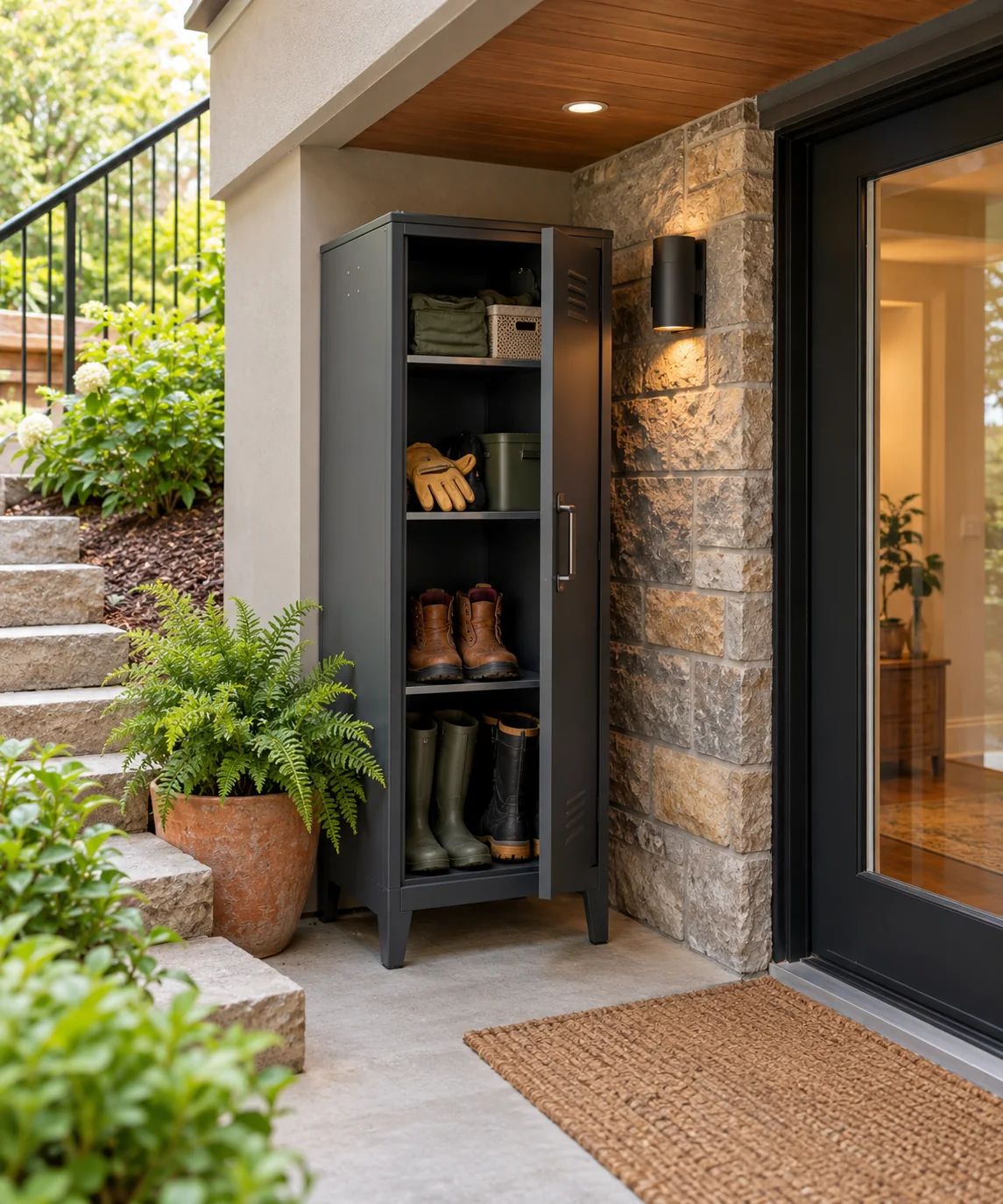
Evaluating Walkout Footprints and Door Clearance
Basement walkout landings typically feature constrained square footage bordered by concrete retaining walls, exterior steps, and drainage grates. Before introducing storage furniture, measure the full clearance needed for the basement access door to swing completely open without obstruction. The locker footprint must never impede designated egress paths or violate local fire and building accessibility codes. Place the unit along a sheltered alcove wall beneath structural overhangs where possible, ensuring it sits entirely clear of ground drains and cleanouts to maintain unrestricted stormwater runoff.
Powder-Coated Steel and Ventilation Features
Avoid standard indoor sheet metal or untreated wood cabinets, which buckle and rust when exposed to walkout condensation and frost. Heavy-gauge galvanized steel coated with outdoor-rated industrial powder coat resists corrosion and withstands temperature swings. Look for units manufactured with integrated louvered door vents or perforated back panels. These openings promote passive cross-ventilation, allowing damp work gloves, rubber mud boots, and wet raincoats to dry naturally without trapping moisture, mildew, or sour odors within the enclosed compartments.
Interior Shelf Zoning for Wet Footwear
Organize locker interiors vertically by assigning shelf heights according to wetness and weight. Position deep, removable perforated trays or raised wire grids on the lowest shelf to hold muddy boots, allowing trapped grit and water droplets to fall cleanly away from footwear soles. Store dry garden gloves, flashlights, and maintenance gear on middle shelves in clear, latching plastic bins. Reserve top shelves for lighter spare gear. This zoning prevents drips from wet gear on lower levels from contaminating clean items stored higher up.
Elevated Base Positioning and Drainage Safety
Never place an outdoor locker flat against ground-level concrete where rain pooled during severe storms can seep inside through bottom seams. Select lockers equipped with adjustable leveling feet to elevate the base above the landing surface according to site drainage needs and manufacturer instructions. This clearance permits standing water to flow unimpeded toward walkout drain basins and prevents rust formation along the underside. Verify that the unit stands level on sloping concrete pads so doors latch smoothly without binding or warping.
Routine Exterior Wipedown and Hardware Care
Subterranean stairwells collect windblown leaves, dirt, and spider webs that degrade locker finishes if left unchecked. Inspect the locker quarterly, clearing out accumulated debris beneath the raised base with a stiff push broom. Wipe exterior powder-coated surfaces using a soft cloth dampened with mild soapy water, followed by a clean rinse and dry towel wipe. Lubricate door hinges, hasps, and latch mechanisms periodically with a dry silicone spray formulated for outdoor hardware to prevent corrosion without attracting abrasive grit.
YOUR STARTING POINT
A little checklist.
Original editorial guidance. Images are AI-generated concepts, not photographs of completed projects. Our sources and approach.
Questions to consider
Can an exterior weather locker be used if the walkout lacks an overhead roof?
Fully exposed landings require lockers engineered with sloped, watertight roofs and sealed gaskets. If open to direct downpours, position the locker against the most sheltered retaining wall and verify that weather seals remain intact to prevent internal water ingress.
How do I stop moisture buildup inside an exterior metal locker during winter?
Ensure ventilation louvers remain unobstructed by interior items. Adding non-spill desiccant packs or hanging moisture-absorbing containers inside the cabinet captures excess humidity, helping protect metal tools and leather boots from mold during prolonged damp periods.
Should the locker be bolted to the exterior foundation wall?
Freestanding placement on level, adjustable feet is generally recommended. Drilling into exterior foundation walls can puncture exterior waterproofing membranes, cause moisture intrusion, or violate lease terms. If structural anchoring is required, consult the locker manufacturer and property management or a qualified contractor before altering masonry.