Garden Tool Organization · THE GUIDE
Organize Hand Spades and Dibbers in a Sand-Filled Ceramic Crock
Hand digging tools often end up scattered across porch steps or tossed haphazardly into buckets where blades scrape and blunt each other. A ceramic crock filled with coarse sand creates a self-supporting landing zone that holds trowels, transplanters, and wooden dibbers upright. By coating the sand lightly with pure mineral oil, this simple station scours away surface grime while establishing a protective barrier against moisture. Placing this crock along a sheltered entryway allows you to park hand tools immediately after gardening, keeping fine soil off indoor flooring while preserving tool edges without complicated storage racks.
Jump to the checklist ↓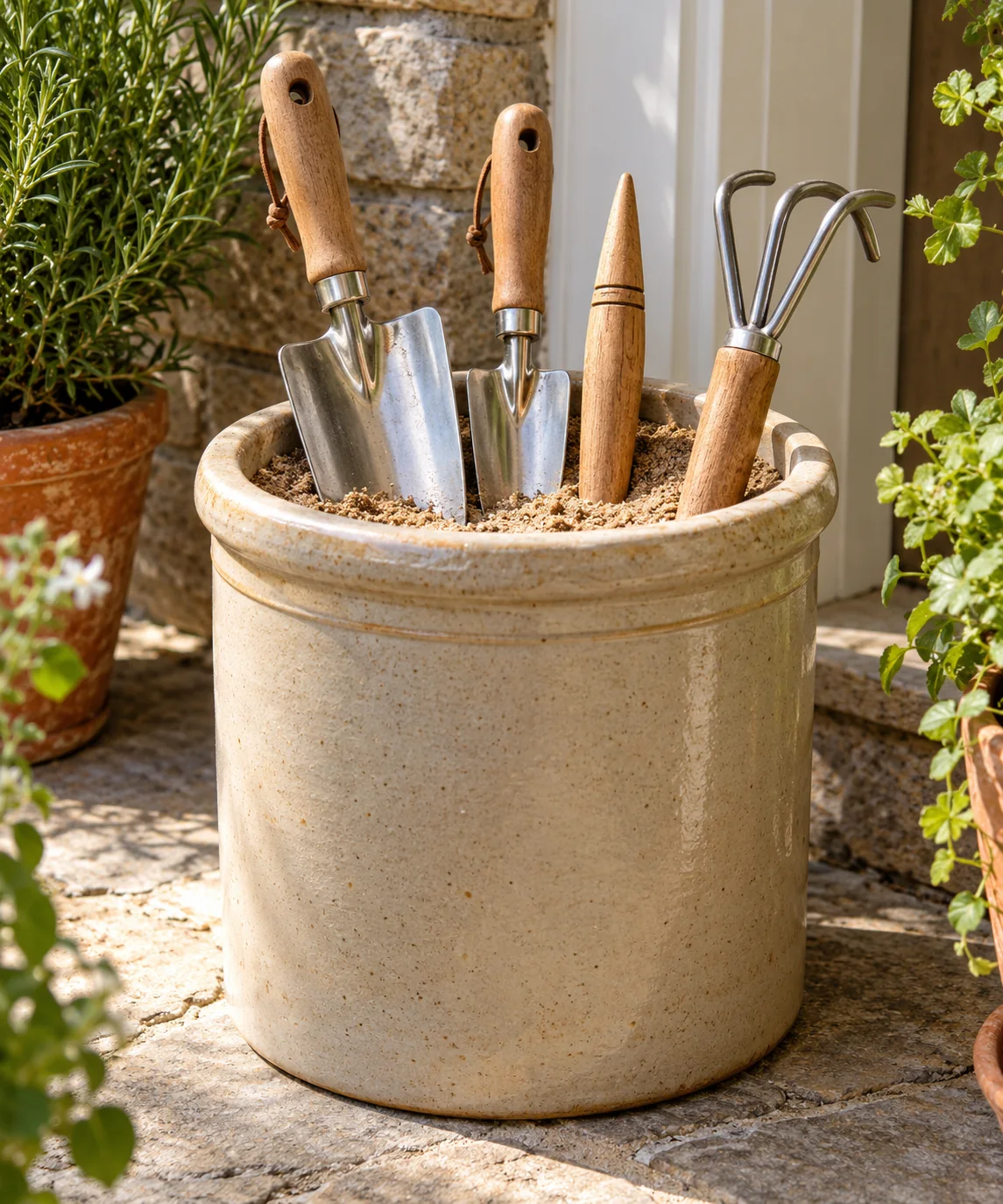
Selecting the Vessel and Staging Location
Stoneware and heavy ceramic crocks provide stable ballast for hand digging tools, provided the container has a broad base relative to its height. Choose a vessel heavy enough not to tip when loaded with long-handled dibbers or weighty transplanters, and test its stability on a flat surface before filling. Position the crock along a sheltered porch wall or potting bench corner away from main footpaths to prevent handles from snagging clothing or blocking walkways. Avoid narrow-necked jugs or lightweight decorative pots that can easily overbalance under the leverage of tall implements.
Sand Selection and Mineral Oil Blend
Fill the container with coarse builder's sand or washed horticultural grit instead of ultra-fine play sand, which tends to pack tightly around blade collars. Adding a modest amount of plain mineral oil—just enough to lightly coat the grains without saturating or pooling at the bottom—helps suppress airborne grit dust and leaves a faint oily film on carbon steel implements. Stir the mixture with a wood scrap until the sand holds a uniform, barely damp consistency. This abrasive medium wipes away loose surface grit each time tools are plunged into the vessel.
Tool Arrangement and Spacing
Arrange tools with deliberate spacing to prevent edges from striking one another below the sand line. Slide wide trowels and transplanters along the back curve with flat faces aligned toward the rim to maximize usable center space. Place narrow dibbers, weeders, and cultivator forks toward the front and center, leaving enough clearance between grips so you can easily grasp one handle without dislodging adjacent tools. Staggering implements by handle height keeps the station organized and minimizes contact between metal components.
Routine Debris Removal and Sand Maintenance
Knock heavy soil clumps, wet clay, and fibrous roots off blades before inserting them into the sand. Sand stations work well for light residual dust, but wet garden mud will quickly foul the grit and form compacted clumps around tool tips. Periodically inspect the top layer of sand and scoop out accumulated leaves, twigs, and dry soil debris with a small garden riddle or mesh strainer. If the sand feels dry and dusty after months of sheltered outdoor exposure, work in a small spoonful of mineral oil to restore smooth tool insertion.
Moisture Protection and Freezing Precautions
Keep the ceramic vessel strictly beneath a covered porch, shed roof, or potting shelter. Uncovered outdoor placement allows rainwater to flood the container, which can trap standing water at the base, corrode metal ferrules, and promote mildew on wooden handles. In areas that experience sub-freezing winter weather, bring the crock into a dry, temperature-buffered garage or shed. Moisture trapped inside damp sand expands during freeze-thaw cycles, which can exert enough pressure to crack thick glazed ceramic and stoneware pottery.
YOUR STARTING POINT
A little checklist.
Original editorial guidance. Images are AI-generated concepts, not photographs of completed projects. Our sources and approach.
Questions to consider
Can vegetable oil be substituted for mineral oil in the sand mixture?
Vegetable oils, such as canola, corn, or olive oil, tend to oxidize and turn gummy or rancid over time when exposed to air. Standard mineral oil remains stable, resists spoilage, and provides a light lubricating film that will not congeal on metal blades or wooden handles.
How deep should the sand layer be inside the container?
The sand should be deep enough to support the longest working blade or dibber point upright without having the metal tip scrape the bottom of the crock. A depth that covers at least half to two-thirds of the tool blade generally provides sufficient friction to keep handles standing straight.
Will coarse sand abrade polished or coated tool surfaces?
Repeatedly plunging tools into coarse sand creates minor micro-scratches on polished or painted metal over time. While this mechanical friction helps dislodge dried soil and sap, high-polish decorative tools or non-stick coated blades are better stored on dry hanging pegs or padded tool rolls.