Pantry Organization · THE GUIDE
Organize Honey Jars and Sticky Syrups on a Removable Ceramic Coaster Tray
Natural liquid sweeteners like raw honey, maple syrup, blackstrap molasses, and agave nectar are notoriously prone to secondary drips that travel down container walls. Over time, these sugary residues pool on wooden pantry shelves, creating stubborn, gummy rings that attract kitchen pests and permanently mar natural wood finishes. Containing your daily sweeteners on a dedicated, removable glazed ceramic coaster tray solves this housekeeping nuisance. The non-porous ceramic surface acts as a protective barrier that catches every errant drop, while remaining effortless to lift out, rinse clean under warm tap water, and return spotless.
Jump to the checklist ↓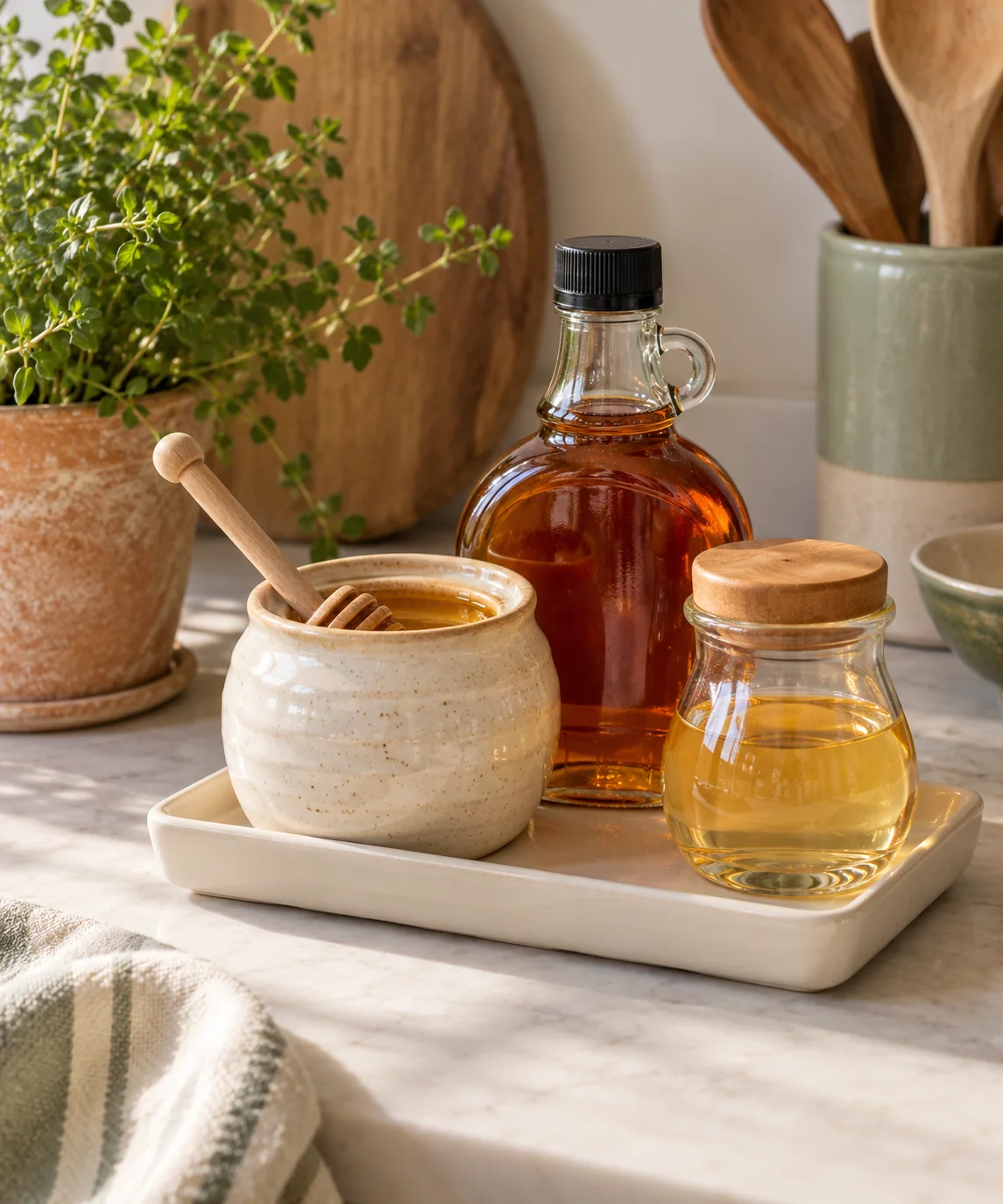
Managing Sweetener Drips on Pantry Shelving
Natural liquid sweeteners like honey, molasses, and syrups frequently leave residual drips that travel down container exteriors after pouring. When stored directly on unsealed or lightly finished wooden pantry shelves, standing sugar droplets can leave sticky marks, soften surface finishes over time, or bond to shelf liners. Using a dedicated, washable coaster tray beneath sweetener containers establishes a defined zone that catches stray drops before they reach the underlying shelf surface, making cleanup simpler and protecting shelf materials from repeated scrubbing.
Selecting a Practical Washable Dish
Look for a shallow tray or coaster made of glazed ceramic, tempered glass, or another smooth, non-absorbent material with a modest raised perimeter lip. The lip helps contain minor pooling drips so they do not spread across the shelf board. A fully glazed finish simplifies cleaning because dried sugars release easily under running water without aggressive scraping. Before placing the dish, inspect the base; if the bottom foot ring is unglazed or abrasive, attaching adhesive silicone or felt bumpers prevents friction marks on delicate shelf finishes.
Arranging Bottles and Jars for Stability
Organize sweeteners by bottle height and usage patterns across the tray surface. Placing taller, narrow containers toward the back and lower, wide-based honey pots near the front reduces the chance of knocking over taller bottles when reaching into the pantry. If using honey jars with separate drippers or spoons, adding a small resting dish keeps the utensil contained without smearing the sides of adjacent jars. Leaving slight breathing room between containers prevents them from sticking to one another if drips settle on the tray.
Evaluating Shelf Height and Reach
Store the sweetener tray on a shelf situated between waist and shoulder height for clear visibility and balanced lifting. Placing sticky containers on high shelves can lead to clumsy handling or blind reaching, which increases the likelihood of spills. Lower shelves require awkward bending that can make gripping slick bottles difficult. Check that the tray rests flat on the shelf without rocking, providing a stable foundation when lifting bottles or unscrewing tight caps.
Routine Maintenance and Cleaning Habits
A removable tray simplifies pantry maintenance by turning a tedious shelf-scrubbing task into a routine sink rinse. When syrup residue accumulates, remove the containers to a clean counter, carry the tray to the sink, and soak or rinse it with warm water and mild dish detergent until the sugar dissolves. Wipe the tray dry before returning it to the pantry. Wiping down the exterior bases of jars before returning them to the clean dish prevents immediate transfer of old syrup.
YOUR STARTING POINT
A little checklist.
Original editorial guidance. Images are AI-generated concepts, not photographs of completed projects. Our sources and approach.
Questions to consider
Can I use trays made from materials other than glazed ceramic?
Yes. Stainless steel, melamine, or tempered glass trays also work well because their non-porous surfaces do not absorb liquids and can be easily washed. Porous materials like unsealed wood or raw terracotta are harder to clean once sticky syrups soak into the surface.
Should maple syrup be stored on the pantry tray?
Unopened pure maple syrup is shelf-stable in the pantry, but manufacturer guidelines typically require refrigeration after opening to prevent spoilage and mold growth. Keep opened bottles in the refrigerator and reserve pantry trays for shelf-stable sweeteners like honey and unopened syrups.
How should I loosen a jar that has adhered to the tray?
Avoid twisting or forcing the glass forcefully, which could cause a spill or break fragile packaging. Instead, add a small amount of warm water directly around the container's base on the tray and allow it to sit for a few minutes until the dried sugars soften and release.