Sage and Cream Interiors · THE GUIDE
Organize Kitchen Spices on an Expandable Tiered Shelf Organizer
Upper kitchen cabinets often conceal valuable culinary seasonings behind cluttered rows, leading to accidental duplicates and forgotten containers. An expandable tiered shelf organizer transforms a shallow, standard-depth cupboard into a visible and structured pantry station. By elevating back rows above front jars, tiered risers eliminate visual blind spots while maximizing cabinet width. In a sage and cream kitchen, pairing wooden or neutral risers with uniform labeled jars provides a calming, functional order. Proper planning of tier heights and jar diameters ensures every single herb remains identifiable and instantly accessible during active meal preparation.
Jump to the checklist ↓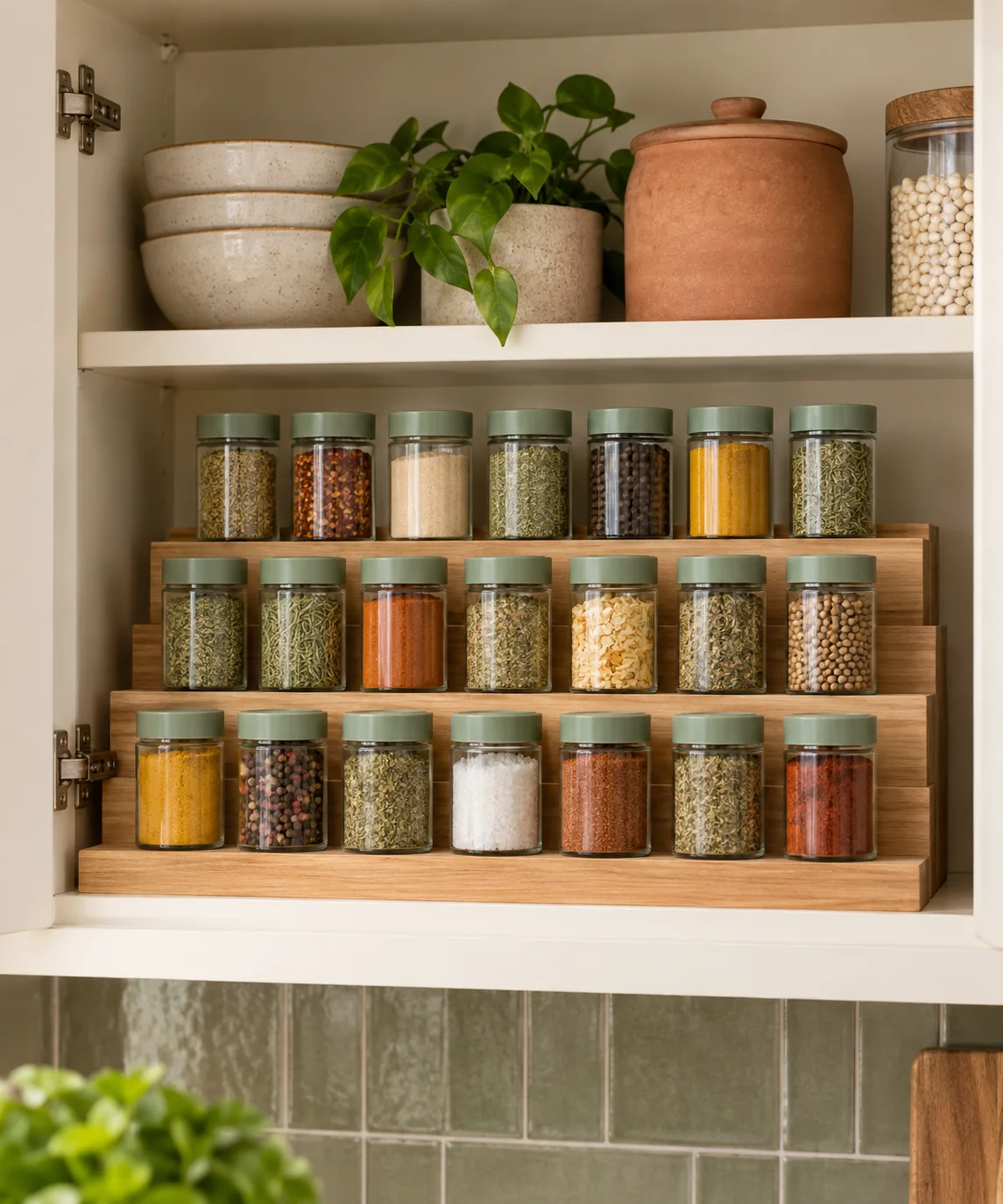
Measuring Cabinet Depth and Vertical Clearances
Standard upper kitchen cabinets usually measure eleven to twelve inches in interior depth. Measure the usable internal depth, shelf thickness, and height between shelves before selecting an organizer. An expandable three-tier riser typically requires at least nine to ten inches of shelf depth and eight to ten inches of vertical clearance to accommodate standard four-inch spice jars. Factor in the height of the top-tier jars so they do not collide with the cabinet ceiling or shelf underside when lifted outward for cooking.
Adjusting Organizer Width for Maximum Capacity
Expandable risers slide horizontally to match the exact interior span of your cupboard. Expand the organizer so it fits flush against one side wall while leaving a small side gap if you store wider bulk tins or salt cellars. Avoid overextending the sliding mechanism past its structural overlap point, which creates a sagging center seam. If your cabinet interior is painted a warm cream, light wood or cream risers maintain an open, uncluttered appearance across the full interior shelf span.
Standardizing Jars and Consistent Labeling
Mismatched manufacturer containers often vary in height and width, creating uneven lines that block visibility on tiered steps. Transferring dried herbs and spices into uniform round or square glass jars establishes visual rhythm. Apply sage green labels with clear block lettering either around the jar body or directly atop lids. Lid labels allow rapid identification when looking slightly downward at lower tiers, while front-facing labels assist when scanning the elevated top row without pulling jars out to read them.
Zoning Spices by Cooking Style and Frequency
Sort spice jars methodically rather than relying on strict alphabetical arrangements that disrupt daily kitchen workflow. Reserve the lowest tier for daily cooking essentials, such as black pepper, coarse salt, garlic powder, and onion flakes. Place intermediate baking spices like cinnamon, nutmeg, and ginger across the middle tier. Elevate specialty blends, dried whole chilies, and bay leaves to the highest step. This configuration prevents reaching over tall or fragile jars to retrieve items used multiple times every day.
Maintenance Routines and Storage Constraints
Spices degrade quickly when exposed to direct heat, steam, and sunlight. Ensure your spice cabinet sits away from the immediate range hood exhaust or stovetop steam plume. Wipe down the tiered organizer every few months using a lightly dampened microfiber cloth to lift loose spice powders and oils. Avoid overloading tiers with heavy stone mortar sets or large oil bottles, keeping the expandable shelf dedicated exclusively to light, standardized glass or tin spice containers.
YOUR STARTING POINT
A little checklist.
Original editorial guidance. Images are AI-generated concepts, not photographs of completed projects. Our sources and approach.
Questions to consider
Are round or square spice jars better for tiered organizers?
Square jars fit more snugly edge-to-edge without rolling or rotating. This keeps front labels facing forward consistently on shallow steps, preventing labels from turning sideways when neighboring containers are removed and replaced.
What if my top-tier spice jars hit the cabinet roof?
Lower your cabinet shelf pins down one or two notches to gain vertical clearance. Alternatively, place your shortest spice containers on the top tier and taller glass bottles along the front bottom step.
How do I clean fine powder spills from wooden risers?
Remove all jars and vacuum loose dust with a brush nozzle attachment. Wipe the wooden steps with a barely damp cloth dried immediately with a towel. Avoid soaking wood to prevent warping or swelling seams.