Warm Neutral Living Rooms · THE GUIDE
Organize Living Room Media Cords Inside a Pine Slatted Bench
Living room media setups often struggle with tangled cords, bulky power supplies, and warm electronics that compromise a clean interior aesthetic. A pine slatted bench or low media cabinet offers a practical solution by combining natural wood texture with passive air circulation. Gaps between slats allow ambient air movement around auxiliary equipment while keeping power strips, streaming devices, and excess wiring tucked out of direct sight. Selecting appropriate storage bins, routing cables with strain relief, and maintaining adequate manufacturer-recommended clearances preserves equipment performance while achieving an understated, warm neutral aesthetic.
Jump to the checklist ↓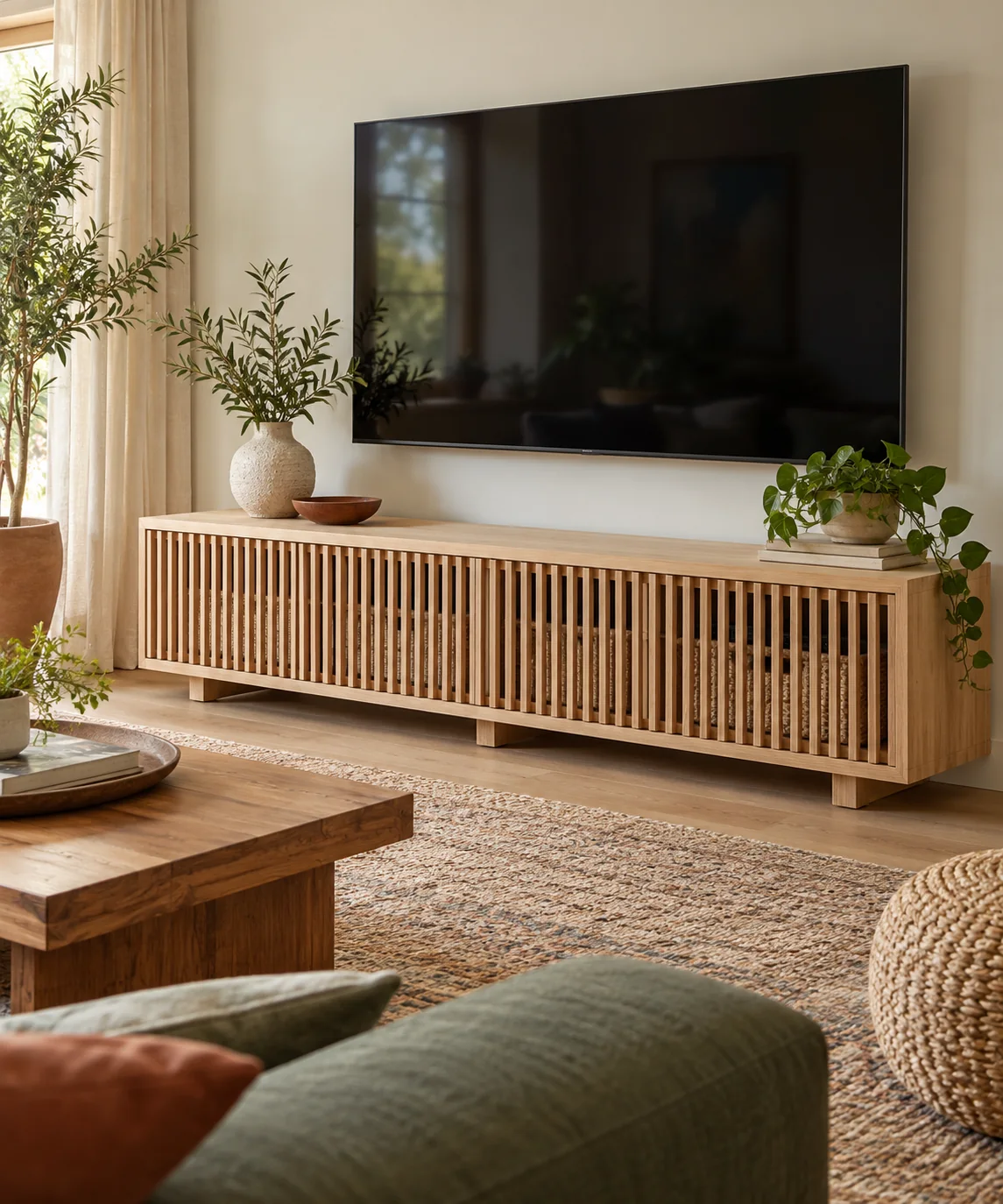
Utilizing Slatted Wood for Passive Airflow
Consumer electronics like streaming hubs, network routers, and audio receivers generate warmth that can build up inside enclosed cabinetry. A slatted pine unit encourages natural air circulation through open gaps without requiring motorized cabinet fans. When choosing furniture, look for designs with open slat backs or generous front and side venting. Ensure each piece of hardware has sufficient open perimeter space as specified in its operating manual, rather than packing compartments tightly with decorative items.
Organizing Devices with Open Storage Bins
Grouping loose power supplies and accessory cables into shallow, open-topped storage bins keeps shelves tidy. Baskets made of sturdy canvas, woven paper cord, or lightweight wood keep transformers from sliding around without trapping heat over top vents. Choose containers designed with built-in side handles or cable cutouts so cords exit naturally without pinching or requiring you to cut and fray the basket weave. Keeping power strips resting flat inside open bins prevents tension on plugged-in adapters.
Routing Cables and Managing Slack
Excess cable slack can be bound neatly with reusable fabric hook-and-loop straps rather than tightened zip ties, which can crimp insulation or damage fragile signal lines. Where layout permits, run low-voltage audio-video cables slightly separated from alternating current power cords to minimize electromagnetic interference. Clearly labeling both ends of each cord with durable cable tags simplifies future troubleshooting, equipment upgrades, or component rearranging without having to trace every individual wire back to the wall.
Checking Clearance and Equipment Placement
Before setting up your equipment, measure the height, depth, and ventilation requirements of each device. Arrange components on shelves with their exhaust ports pointing toward open gaps or vented panels. Instead of relying on guesswork or casual touch checks, review each device's instruction manual for minimum clearance distances and monitor for system warning indicators or elevated fan noise during normal operation. If a unit consistently runs loud or warm, reposition it to an upper or more open shelf.
Caring for Pine and Managing Weight Limits
Pine is a softwood that responds naturally to indoor humidity shifts and can bow if subjected to excessive loads. Verify shelf weight ratings before stacking heavy surround-sound receivers or subwoofers onto the bench. Protect bare or wax-finished pine surfaces by dusting with a dry microfiber cloth, avoiding saturated wet wipes that can raise the wood grain. Periodically inspect the cabinet interior to vacuum away loose dust, which tends to gather around power transformers and can impair component cooling over time.
YOUR STARTING POINT
A little checklist.
Original editorial guidance. Images are AI-generated concepts, not photographs of completed projects. Our sources and approach.
Questions to consider
Can infrared remote controls operate devices through wooden slats?
Infrared remotes require a direct line of sight between the remote transmitter and the device sensor. If slats are spaced widely enough and the equipment is aligned directly with a gap, signals often pass through, though radio frequency or Bluetooth remotes are generally more reliable for concealed equipment.
Is it safe to place power strips inside decorative baskets?
Power strips can be placed in sturdy, open-top bins provided the strip is not overloaded, heavy power bricks are kept uncovered, and there is adequate room for air circulation. Never stack multiple warm transformers on top of each other inside an enclosed container.
How should bare pine furniture be maintained around electronics?
Dust slatted wood surfaces regularly with a dry cloth or soft vacuum attachment. Avoid spraying liquid furniture polishes or aerosol cleaners directly onto or near the furniture while electronics are housed inside, as airborne mist can coat electrical vents and attract lint.