Garden Tool Organization · THE GUIDE
Organize Precision Greenhouse Snips in a Countertop Wooden Block
Fine propagation snips, floral shears, and micro-tip trimmers feature delicate blades that dull or bend when stored loose inside garden drawers. Setting a heavy timber block directly on the potting bench provides immediate vertical access while shielding precise tips from accidental drops. Unlike lightweight plastic cups that easily tip over under the weight of steel handles, a solid hardwood block anchors tools upright against working jostles. This countertop arrangement encourages deliberate blade alignment, prevents tip collisions, and establishes a tidy staging area for detailed trimming routines without modifying structural greenhouse frames.
Jump to the checklist ↓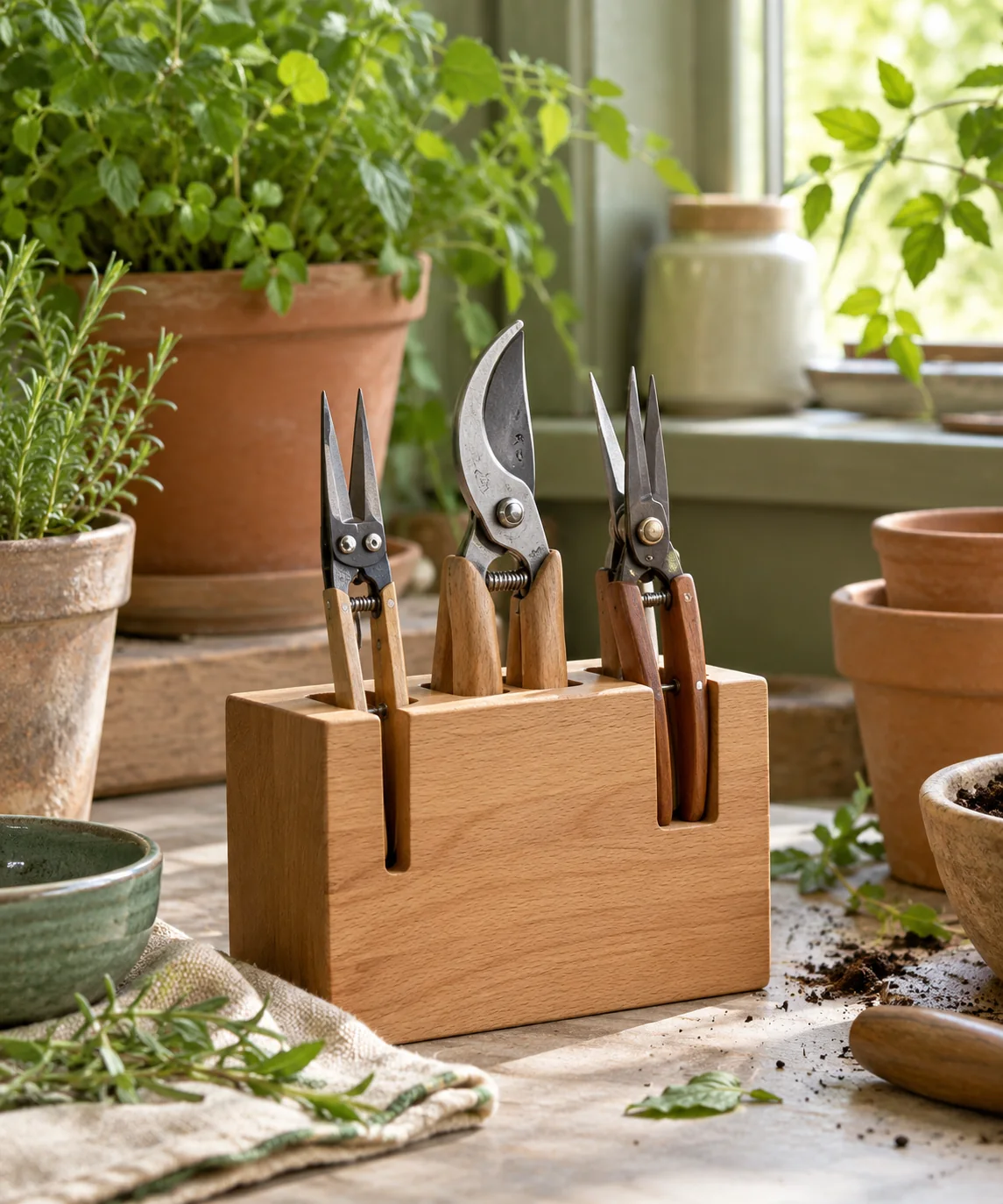
Selecting the Block and Material
Dense hardwoods such as beech, maple, or oak provide a stable countertop base for organizing precision pruners and propagation snips. The block requires sufficient mass and base footprint so it stays upright when tools are inserted or removed. Commercial culinary blocks can sometimes be repurposed if the slots fit snip pivot pins and spring mechanisms, though blocks with wider vertical channels prevent binding. Untreated softwoods tend to absorb greenhouse humidity more readily, which may cause wood fibers to swell around tool blades.
Channel Dimensions and Tool Spacing
Fine-point shears and floral snips vary in blade width, spring style, and pivot thickness. Channels should offer enough clearance along the sides and bottom so blades slide in freely without rubbing or bottoming out against the wood. Spacing individual slots far enough apart prevents handles and finger rings from catching on adjacent tools when reaching for a pair. Slots cut vertically or with a slight backward tilt help keep blade tips aligned securely within the block.
Countertop Positioning and Bench Layout
Place the tool block toward the rear of your potting bench, away from primary potting trays, soil bins, and watering zones. Stationing the block within comfortable reach of your working hand keeps cutting edges organized without encroaching on central staging space. Avoid perching the block near high-traffic bench corners or edges where passing arms or plant flats might knock against protruding tool handles.
Moisture Management and Blade Maintenance
Plant sap, soil particles, and ambient greenhouse moisture can contribute to surface corrosion if cutting tools are stored dirty or wet. Wipe blades clean and dry with a soft cloth after use, applying a light protective coat of mineral oil or camellia oil to metal surfaces according to the manufacturer's care recommendations. Keep the storage block in a dry microclimate away from overhead misting nozzles or evaporative coolers, and regularly brush away loose potting debris from channel openings.
Tool Weight and Stability Boundaries
Countertop blocks are designed for lightweight precision hand tools, including floral snips, micro-tip trimmers, and thread clippers. Larger bypass pruners, heavy ratcheting shears, and loppers place excessive leverage on countertop blocks and require dedicated wall racks or deeper utility storage. If your snips feature external return springs, latch the safety catch before docking to prevent springs from pressing continuously against slot walls. Non-slip rubber feet placed beneath the block help keep it steady on slick potting benches.
YOUR STARTING POINT
A little checklist.
Original editorial guidance. Images are AI-generated concepts, not photographs of completed projects. Our sources and approach.
Questions to consider
Can I adapt a standard kitchen knife block for garden snips?
A kitchen knife block can work if the pre-cut slots accommodate the thicker pivot bolts and tension springs common on garden snips. Check the fit beforehand to make sure blades insert and release without sticking.
How do I prevent rust when storing snips in a wooden block?
Clean off sap and soil, dry the metal surfaces thoroughly before docking, and store the block away from direct misting lines. Periodically wiping metal parts with a thin coat of tool oil provides an effective moisture barrier.
What should I do if a shear tip reaches the bottom of the slot?
Choose a block with slots deeper than your longest cutting blade, or place a thin slice of cork at the base of the channel to provide a gentle resting surface for delicate tips.