Small Balcony Layouts · THE GUIDE
Organize Recycling Bins Inside a Slatted Wooden Box
Balcony waste management often results in an unorganized cluster of plastic bins, loose cardboard, and beverage cans exposed to wind and rain. Housing your recycling containers within a slatted wooden bench creates a tidy, concealed utility station that blends seamlessly with outdoor greenery. The slatted exterior promotes passive air circulation to prevent stagnant moisture buildup, while the solid top provides a stable resting surface for lightweight potted plants. Implementing a measured, ventilated wooden enclosure keeps separation routines practical, prevents windblown litter, and maintains a calm aesthetic across small residential balconies.
Jump to the checklist ↓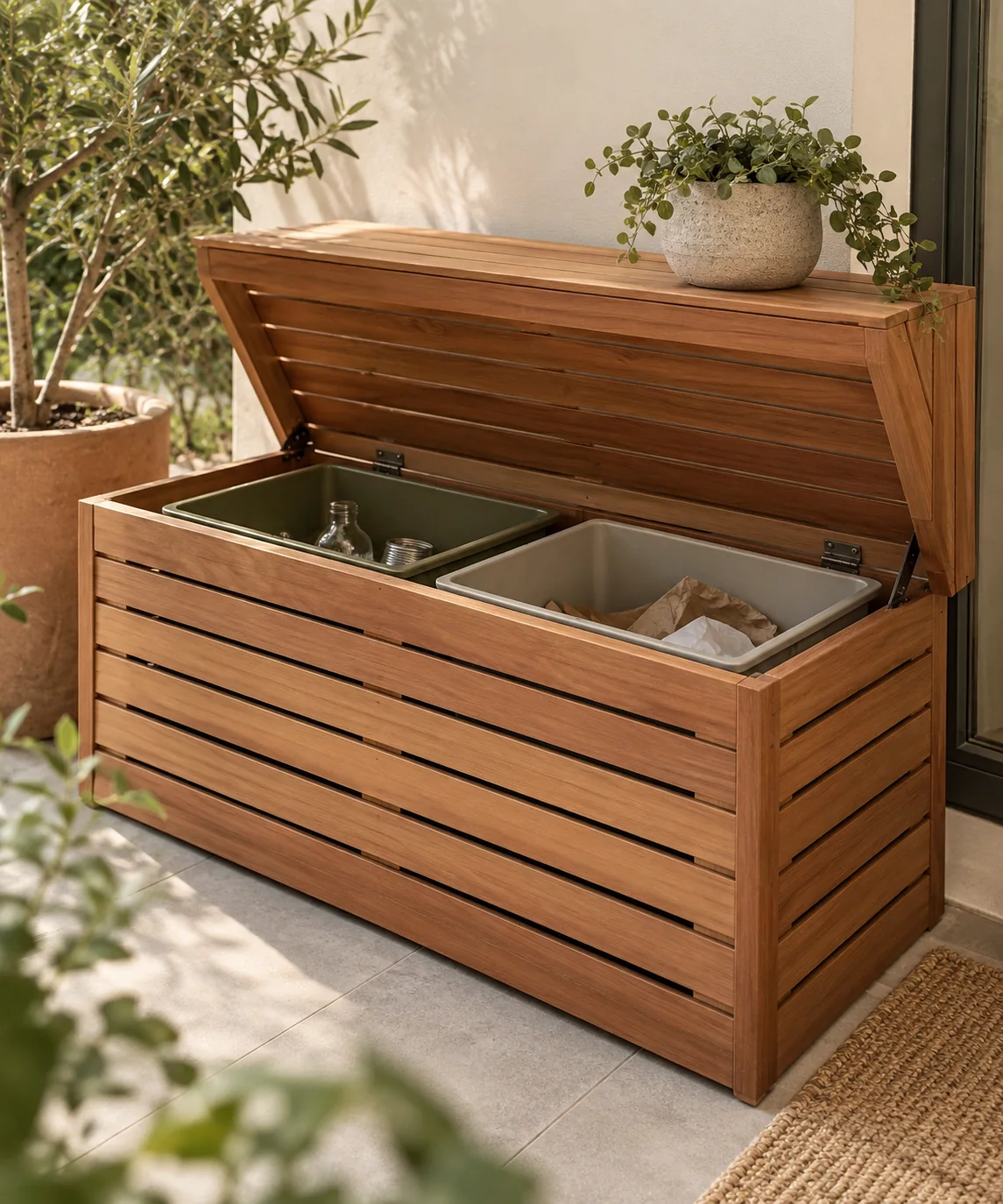
Sizing the Box to Internal Sorting Bins
Begin by measuring the exact dimensions of your household sorting containers before selecting or building an enclosure. Two standard five-gallon handled plastic buckets or slim recycling totes fit comfortably inside a box measuring thirty-six inches long, eighteen inches wide, and twenty inches high. Allow at least one inch of internal clearance around each bin for effortless lifting during collection runs. Ensure the top lid opens smoothly without catching on nearby wall finishes or deck railings.
Ensuring Passive Airflow and Ventilation
Airtight storage boxes trap moisture, leading to mold growth and sour odors from rinsed food packaging. Choose horizontal wood slats spaced roughly a quarter-inch to a half-inch apart on the side panels. This spacing permits steady ambient air exchange while visually obscuring plastic bins inside. Elevated floor runners on the box base keep the bottom slats off the damp balcony surface, allowing wet deck planks to dry quickly underneath after rain showers.
Using the Bench Lid as a Display Surface
A low wooden recycling bench doubles as an attractive pedestal for container plants when floor space is tight. Limit surface decor to one or two lightweight pots, such as shallow ceramic bowls holding hardy succulents or compact trailing foliage. Avoid covering the entire lid; keep pots grouped toward one side so you can easily shift them aside or lift the lid section without disturbing delicate root systems when depositing daily empty containers.
Lining and Protecting the Interior Floor
Rinsed recyclables can occasionally drip residual liquid into the bottom of the enclosure. Place a shallow, washable plastic drip tray or rubber boot mat at the bottom of the wooden chest beneath the sorting bins. This barrier captures stray liquid before it penetrates the wood slats or seeps onto your balcony deck. Periodically remove the drip tray, rinse it with warm water, and wipe it dry to maintain sanitary outdoor conditions.
Positioning the Unit for Easy Access
Locate the recycling box against a sheltered balcony wall close to the entrance door. Placing it near the threshold reduces steps when carrying items outside while keeping the primary walking path clear. Avoid blocking drainage scuppers, exterior utility meters, or emergency egress routes. A sheltered placement also protects the wooden frame from direct driving rain, extending the lifespan of exterior wood stains and keeping internal contents dry.
YOUR STARTING POINT
A little checklist.
Original editorial guidance. Images are AI-generated concepts, not photographs of completed projects. Our sources and approach.
Questions to consider
How do I keep pests away from balcony recycling storage?
Thoroughly rinse all cans, bottles, and cartons before placing them in the sorting bins. Using bins with integrated click-lock lids inside the ventilated wooden box adds a double barrier against curious neighborhood birds and insects.
What wood species works best for an outdoor ventilated box?
Naturally rot-resistant timbers like cedar, cypress, or teak perform best outdoors. Alternatively, exterior-grade pine treated with a water-repellent outdoor stain provides good protection against seasonal humidity shifts when maintained with a light annual re-coating.
Can I sit on the recycling box bench?
Only if the box is specifically rated for adult seating capacity with reinforced corner framing and heavy-duty hinges. Lightweight decorative storage boxes should be treated strictly as plant stands and utility covers, not structural lounge seating.