Warm Neutral Living Rooms · THE GUIDE
Organize Remote Controls Inside a Lidded Rattan Box
Black plastic electronics, streaming remotes, and charging cables frequently undermine the visual harmony of a carefully styled neutral living room. When scattered across coffee tables, these utilitarian objects create visual noise that distracts from textural elements like woven linens, stoneware, and pale woods. Concealing everyday controllers within a compact, lidded rattan box offers a practical, reversible organizational solution. The natural honey tones and woven construction of rattan absorb functional clutter, introducing subtle tactile warmth while ensuring media controllers remain instantly accessible to everyone in the household.
Jump to the checklist ↓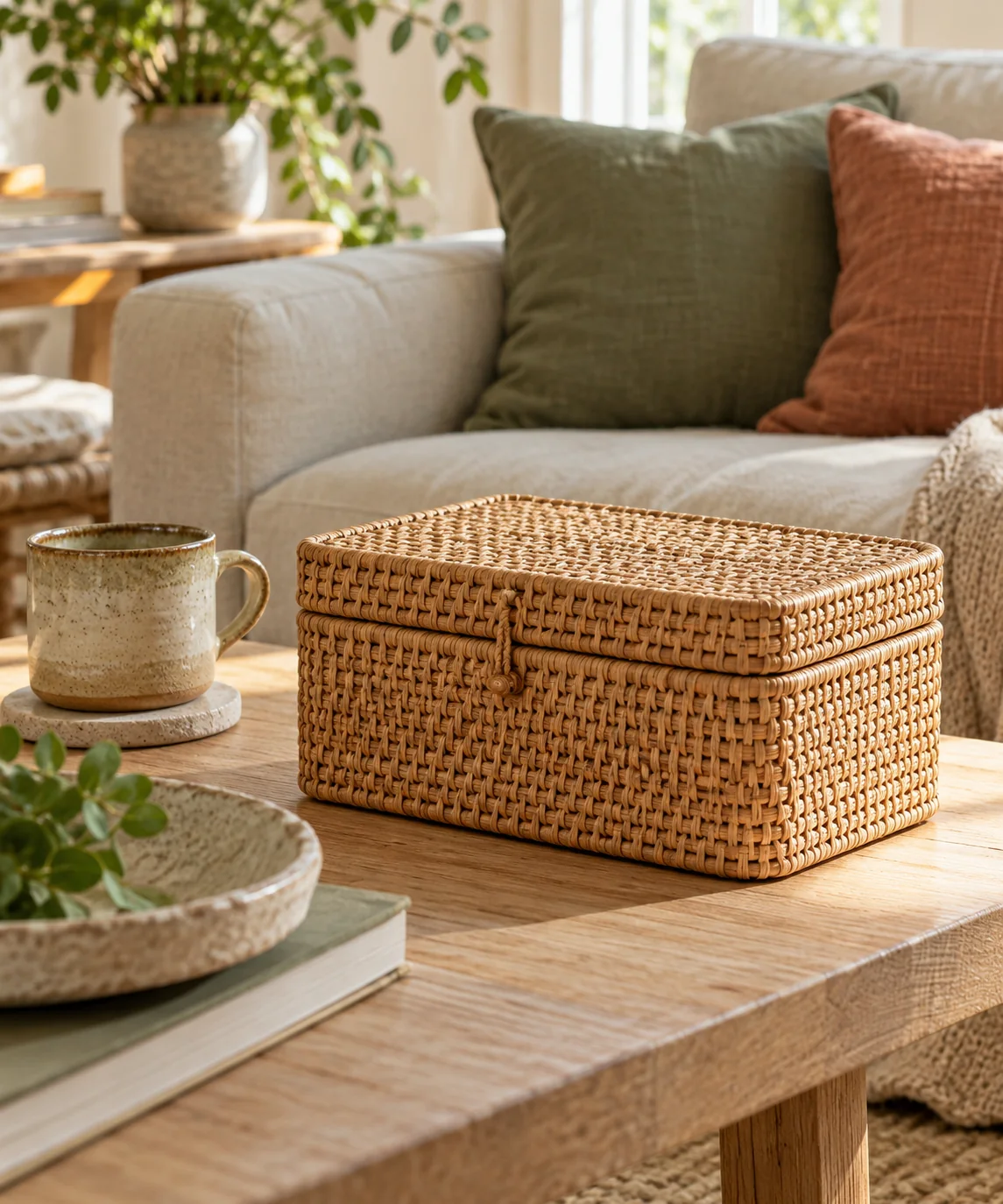
Sizing the Container Appropriately
Gather all devices that regularly rest on your living room surfaces, including television remotes, audio wands, soundbar controllers, and small streaming sticks. Measure their collective footprint laid flat side by side. Select a lidded rattan box that accommodates these items in a single horizontal layer without forcing them to stack awkwardly. An interior dimension of roughly nine by twelve inches with a three-inch depth generally accommodates three standard remotes while maintaining a discreet, balanced presence.
Designing Internal Compartments
Loose devices placed inside an undivided box can rattle against interior walls and tangle with auxiliary cords. Line the interior bottom with a small piece of natural linen or unbleached wool felt cut to size, which cushions plastic casings and dampens sound when remotes are dropped in. If the box lacks built-in dividers, insert lightweight cardstock or small shallow cardboard trays to create designated slots, preventing controllers from sliding around during daily lid removal.
Evaluating Coffee Table Surface Balance
Position the lidded rattan box to balance other objects on your coffee table rather than crowding the center. Pair the box alongside a low ceramic bowl or a modest stack of art books, allowing at least six inches of clear space along the table perimeter for resting drinks. Keeping the box near the edge closest to your primary seating position makes reaching inside effortless, ensuring family members put devices away instead of leaving them out.
Establishing an Accessible Return Habit
An organizational container only succeeds if it simplifies household routines rather than adding friction. Choose a box featuring an attached hinged lid or a lift-off top with a generous woven finger pull. Containers with fussy latches, heavy locks, or tight-fitting lids tend to be left open, defeating their aesthetic purpose. Make it a simple household rule that the lid closes whenever the screen turns off at the end of the evening.
Caring for Natural Woven Rattan
Woven rattan contains natural crevices where everyday dust and household debris settle over time. Keep the exterior clean by brushing along the weave with a soft, clean paint brush or using a vacuum hose fitted with a brush attachment. Avoid placing the box in direct, intense sunlight near unshaded south-facing windows, as continuous UV exposure can dry out the natural split cane, leading to brittle fibers and structural cracking over time.
YOUR STARTING POINT
A little checklist.
Original editorial guidance. Images are AI-generated concepts, not photographs of completed projects. Our sources and approach.
Questions to consider
Can infrared remote signals pass through a closed rattan box?
Generally, no. Most traditional infrared remotes require a direct line of sight to equipment sensors. Modern radio-frequency or Bluetooth remotes may connect through woven fibers, but opening the box during active television operation remains the most reliable practice.
How do I prevent rattan fibers from snagging internal fabrics?
Check the interior for rough cane splinters before loading devices. Lightly buff coarse internal points using fine-grit sandpaper, then line the inner walls with a simple tailored linen insert to ensure completely smooth, snag-free everyday access.
What should I do if the rattan material becomes excessively dry?
Wipe the exterior lightly with a clean cloth barely moistened with plain water once or twice a year. Do not soak the cane; mild surface humidity helps natural split-rattan fibers retain flexibility without causing rot or fungal mildew.