Pantry Organization · THE GUIDE
Organize Seasonal Pickling and Fermenting Crocks on Low Reinforced Shelves
Ceramic fermentation crocks, stoneware pickling vessels, and large glass jars carry significant dead weight, especially when filled with dense vegetables and liquid brines. Storing these heavy containers on standard mid-level or upper pantry shelves can create handling hazards and exceed manufacturer shelf weight limits. Allocating low, sturdy shelving or designated floor-level staging areas provides a practical, stable foundation for heavy food preservation containers. Placing vessels at lower elevations minimizes lifting strain, protects fragile containers from accidental drops, and allows for routine monitoring of airlocks and lids without awkward overhead reaching.
Jump to the checklist ↓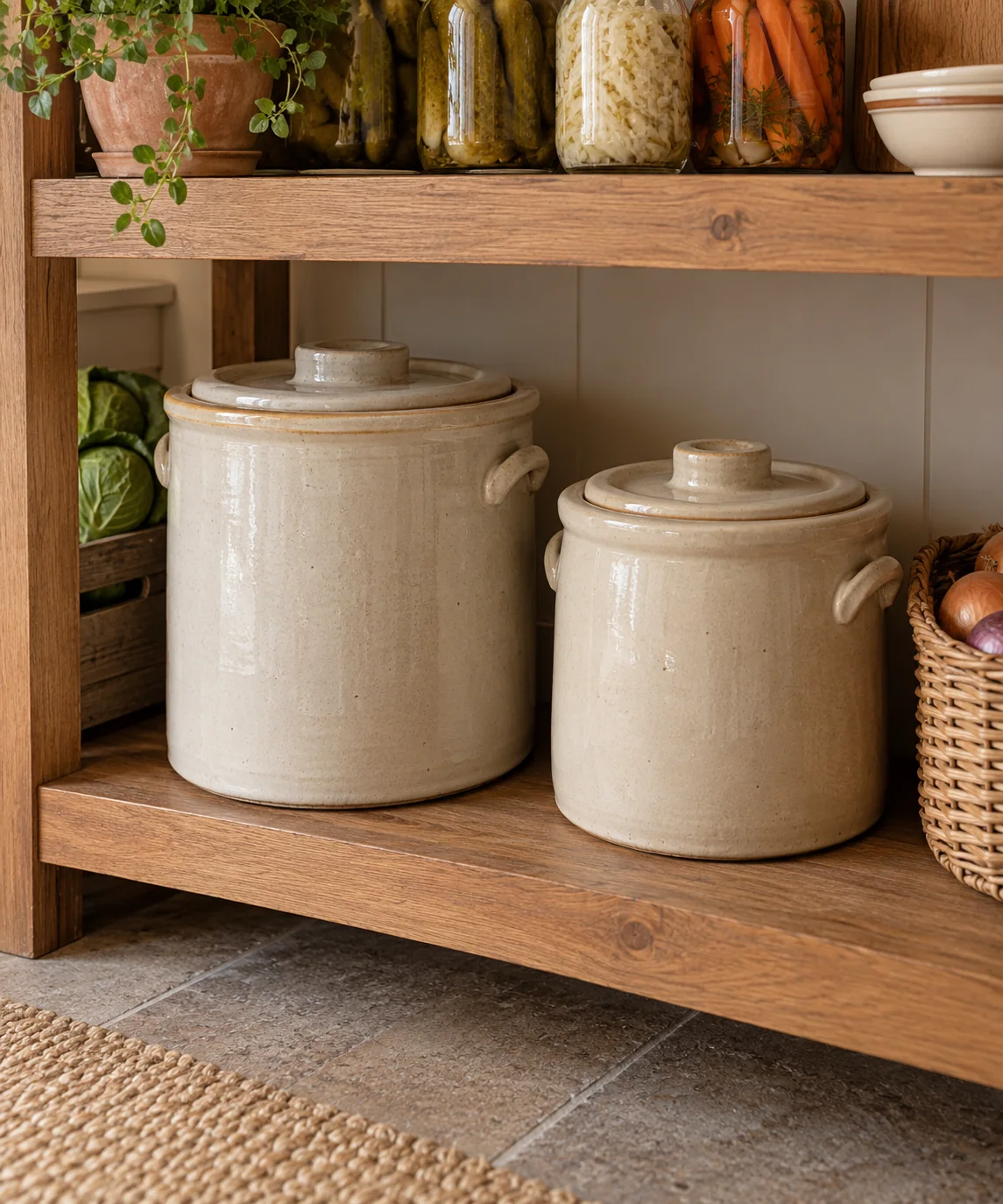
Selecting Low-Level Shelf Locations
Filled fermentation containers can weigh dozens of pounds depending on vessel capacity and liquid volume. Check the manufacturer load ratings for your pantry shelving system before placing filled vessels onto any shelf tier. Lower shelves or bottom cabinet bases are generally preferable because they minimize the lifting distance required to move heavy vessels into position. Avoid assuming any shelf can support dense stoneware simply based on wood appearance or board thickness. Keeping heavy vessels near floor level also reduces tipping hazards and lessens the risk of impact damage to cabinetry during routine handling.
Planning Headspace for Vessel Access
Measure the total vertical height of your containers with all accessories installed, including weights, specialized lids, and water-filled airlocks. Ensure there is enough vertical clearance above the highest component so you can remove lids, inspect liquid levels, and service seals without tilting the container or dragging it forward across the shelf surface. Adequate vertical space helps prevent hands and jar components from bumping the shelf above, reducing the risk of chipping ceramic rims or dislodging delicate airlocks during fermentation checks.
Protecting Shelving with Spill Containment
Fermentation brines and acidic solutions can spill or bubble over during active processing, which may discolour shelf finishes or seep into shelf seams. Place vessels inside shallow, non-reactive rimmed trays or atop washable silicone mats. This provides an effective secondary containment layer that catches minor overflows, condensation, and drips before liquid contacts shelving surfaces. Ensure that the containment tray sits completely flat and does not introduce wobble or uneven settling beneath heavy stoneware or glass vessels.
Organizing Active and Dormant Preservation Vessels
Pickling and fermentation crocks often follow distinct seasonal cycles, sitting empty for extended periods between harvests. Keep currently active batches toward the front of your low storage zone for convenient inspection, skimming, and brine replenishment. Once preservation cycles conclude, clean and thoroughly dry the containers according to manufacturer instructions before placing them into dormant storage. Moving inactive crocks toward the rear of the shelf preserves prime, accessible space for ongoing kitchen tasks while protecting empty vessels from accidental bumps.
Managing Environmental Conditions and Cleanliness
Lower pantry zones often benefit from relatively moderate temperature variations compared to elevated shelving, making them useful for food preservation storage. Keep the surrounding floor and shelf areas free from dust and debris to prevent contamination around airlocks and water seals. Avoid placing containers directly against uninsulated exterior walls where outdoor weather swings might create localized temperature shifts. Consult validated food preservation recipes and cooperative extension guidelines for the appropriate ambient conditions required by your specific preservation projects.
YOUR STARTING POINT
A little checklist.
Original editorial guidance. Images are AI-generated concepts, not photographs of completed projects. Our sources and approach.
Questions to consider
Can heavy fermentation crocks be stored directly on the pantry floor?
Placing heavy crocks directly on the floor eliminates shelf collapse risks, but it can expose vessels to floor debris, foot traffic, and drafts. Placing containers on a low cabinet base or dedicated storage platform with verified load capacity keeps vessels clean while maintaining safe, low-elevation access.
How can I prevent moisture damage on shelves beneath fermentation vessels?
Set containers inside rimmed polypropylene trays or on top of food-grade silicone mats. These non-porous barriers catch condensation rings, minor bubbling overflows, and salt residue, protecting underlying shelving materials from moisture contact and surface staining.
How much space should be left between adjacent stoneware crocks?
Leave sufficient space between containers so your hands can comfortably grip handles or side walls without bumping adjacent jars. Providing enough clearance for a secure two-handed lift helps prevent accidental chipping, slipping, or jarring when moving heavy containers.