Small Balcony Layouts · THE GUIDE
Organize Seasonal Pots on a Movable Cast-Iron Plant Caddy
Managing heavy plant containers on an apartment balcony presents practical considerations regarding sunlight tracking, deck maintenance, and overall weight distribution. Saturated soil and large ceramic or stone pots can be difficult to shift by hand, potentially leading to trapped moisture or debris on decking materials. Placing an appropriate planter on a sturdy cast-iron plant caddy allows for controlled mobility without permanent alterations. However, moving substantial planters requires careful attention to building load thresholds, floor slopes, and manufacturer hardware ratings to keep outdoor spaces functional and safe.
Jump to the checklist ↓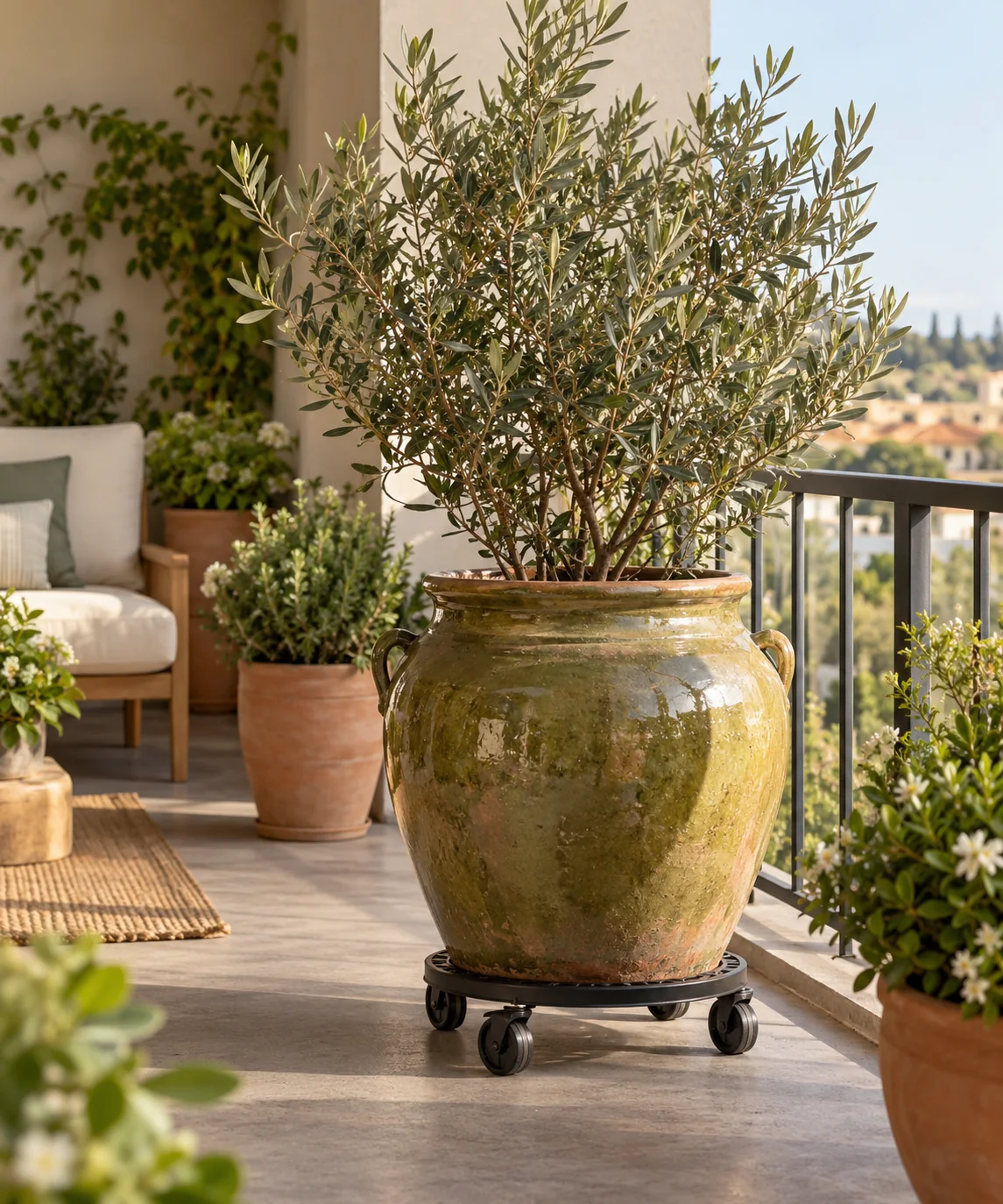
Balcony Load Limits and Caddy Weight Ratings
Before pairing an oversized container with a mobile caddy, consider the total mass of the pot, plant, and saturated soil. Saturated potting mix weighs considerably more than dry media. Balconies have specific structural load limits that must never be exceeded; consult property management or a qualified structural engineer to understand your balcony's capacity before clustering large, heavy containers. Additionally, check the caddy manufacturer's rated maximum load capacity to verify that the wheel assemblies and metal base are designed to support the combined wet weight safely.
Floor Surfaces and Pathway Planning
Balcony flooring surfaces vary from smooth poured concrete and exterior tiles to slatted wood decking. Rough textures, wide grout joints, or raised deck board edges can catch caster wheels, creating tipping hazards if a heavy container is pushed abruptly. Inspect the travel path before rolling the planter, ensuring there is ample unobstructed clearance around door thresholds, seating, and railings. Keep walking routes adequately clear so residents can move past without brushing against foliage or tripping over the caddy base.
Repositioning for Changing Sunlight and Weather
As seasonal sun angles shift throughout the year, a mobile caddy makes it practical to roll planters to brighter spots without heavy lifting. Similarly, when adverse weather, intense heatwaves, or high wind conditions are forecast, wheeled containers can be guided toward sheltered wall zones. When moving heavy pots, grasp the container low near its center of gravity to avoid tilting. Always monitor local weather alerts, as strong gusts can affect tall or top-heavy plants regardless of whether casters are used.
Balcony Drainage and Floor Surface Protection
Stationary plant saucers and flat-bottomed containers often trap standing water and organic debris beneath them, potentially staining concrete or deteriorating wooden deck boards. An open-grid cast-iron caddy elevates the pot, facilitating air circulation and allowing excess irrigation water to flow freely into a saucer or drainage channel. Rolling the caddy aside periodically makes it straightforward to sweep away fallen leaves, clean dirt accumulation, and verify that balcony drainage scuppers remain clear and unobstructed.
Managing Slopes and Caster Limitations
Exterior balconies are intentionally constructed with a gradual pitch away from the building to direct rainwater toward outer drains. Because wheeled platforms roll easily on inclined surfaces, caster brakes must be engaged whenever the caddy is stationary. While quality locking casters help prevent casual drift, they do not guarantee complete immobility during extreme wind events or on steep drainage pitches. Avoid placing top-heavy, tall plantings on rolling bases in exposed, wind-prone corners, and check the caster locks regularly to ensure they remain firmly depressed.
YOUR STARTING POINT
A little checklist.
Original editorial guidance. Images are AI-generated concepts, not photographs of completed projects. Our sources and approach.
Questions to consider
Can a heavy planter exceed balcony load limits on a mobile caddy?
Yes. Saturated soil, mature root systems, and dense pots add considerable concentrated weight. Balcony load limits vary widely, so consult property management or a qualified professional before concentrating heavy planters on your deck.
How do I choose the correct caddy size for a tapered pot?
Measure the diameter of the planter's base where it meets the ground rather than the top rim. The caddy platform should be equal to or slightly larger than the base to ensure the container sits level and stable without wobbling.
Are caster wheel locks sufficient to prevent planters from moving in high winds?
Wheel locks help prevent gradual rolling on sloped decking, but they cannot guarantee stability during severe wind gusts, especially for tall or top-heavy plants. Move vulnerable containers close to protective building walls during severe weather alerts.