Rental-Friendly Decor · THE GUIDE
Organize Wardrobe Essentials with a Freestanding Metal Clothes Rail
Older rental bedrooms frequently lack built-in closets, leaving tenants with awkward alcoves or limited wall space for bulky furniture. A freestanding metal clothes rail provides an immediate, reversible solution for daily garments without requiring wall fasteners or permanent assemblies. By treating the open rail as a functional capsule display, you can keep essential workwear, outer layers, and footwear visible and well ventilated. Success depends on realistic weight limits, disciplined spacing, and selecting a footprint that preserves primary walking paths between the bedroom doorway and your sleeping area.
Jump to the checklist ↓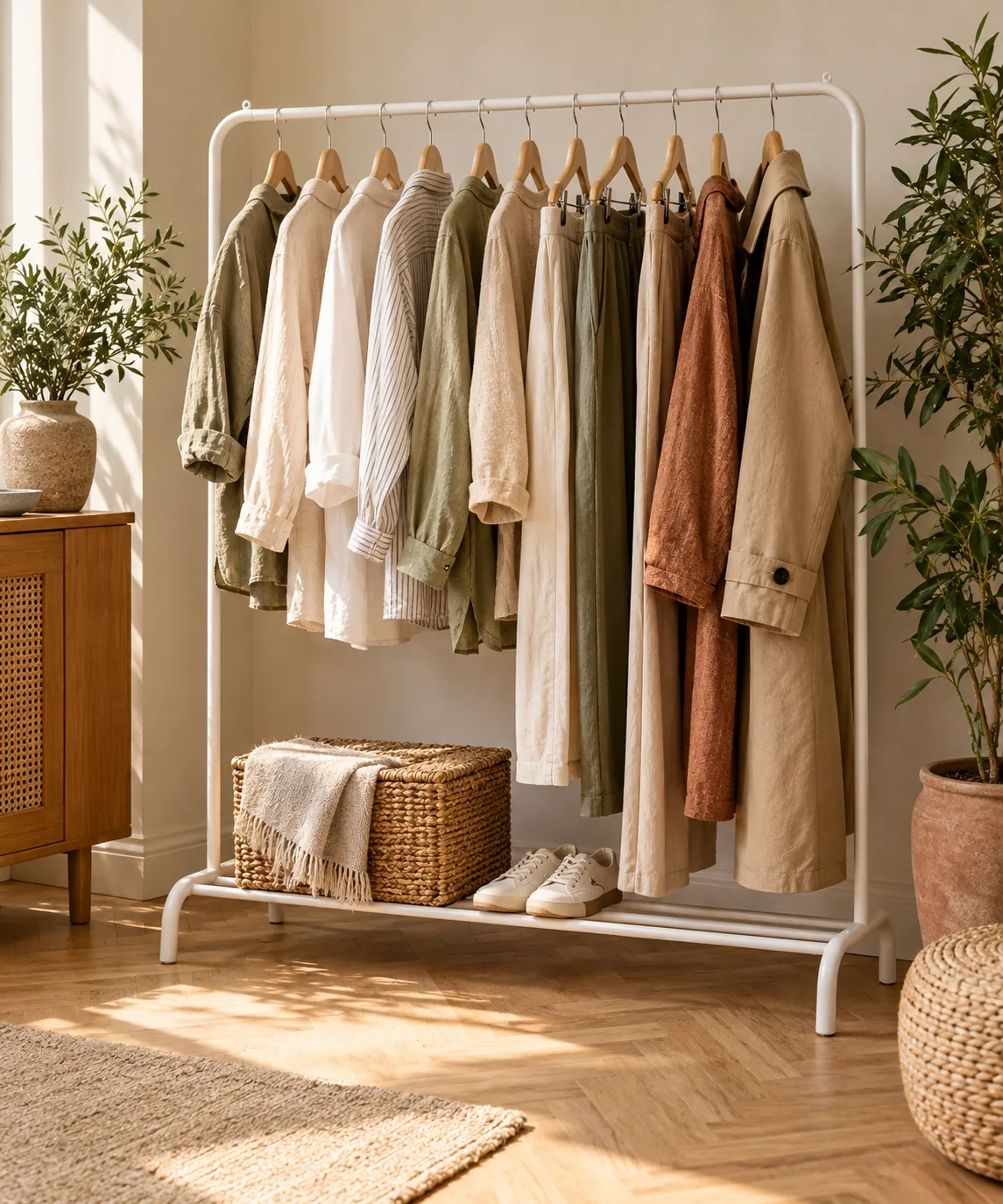
Selecting Footprint and Base Profiles
Measure the available floor expanse to maintain an unobstructed pathway between your bedroom entrance, closet alcove, and bed. A single-rail unit fitted with an integrated lower shelf adds stability across the base uprights while elevating storage baskets or footwear off the floorboards. Look for welded steel or tubular aluminum frames with broad, stable base feet rather than lightweight caster wheels that can shift unexpectedly during daily use. Units with wide A-frame or splayed-leg geometry provide greater resistance against tipping forward when supporting heavier garments such as winter coats, denim, or thick twill jackets.
Curating Garment Capacity and Spacing
Open clothing rails depend on disciplined capacity to prevent structural sagging and visual clutter. Rather than overloading the crossbar, hang only a curated collection of seasonal clothing, tailored trousers, and everyday shirts. Sturdy hangers made of smooth wood or durable coated metal distribute fabric weight evenly and preserve consistent separation between garments. Avoid clustering multiple items on single hangers, as excess localized weight can bow the horizontal bar, stress frame joints, and cause longer hemlines to drag against lower shelves.
Balancing Base Storage and Floor Clearance
Utilize the lower wire or slatted shelf to help keep the rack's center of gravity close to the floor. Position structured fabric storage boxes or felt bins across the bottom tier to hold folded knitwear, seasonal accessories, or heavier textiles that might stretch if placed on hangers. Distribute shoes and loaded bins evenly from side to side to avoid lopsided strain on the frame uprights. Ensure the unit rests on a level surface, applying adhesive felt floor protectors to the feet rather than using loose shims that could slip across smooth flooring.
Managing Seasonal Transitions and Fabric Care
Because open garment racks lack protective doors, fabrics remain vulnerable to settling household dust and ambient sunlight that can fade sensitive dyes over extended periods. Rotate off-season items into breathable under-bed boxes or closed storage containers to maintain comfortable spacing along the rail. When hanging full-length coats, arrange them toward the outer ends of the bar where lower storage baskets can be positioned out of the way. Avoid pushing hangers past the upright connection joints, as wedging clothes against the frame hardware can loosen fittings over time.
Routine Cleaning and Frame Maintenance
Freestanding metal rails naturally collect lint and airborne dust across exposed horizontal bars and support hardware. Wipe down the entire metal frame once a month using a dry microfiber cloth to remove dust buildup without scratching the finish. Routinely inspect the bolts, thumbscrews, or cam locks that secure the uprights to the lower base, as the movement of removing and rehanging clothes can gradually loosen structural hardware. If you notice any wobbling or tilt during use, reduce the hanging load immediately and tighten all connection points.
YOUR STARTING POINT
A little checklist.
Original editorial guidance. Images are AI-generated concepts, not photographs of completed projects. Our sources and approach.
Questions to consider
How do I prevent clothes from gathering dust on an open rail?
Rotate off-season garments into lidded storage bins and reserve the rail for frequently worn essentials. Breathable garment shoulder covers can protect delicate fabrics, and wiping the top horizontal bar with a dry microfiber cloth prevents dust transfer.
Can standard lightweight plastic hangers support heavier garments?
Lightweight plastic hangers can bow or snap under heavier outerwear and allow garments to slide together. Solid wooden or sturdy tubular metal hangers offer greater rigidity, keeping fabrics evenly separated and supporting heavy coats without deforming.
What should I do if the clothes rail begins to lean or wobble?
Immediately remove heavy garments to relieve structural tension. Confirm the rack rests on a level surface, evenly distribute storage containers across the bottom shelf to stabilize the base, and tighten all assembly bolts with the appropriate tool.