Sage and Cream Interiors · THE GUIDE
Organize Wardrobe Upper Shelves With Labeled Sage Fabric Bins
Upper wardrobe shelves often turn into disorganized drop zones because contents remain out of direct eye level. Introducing uniform fabric storage bins in soft sage green introduces visual order to tall storage cavities while shielding rarely used items from ambient dust. Paired with cream interiors, this soft hue maintains an airy aesthetic across overhead space. A structured bin system simplifies seasonal transitions by grouping light accessories into manageable units. Clear labeling prevents unnecessary rummaging, allowing you to identify stored scarves, knitwear, or swim accessories from the floor before retrieving a single container.
Jump to the checklist ↓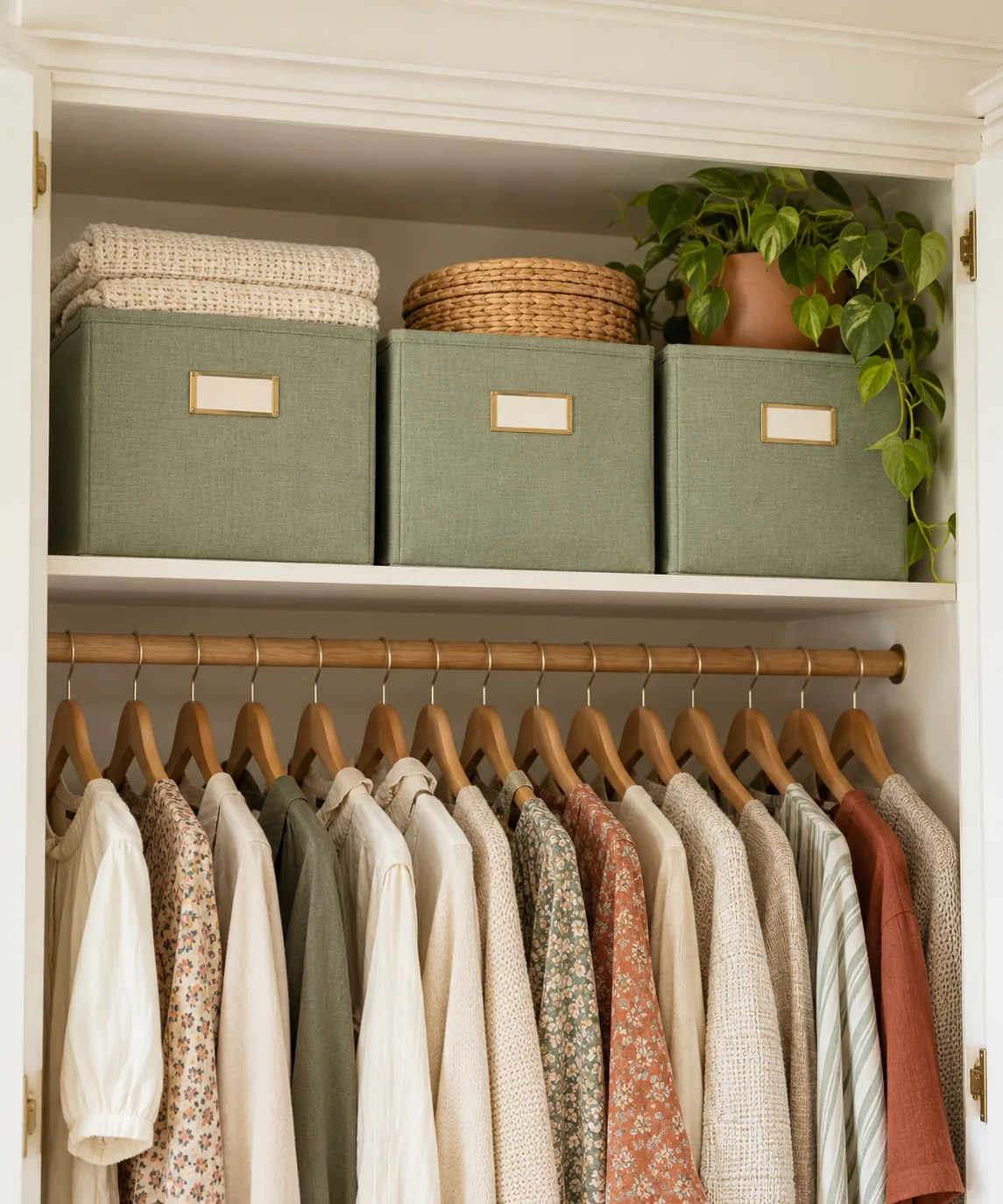
Shelf Dimension Checks and Bin Selection
Measure the wardrobe shelf depth, height clearance, and total width before acquiring bins. Upper shelves frequently possess overhangs or face frames that restrict clearance below the ceiling line. Ensure at least three to five centimeters of vertical breathing room above each bin so you can easily pull containers forward without catching. Select collapsible fabric cubes with rigid base inserts that maintain their shape when partially filled. Soft sage textiles absorb harsh shadows in wardrobe recesses, creating a tidy upper boundary that coordinates gracefully with light woodwork.
Categorizing Soft Seasonal Accessories
Upper storage operates most effectively when reserved for low-frequency items rather than everyday garments. Group accessories by functional season, such as dividing winter wool gloves from lightweight summer sun hats. Keep individual bin contents lightweight so lifting stays safe and manageable. Avoid overfilling bins past the rim, which distorts fabric walls and makes sliding containers across the shelf difficult. Placing soft, folded items vertically within the bin allows you to survey the contents instantly upon pulling the bin down.
Clear Labeling for Overhead Visibility
Identify items without taking bins down by attaching high-contrast cream labels to the front panels. Use cardstock tags slipped into metal label holders or stitched fabric sleeves, which remain neat over repeated handling. Write legible categories in dark lettering sized for identification from standing eye level. Keep category descriptors broad, such as cold weather knitwear or travel wraps, to maintain flexibility throughout the year without requiring newly printed labels every time you reorganize internal wardrobe contents.
Safe Retrieval Habits and Placement
Place the heaviest containers on lower intermediate shelves, reserving light fabric storage exclusively for top zones. When retrieving high bins, utilize a stable non-slip step stool rather than stretching past your comfortable vertical reach. Pull bins straight out by the sewn handle using one hand to support the container base as it clears the shelf edge. Maintaining manageable bin weights ensures safe single-person handling and prevents strain when returning bins to elevated positions after sorting seasonal gear.
Routine Care and Seasonal Rotation
Dust tends to accumulate on elevated horizontal surfaces over time, requiring periodic light maintenance. Vacuum fabric bin exteriors twice a year using a soft upholstery attachment during your seasonal closet swap. Wipe the exposed wardrobe shelving with a dry microfiber cloth before returning bins to their positions. If storing woolens, confirm items are washed thoroughly before bin storage to deter fiber pests. Keeping a light cedar block wrapped inside breathable paper prevents direct contact with fabric linings.
YOUR STARTING POINT
A little checklist.
Original editorial guidance. Images are AI-generated concepts, not photographs of completed projects. Our sources and approach.
Questions to consider
How do I choose between open bins and lidded fabric boxes?
Open bins offer rapid retrieval for frequently swapped seasonal gear, while lidded boxes offer better dust protection on tall closet shelves. Select lidded options if the shelf sits in an open-concept wardrobe without protective exterior doors.
Can I store heavy shoes inside these upper shelf fabric bins?
Footwear should remain on lower racks because excessive weight strains fabric seams and increases drop hazards. Reserve high fabric cubes strictly for lightweight textiles such as hats, wraps, scarves, or folded seasonal gloves.
What is the best way to clean sage fabric storage containers?
Brush exterior surfaces with a soft dry lint roller or light vacuum attachment. Avoid saturated liquids or harsh spot removers, which can warp interior cardboard stiffeners and cause fabric dyes to bleed into interior shelf paint.