Reading Corners · THE GUIDE
Outfit a Studio Bed-Alcove Divider as a Personal Reading Seat
In open studio apartments, freestanding room divider cabinets delineate sleeping alcoves while presenting an expansive, underutilized reverse panel to the main living area. Pairing this vertical surface with a dedicated reading setup creates a comfortable personal nook without requiring permanent architectural renovations. Rather than mounting structural weight-bearing seating onto furniture carcasses—which creates significant tip hazards and structural failure risks—a safer approach combines a sturdy, freestanding compact chair or bench with low-profile divider-mounted accessories. With appropriate clearance planning, reversible organizer attachments, and focused task lighting, the divider becomes an efficient reading backdrop.
Jump to the checklist ↓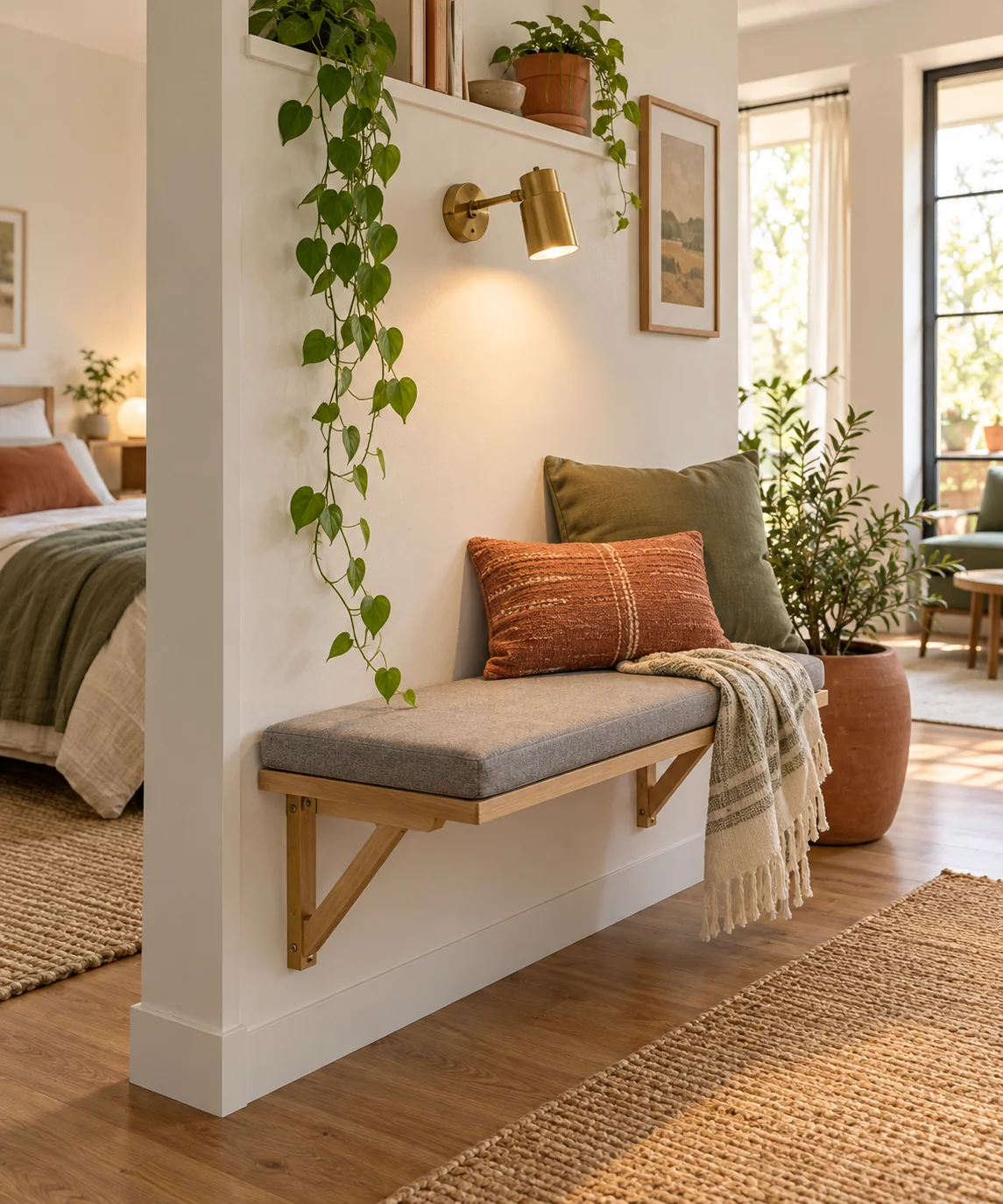
Divider Stability and Weight Limitations
Freestanding room dividers and storage units are engineered to support distributed interior shelf loads, not dynamic human seating weight. Never attempt to mount folding benches or weight-bearing brackets directly to cabinet backs or vertical divider panels, as dynamic seated loads can pull hardware loose or cause tall furniture to tip forward unexpectedly. Always secure freestanding dividers according to manufacturer anchoring instructions, and keep all seating strictly independent and floor-supported.
Clearance Planning Around Studio Circulation
Integrating a reading seat beside a studio partition requires preserving functional walking routes across the room. Select a compact, low-profile freestanding chair or small upholstered bench that leaves adequate space along primary pathways toward the sleeping area, kitchen, or windows. When planning the layout, ensure room occupants can stand, stretch, and move comfortably past the furniture without snagging clothing or squeezing through narrow gaps.
Task Lighting and Cord Management
Dedicated illumination supports comfortable reading without relying on harsh overhead fixtures. Opt for a slim, battery-powered wall light or a lightweight plug-in task lamp mounted with non-destructive adhesive brackets or clamped to non-structural divider edges where permitted by the manufacturer. If utilizing a plug-in lamp, route power cables cleanly down corners using adhesive cord channels to keep walking zones free from trip hazards and prevent tension on the cord.
Backdrop Comfort and Sound Dampening
A hard laminate or wood veneer cabinet back can feel cold and echo ambient apartment sounds. Soften the reading corner by mounting lightweight decorative acoustic felt tiles, a suspended fabric wall hanging, or a flat upholstered back pad using hook-and-loop strips or removable picture-hanging strips. This provides a gentle leaning surface behind your freestanding chair while dampening noise transmission between the living space and the sleeping alcove.
Slim Storage and Low-Profile Organization
Keep the area tidy and functional by outfitting the divider back with lightweight, low-profile storage accessories. Install a shallow fabric pocket organizer or a slender picture ledge rated strictly for a few paperbacks, reading glasses, and bookmarks. Ensure mounted accessories do not protrude into walking paths or exceed the safe weight capacity of the divider surface, and periodically inspect all non-permanent mountings for stability.
YOUR STARTING POINT
A little checklist.
Original editorial guidance. Images are AI-generated concepts, not photographs of completed projects. Our sources and approach.
Questions to consider
Why shouldn't a folding seat be mounted to the back of a room divider cabinet?
Room divider backs typically consist of thin hardboard or veneer that cannot support dynamic human weight. Attaching a bench creates severe leverage that can split the panel, pull fasteners free, or pull the entire storage unit over.
What is the safest seating option for an alcove divider reading nook?
A standalone, low-profile accent chair, compact slipper chair, or solid wood bench resting entirely on the floor provides reliable stability and can be easily shifted for cleaning or rearranging.
How can I attach reading accessories without damaging rental furniture?
Use removable damage-free adhesive strips, lightweight hook-and-loop fasteners, or hanging fabric organizers that drape over the top panel without requiring structural drilling or permanent alterations.