Small Kitchen Organization · THE GUIDE
Over-the-Cabinet-Door Pocket for Cutting Boards
Flat wooden and composite prep boards consume substantial flat shelf space or slide awkwardly between upright pans. An over-the-cabinet-door pocket captures vertical storage on the interior face of lower kitchen cabinets, transferring thin items out of primary shelving zones without requiring screw holes into cabinet casework. Because base cabinetry layouts vary with interior pull-out trays, adjustable shelf setbacks, and sink plumbing runs, verifying internal physical clearance before adding door-hung organizers remains essential. Observing door hinge behavior, existing door alignment, and the thickness of both the rack and your boards ensures the cabinet closes squarely without catching on interior millwork or straining hinge hardware over sustained daily use.
Jump to the checklist ↓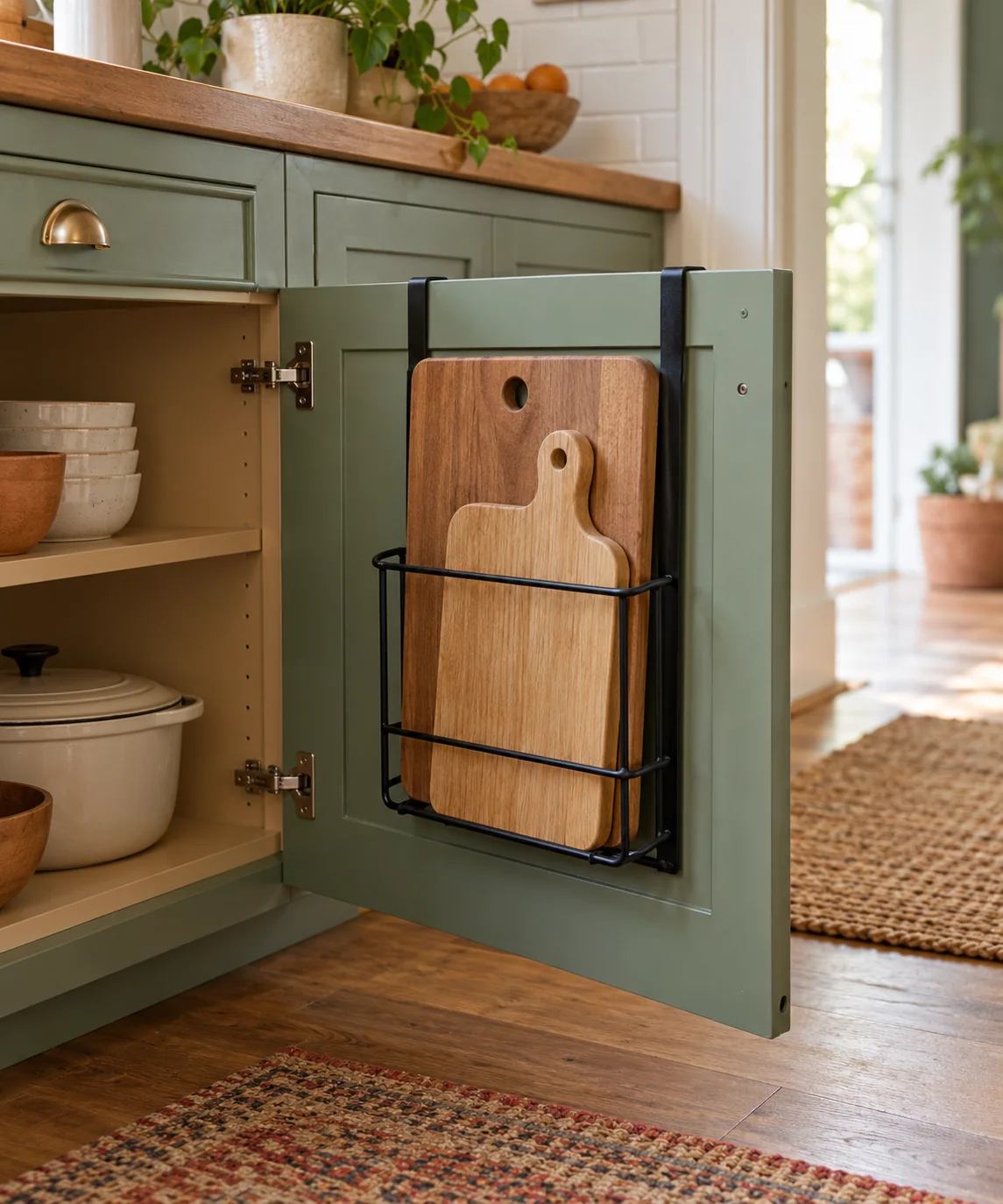
Checking Cabinet Depth and Interior Obstructions
Before choosing an over-the-cabinet storage rack, assess the open space between the closed door panel and the interior shelves. Cabinet interiors differ significantly across manufacturers: some shelves sit flush with the front frame, while others provide recessed spacing. Measure the physical depth of the wire pocket together with your intended cutting boards to confirm they will clear internal shelving, center stiles on double doors, pull-out wire baskets, or under-sink drainage pipes. If the total combined depth exceeds the available interior void, the door will bind, rebound against the latch, or exert continuous outward leverage against the hinge screws.
Evaluating Hinge Condition and Hardware Limitations
Door hinges on base cabinets are sized to handle the weight of the wood or composite door panel plus normal opening friction. Adding storage to the door interior introduces eccentric cantilevered loads that can accelerate hinge wear, loosen screw mountings, or pull doors out of vertical alignment. Avoid loading door organizers with dense butcher blocks, heavy stone pastry boards, or multiple layered cutting slabs. Instead, limit door-mounted storage to slim utility boards and monitor the cabinet door for subtle signs of sagging, rubbing at the bottom rail, or resistance when latching shut.
Testing Clearance with Temporary Positioning
Verify how the rack and boards interact with your specific cabinetry before loading items permanently. Rest the over-door hooks across the upper edge of the door and slide the boards into place, then close the door slowly by hand. Observe the top edge clearance between the hanging bracket and the countertop overhang or cabinet face frame, as narrow reveals may rub against metal brackets. Also confirm that the lower portion of the basket does not impact the bottom cabinet shelf or catch against drawer runners inside the box. If contact occurs, shifting the rack sideways or opting for an alternate storage location protects the cabinet joinery.
Managing Moisture and Board Dryness
Enclosed base cabinets lack active air circulation, creating a microclimate where trapped moisture can deteriorate cabinetry and kitchenware alike. Never store cutting boards in a door organizer while they remain damp from washing or sanitizing. Stowing moist wooden, composite, or bamboo boards inside a dark, confined cabinet can encourage surface mold, degrade timber laminations, and cause wood to warp unevenly. Ensure cutting boards dry completely in an open, ambient dish rack before returning them to the door pocket, and select an open wire basket design to permit ongoing ambient ventilation across the board faces.
Protecting Door Finishes and Hinge Fasteners
Repeated door swinging can cause metal over-door brackets to shift slightly, which may burnish or scratch finished cabinet surfaces over time. Check whether the rack's hanging brackets incorporate padded lining, or place thin protective felt or foam shims between the bracket channel and the cabinet door edge to buffer high-contact points. Periodically inspect hinge mounting screws into both the door panel and the cabinet frame, tightening any hardware that develops play under regular use. Keep the wire basket clean by wiping away dry crumbs, seasoning dust, or wood debris that collects in the bottom tray.
YOUR STARTING POINT
A little checklist.
Original editorial guidance. Images are AI-generated concepts, not photographs of completed projects. Our sources and approach.
Questions to consider
Can over-the-cabinet racks be used on frameless cabinet doors?
Frameless European-style cabinets feature very tight margins between the top door edge and the countertop or drawer above. Check the manufacturer's specified bracket thickness against your cabinet's existing gap, as brackets that rub against the face frame can prevent smooth closure and wear down finish edges.
How can you tell if door storage is overloading a cabinet?
Signs of overload include doors that drag against the bottom cabinet frame, latch mechanisms failing to engage without manual lifting, loose hinge screws, or widening gaps along the top reveal. If any of these symptoms appear, remove heavy items and inspect the hinge fastening.
How do you stop hanging door racks from rattling when opened?
Vibration and rattling can be mitigated by placing small adhesive silicone or rubber bumpers on the lower rear contact points of the wire frame. These bumpers cushion movement against the door face while preventing metal wire from scuffing cabinet paint or varnish.