Kitchen Herb Gardens · THE GUIDE
Over-the-Sink Cutting Board with Cutout Planter Well
Galley kitchens often present a trade-off between open meal-prep space and culinary herb displays. A sink bridge board designed to span an undermount or drop-in basin utilizes otherwise open basin space to extend workable counter area. Incorporating a dedicated, sealed receptacle for a potted herb brings fresh sprigs directly into the prep zone without cluttering standard counters. However, keeping live plants near food prep surfaces requires strict attention to kitchen hygiene and water containment. Choosing stable, properly fitted bridge boards and maintaining physical separation between potting soil and cutting surfaces preserves both safety and practical workspace utility.
Jump to the checklist ↓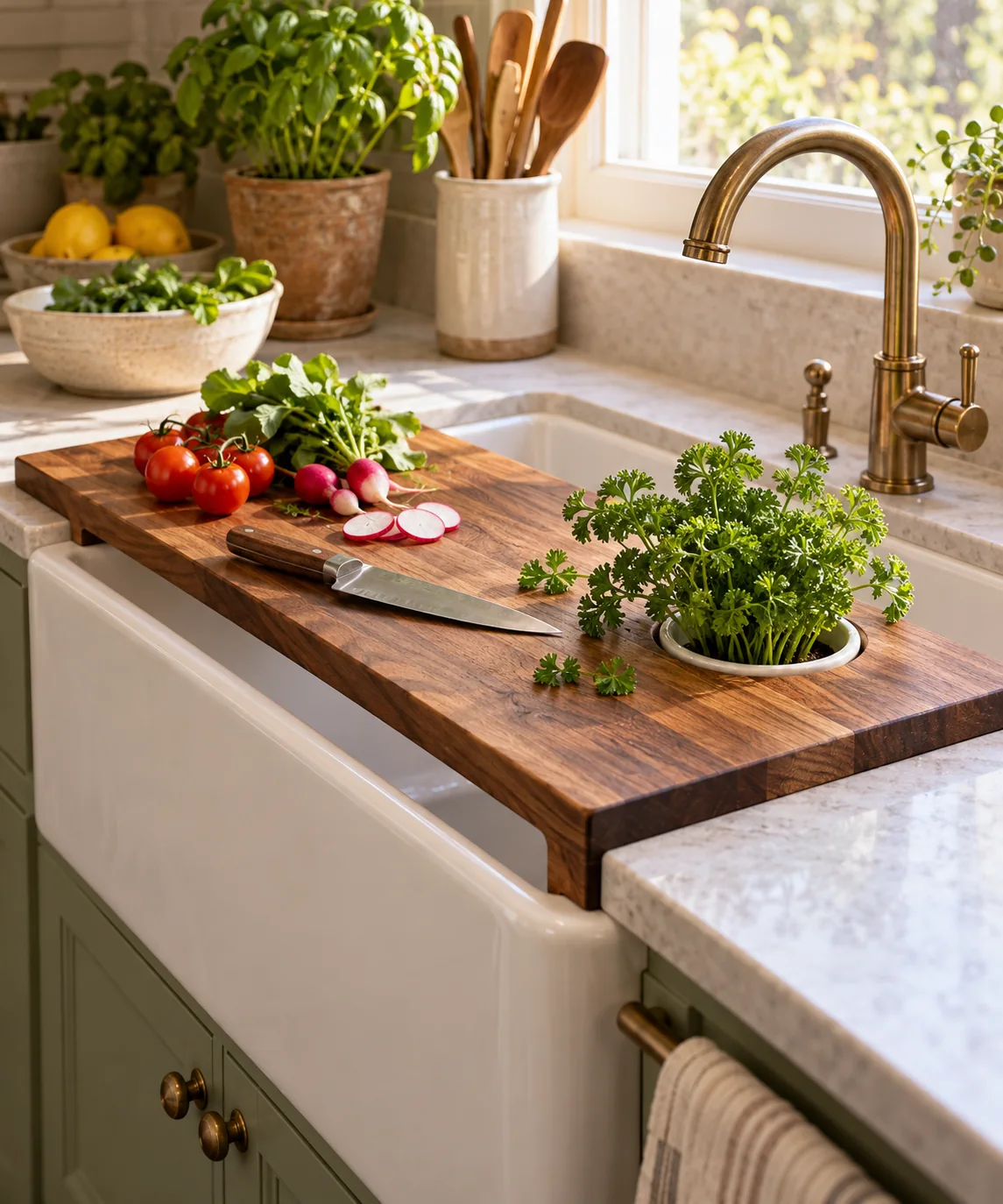
Sink Compatibility and Board Stability
Bridge boards rely on firm, level contact along the perimeter of the sink bowl. Before using any over-sink board, verify that your sink rim provides adequate flat support without rocking or slipping under downward pressure. Sinks with rounded edges or uneven tile grout lines may prevent the board from seating securely. Look for commercial bridge boards fitted with slip-resistant underside feet or dedicated channels designed to engage basin rims securely. Never rely on an unstable board for cutting tasks, as shifts during knife work create significant safety hazards.
Isolating Plants from Food Contact Surfaces
Integrating living plants into a cutting board assembly requires an impervious physical barrier between soil and cutting surfaces. Never fill a wood cutout with loose potting mix or let water drain from nursery pots onto cutting timber. Instead, use a completely sealed, non-porous ceramic or plastic cachepot that drops into the designated recess. The rim of the insert should sit securely so that loose peat, perlite, or irrigation moisture cannot spill onto the board, and the pot must be completely removable for cleaning.
Lighting Considerations Near Water Sources
Culinary herbs like flat-leaf parsley require several hours of strong illumination each day to prevent weak, spindly stems. If the sink sits directly beneath an unobstructed window, natural daylight may fulfill the plant's light needs. When supplementary artificial lighting is used over a sink area, ensure fixtures are rated for damp or wet environments and connected to ground-fault circuit interrupter (GFCI) protected circuits. Keep cords, switches, and non-waterproof fittings clear of splash zones and wet hands.
Food Safety and Cross-Contamination Controls
Positioning plants near a food prep surface introduces biological soil residues to kitchen workstations. Dedicate the cutting board portion exclusively to lower-risk prep, such as slicing washed bread, dry ingredients, or clean produce. Keep raw meats, poultry, and seafood completely away from the board and the adjacent planter. When harvesting herb stems, clip them above the rim of the pot with clean kitchen scissors, and rinse the harvested sprigs thoroughly in clean water before incorporating them into dishes.
Cleaning, Sanitation, and Board Storage
Routine kitchen sanitation requires separating the plant insert from the wooden board before washing. Remove the potted herb entirely before scrubbing the board with hot, soapy water, ensuring no soil enters the dish basin during food prep cleanup. Dry the wooden board thoroughly in an upright, well-ventilated rack to prevent warping or mold development along the sink-facing underside. Condition the wood periodically with food-grade mineral oil according to the manufacturer's directions, and inspect the rim contact areas regularly for wear.
YOUR STARTING POINT
A little checklist.
Original editorial guidance. Images are AI-generated concepts, not photographs of completed projects. Our sources and approach.
Questions to consider
Can herbs be planted directly into an opening cut into a wooden board?
No. Potting soil holds moisture against the raw wood, causing wood rot, bacterial growth, and board warping. Always use a solid, waterproof drop-in container that completely isolates soil and water from the board.
How do I prevent soil particles from contaminating the prep surface?
Keep the potting soil level well below the rim of the drop-in sleeve, top the soil with clean decorative pebbles if desired, and always snip stems carefully rather than pulling on roots.
What should I do if water splashes into the herb pot from the faucet?
Position the herb container on the side of the board farthest from the faucet spout, or angle the faucet stream away from the plant to prevent soil splashing onto adjacent prep areas.