Small Kitchen Organization · THE GUIDE
Over-the-Sink Roll-Up Bamboo Drying Mat Setup
Compact kitchens often face a shortage of usable countertop space, making bulky rigid dish racks difficult to accommodate. An over-the-sink roll-up bamboo drying mat utilizes the open space across your sink basin as a temporary staging and drying surface. Positioned securely across sink rims, the slatted platform supports drying hand-washed glassware, draining freshly rinsed produce, or holding lightweight prep bowls directly over the drain. Once kitchen tasks are finished, the mat rolls into a compact cylinder for streamlined storage, restoring complete access to the basin without demanding permanent counter square footage.
Jump to the checklist ↓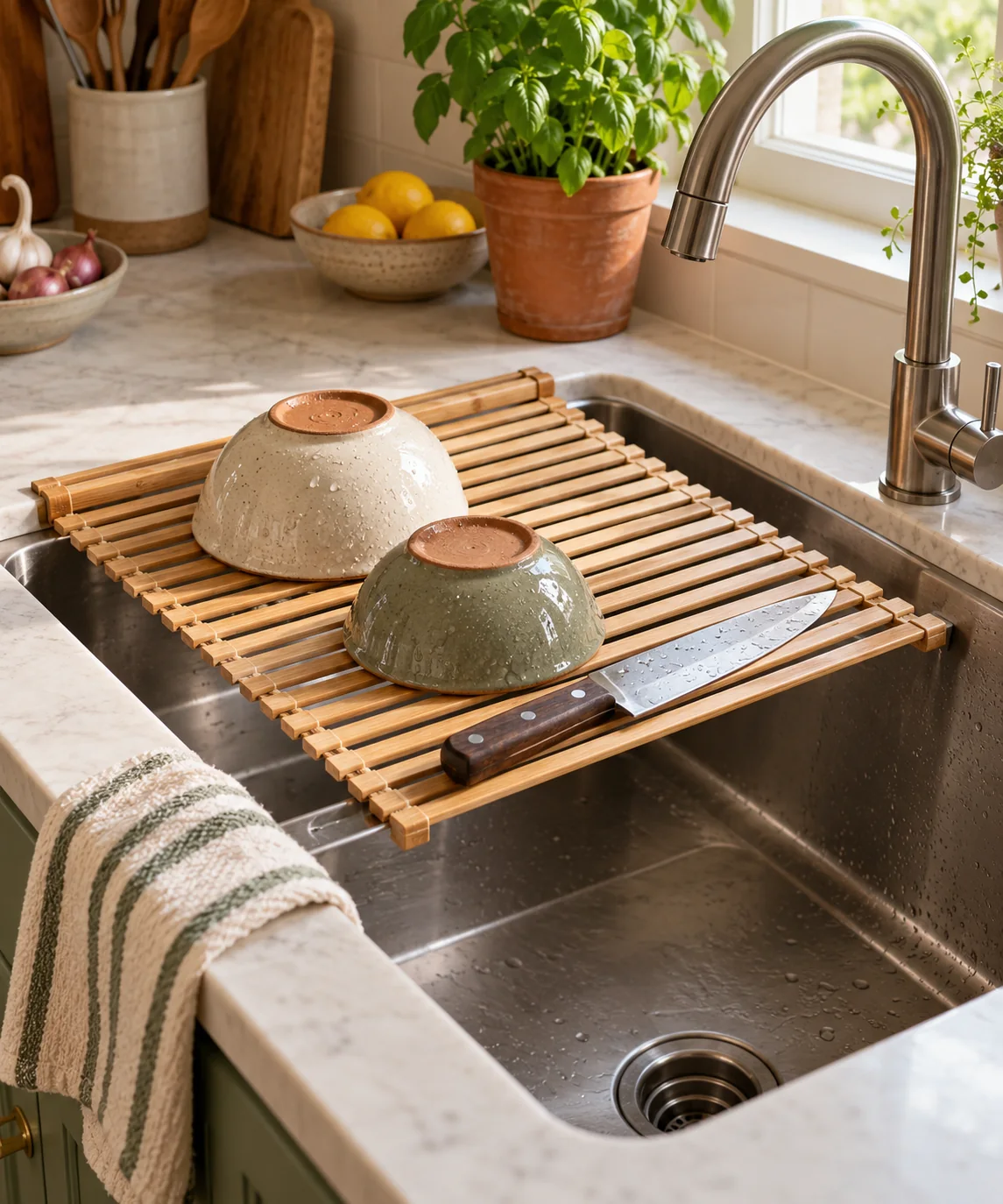
Measuring Sink Lip Contact and Basin Span
Safe use of an over-the-sink rack depends on sufficient, stable contact between the mat ends and the sink surround. Measure the outer front-to-back distance of your sink opening, noting whether your basin is a drop-in model with a raised rim or an undermount style flush with the countertop. The mat must overlap the solid countertop or flat sink edge generously on both sides so that downward pressure cannot cause the ends to slip into the basin. Verify manufacturer dimensional limits and avoid spanning spans wider than the mat's rated specifications.
Using Partial Widths for Flexible Basin Access
A slatted roll-up mat allows for adjustable width depending on the task at hand. Instead of covering the full sink, unroll only several slats across one side of the basin. This partial setup provides an airy draining platform for clean drinkware or washed vegetables while leaving the faucet and drain strainer accessible on the open side. Rinsing produce on the clear side and moving it directly onto the slats keeps splashes contained within the sink perimeter while leaving working room beneath the faucet.
Observing Weight Limits and Structural Stability
Roll-up bamboo platforms are built for light to moderate dish draining and produce holding rather than heavy food preparation. Use the slatted surface for everyday ceramic mugs, lightweight plates, colanders, and washed greens. Do not set heavy cast-iron cookware, large filled pots, or heavy ceramic bakeware onto the span, as concentrated weight can crack individual bamboo slats or stretch connecting bands. Distribute items evenly across the width rather than piling weight onto the center point.
Drying Routines to Prevent Slat and Cord Mildew
Although bamboo is a dense grass that tolerates occasional water exposure, chronic dampness in an enclosed sink area promotes mildew growth along slats and connector webbing. After washing dishes or produce, shake residual water from the slats into the sink. Lean the open or loosely rolled mat upright against a wall or in a well-ventilated dish rack until completely dry to the touch. Avoid rolling a damp mat and storing it in a dark under-sink cabinet where stagnant air traps moisture against the joints.
Maintaining a Safe, Dedicated Prep Surface
While bridging an open basin provides convenient draining space, suspended roll-up slats should not serve as an active chopping board or heavy food-prep station. Placing a cutting board atop flexible slats can cause tilting, bowing, or sudden slipping under knife pressure, posing a significant injury hazard. Keep cutting and heavy slicing on a solid, flat countertop with a stable, non-slip base. Reserve the over-the-sink mat strictly for holding lightweight prep containers, rinsing colanders, or air-drying clean kitchenware.
YOUR STARTING POINT
A little checklist.
Original editorial guidance. Images are AI-generated concepts, not photographs of completed projects. Our sources and approach.
Questions to consider
Can I use an over-the-sink bamboo mat as a cutting board platform?
No, do not use the suspended mat as a base for cutting boards or knife work. The flexible slats can shift, bow, or slip under downward force, creating an unstable surface that increases the risk of knife slips. Always perform chopping tasks on a flat, solid countertop.
How do bamboo drying mats compare to stainless steel models?
Bamboo provides a softer, quieter surface that cushions delicate glassware and introduces a natural finish to the kitchen. However, bamboo and its flexible connector cords require thorough air-drying after each use to prevent mildew, whereas stainless steel racks are non-porous and dry more rapidly.
How should a bamboo roll-up mat be cleaned?
Wash the slats periodically with warm water and a small amount of mild dish soap, using a soft sponge to clean between crevices and along connecting cords. Rinse thoroughly, wipe away surface moisture with a clean towel, and allow it to dry completely in an open, well-ventilated area before rolling.