Bookshelf Styling · THE GUIDE
Pair Functional Ceramic Utility Crocks with Everyday Paperbacks
Everyday paperbacks often lack the structural rigidity to stand upright on their own, especially when shelved loosely. Plain ceramic utility crocks—traditionally manufactured for kitchen utensils or pantry preservation—offer an ideal solution by functioning as ballast and vessel simultaneously. Their thick stoneware walls and wide bases provide the mass needed to support leaning volumes without tipping. Furthermore, their open cylindrical form accommodates frequently used household implements like bone folders, brass bookmarks, reading glasses, or pencils. This pairing bridges utility and shelf styling, lending tactile warmth to utilitarian paper collections without demanding ornate, space-consuming decor.
Jump to the checklist ↓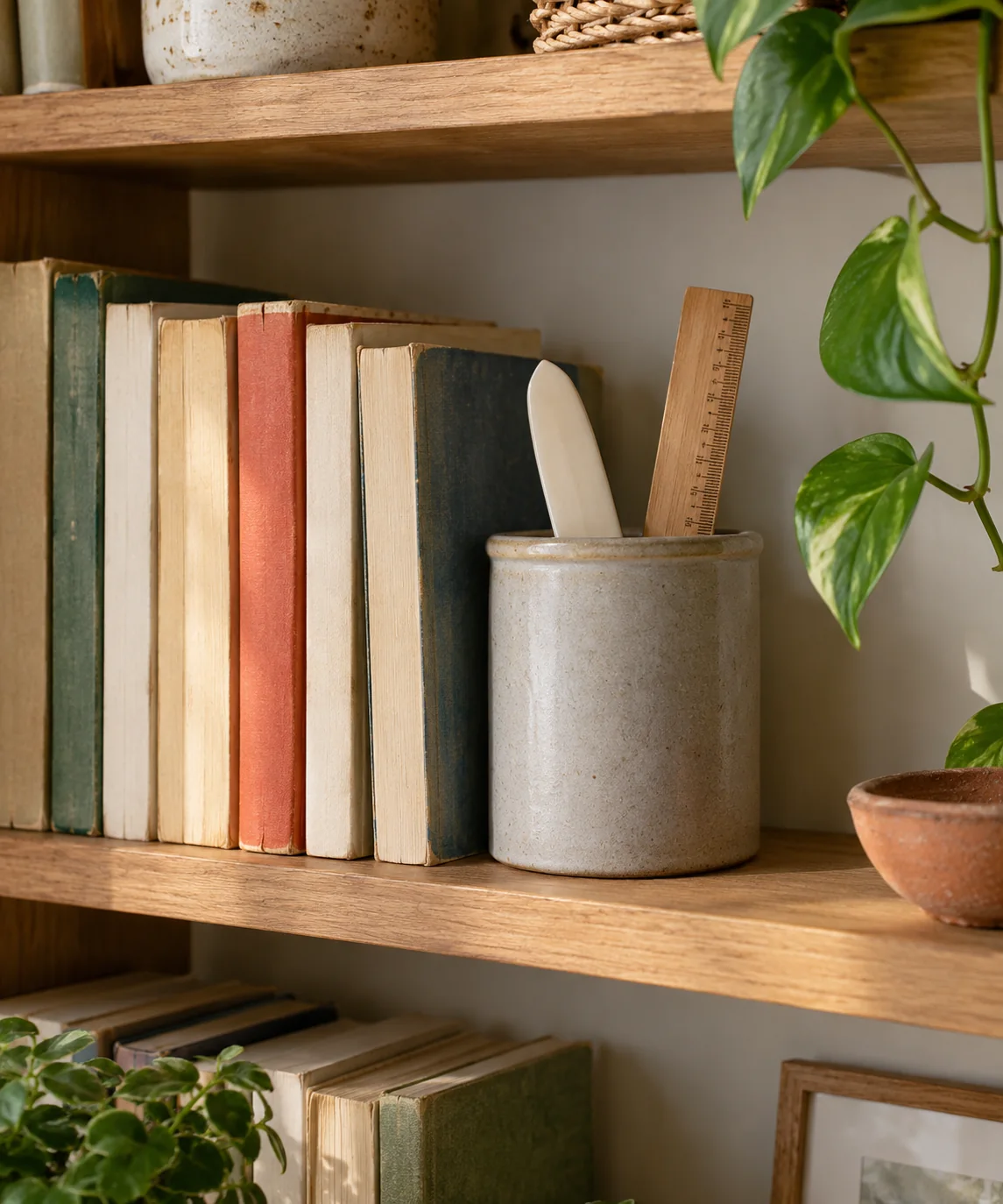
Choosing Stable Crock Dimensions and Profiles
A supportive crock should offer sufficient base diameter and height relative to the paperbacks you intend to stabilize. Straight-sided cylindrical crocks provide a flat vertical surface that sits flush against book blocks, preventing pages from fanning or covers from curling. Look for heavy stoneware with broad, flat bottoms that resist shifting on smooth shelving. Rounded or tapered vessels are less suitable because their curved walls allow book corners to lean inward at awkward angles under lateral pressure.
Protecting Shelving and Book Covers
Unglazed ceramic bases can feature rough kiln spurs or abrasive textures capable of scratching shelf paint or veneer. Examine the base of the crock before shelving and apply protective adhesive felt discs or a thin cork layer across the bottom rim. In addition, place paperbacks with sturdy, laminated covers directly against the vessel's exterior rather than fragile vintage volumes, minimizing potential friction wear on delicate paper stock during daily use.
Curating Practical Shelf Accessories
An open utility crock offers convenient storage for everyday reading accessories and small desktop tools. Store slender items upright, such as wooden rulers, reading glasses, letter openers, brass bookmarks, or drafting pencils. Avoid overfilling the crock with excessive clutter; keeping a curated selection of tools maintains visual balance and preserves a low center of gravity, which helps prevent the crock from shifting when a nearby book is removed.
Arranging Paperbacks for Proper Support
Paperbacks lack the rigid spines of hardcovers and tend to bow if placed under unbalanced lateral force. Shelve volumes with enough firmness to keep them upright, but avoid wedging them tightly against the crock, which can scuff covers when pulling books out. For longer runs of paperbacks, place a second crock or solid support at the far end to distribute lateral pressure evenly and prevent the middle volumes from slumping outward.
Cleaning Stoneware and Preserving Shelf Materials
Stoneware crocks collect atmospheric dust and surface oils over months of display. Clean the vessel periodically by emptying its tools and wiping both interior and exterior surfaces with a clean cloth. If washing with water, allow the ceramic to dry thoroughly in an open space before returning it to the shelf, as retained moisture on the base could transfer to nearby paper goods or wood finishes. Regularly inspect protective felt pads to ensure they remain intact.
YOUR STARTING POINT
A little checklist.
Original editorial guidance. Images are AI-generated concepts, not photographs of completed projects. Our sources and approach.
Questions to consider
Can ceramic crocks add too much weight to lightweight composite shelving?
Dense stoneware adds noticeable localized weight. Check your bookcase manufacturer's shelf ratings, and position heavy ceramic containers near side upright panels rather than at the center of long, unsupported composite spans to reduce deflection risk.
Can glazed kitchen crocks be used instead of unglazed stoneware?
Yes, glazed crocks work well and offer smooth surfaces that are simple to wipe clean. Because glazed bases can be slick against polished shelving, fit the bottom rim with non-skid felt or rubber pads to prevent unintentional movement.
How do I prevent paperbacks from leaning and creasing against the vessel?
Ensure the crock features straight, vertical walls rather than a flared rim or curved belly. Keep the paperback row moderately sized so lateral pressure remains manageable, and use an opposing bookend or wall support to keep the books plumb.