Small Kitchen Organization · THE GUIDE
Pan Lid Organizer Mounted Inside Lower Cabinet Doors
Storing cookware lids inside base cabinets often leads to disordered stacks, chipped edges, and awkward rummaging during meal preparation. Placing a vertical lid organizer against the interior of a lower cabinet door can keep matching covers organized and immediately accessible. However, successful door storage depends on understanding internal clearances, verifying hinge and door weight capacities, and choosing non-invasive, reversible hanging systems. Careful planning prevents lids from colliding with internal shelving, protects cabinet finishes, and avoids placing excessive structural stress on door hinges.
Jump to the checklist ↓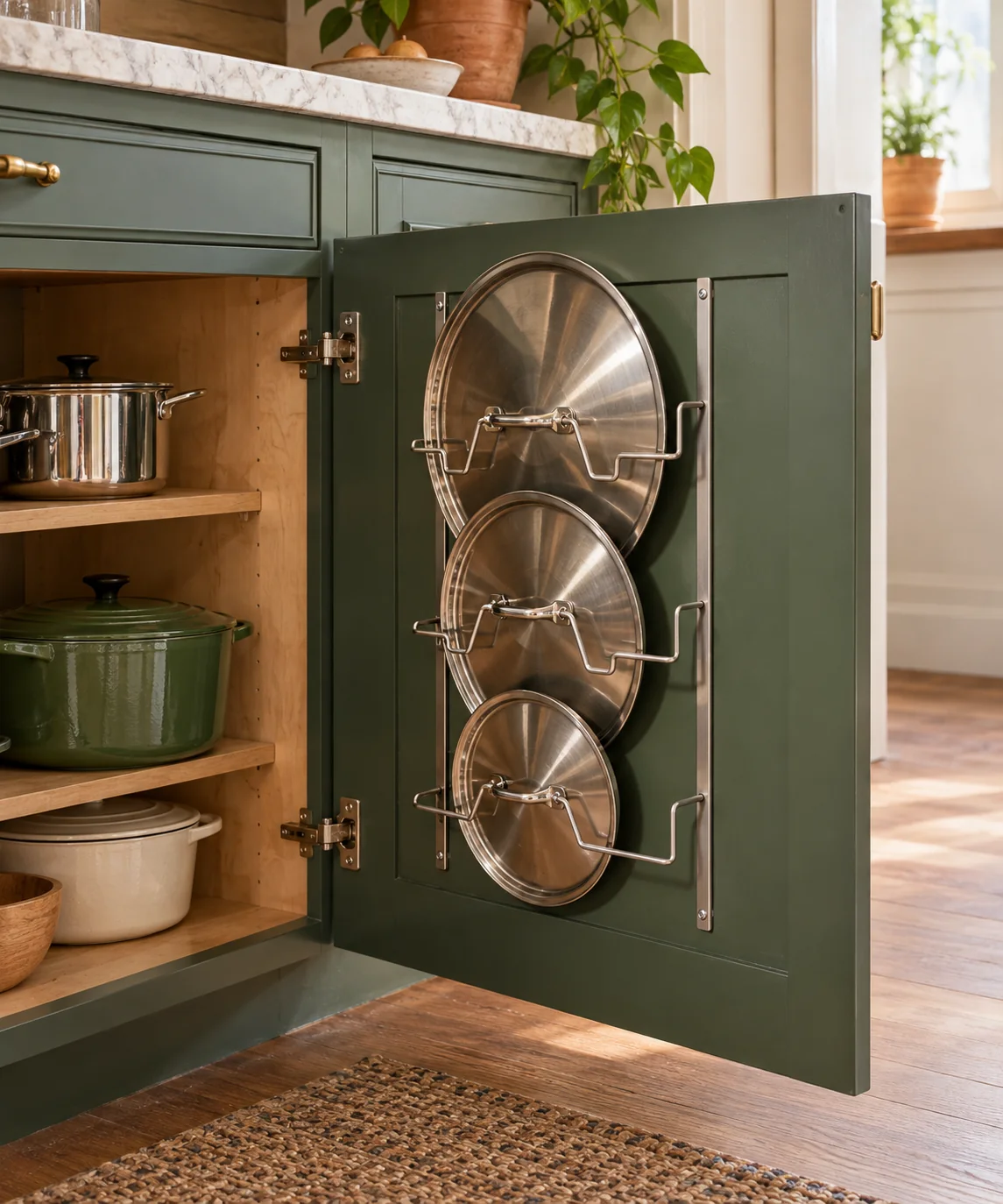
Checking Interior Cabinet Clearance and Shelf Setback
Before planning door-side storage, examine the internal clearance of the cabinet when the door is fully shut. Many base cabinets feature internal shelves that extend almost flush with the front face frame. A rack of lids typically adds two to four inches of profile depth into the cabinet interior, depending on lid curvature and handle style. If your interior shelves are not recessed, hanging lids may strike the shelf front and prevent the door from latching. Confirm that adjustable shelves can be set back toward the rear pins without structural modification before purchasing door hardware.
Reviewing Cabinet Construction and Non-Invasive Mounting
Cabinet door styles vary considerably in construction, from flat slab doors to five-piece rail-and-stile frames with thin floating center panels. Fastening screws into thin decorative panels risks splitting the wood, poking through the exterior finish, or voiding cabinetry warranties. For residential cabinetry, consider reversible non-drilling options such as over-the-door hanging brackets or manufacturer-approved removable adhesive organizers rated for the intended weight. Always follow the hardware manufacturer instructions and test compatibility on an inconspicuous area.
Assessing Hinge Tolerances and Door Weight Distribution
Cookware lids made of heavy tempered glass, cast iron, or thick stainless steel add noticeable swinging load to cabinet hinges. Over time, excessive weight can loosen hinge mounting plates, strain mounting screws, or cause doors to bind against cabinet frames. Consult the cabinet manufacturer or hardware specifications to determine whether your hinges are rated for secondary accessories. As a general rule, store heavy cast-iron or Dutch oven lids flat on interior shelves, reserving door racks only for lightweight saucepot or skillet covers.
Arranging Lids for Stability and Quiet Operation
Evaluate lid shapes, diameters, and handle profiles before placing them in vertical organizers. Domed lids with large knob handles require greater outward depth than flat covers with low-profile loop handles. Arrange items so the lowest tier holds the larger, heavier lids, which keeps the center of gravity closer to the lower hinge pivot and reduces door sway. Ensure lid rims sit securely within holder grooves so they do not dislodge, rattle, or shift when opening or closing the cabinet door during active cooking.
Protecting Cabinet Finishes and Routine Upkeep
Metal and glass lid rims moving against cabinet doors can scuff painted or stained wood over time. Applying small, self-adhesive silicone bumpers directly to contact points buffers movement and dampens metal rattling. Inspect adhesive mounts or bracket fittings periodically to verify that connections remain secure under regular kitchen humidity and repeated opening cycles. Clean organizers and door panels periodically with a mild, non-abrasive surface cleaner to prevent the accumulation of airborne kitchen grease.
YOUR STARTING POINT
A little checklist.
Original editorial guidance. Images are AI-generated concepts, not photographs of completed projects. Our sources and approach.
Questions to consider
Can cabinet doors support the weight of multiple cookware lids?
Hinge capacities vary widely by brand, material, and age. While many quality hinges can support modest additions, hanging multiple heavy glass or cast-iron lids can cause door sag or hinge wear. Verify hardware ratings with the manufacturer, and restrict door storage to lightweight covers.
What options exist if interior cabinet shelves block door organizers?
If interior shelves extend to the door frame, check whether the shelf can be repositioned onto deeper interior support pins. If the shelves are fixed or non-adjustable, avoid door-mounted storage and consider modular countertop or pull-out shelf racks instead.
How can you prevent lids from rattling when opening cabinet doors?
Select organizers with rubberized or coated cradles that cushion the lid rims, and install clear adhesive silicone bumpers on the cabinet door where contact occurs. Ensuring each lid fits snugly in its designated slot also reduces movement.