Kitchen Herb Gardens · THE GUIDE
Pantry Door Vertical Pocket Planter for Compact Greens
Standard interior kitchen storage often prompts interest in utilizing vertical space behind doors. Hanging an over-the-door pocket organizer can provide a convenient, reversible staging area for potted culinary greens, provided the door construction and environmental conditions support plant growth. Interior doors, particularly lightweight hollow-core designs, have structural limits that vary based on hinge gauge, screw embedment, and frame alignment. Culinary herbs also demand significant light and air exchange, which closed pantry doors cannot supply. By assessing door hardware, using self-contained waterproof liners, and treating the organizer as an accessible arrangement rather than an enclosed grow station, home cooks can keep compact herbs organized without risking moisture damage to door finishes.
Jump to the checklist ↓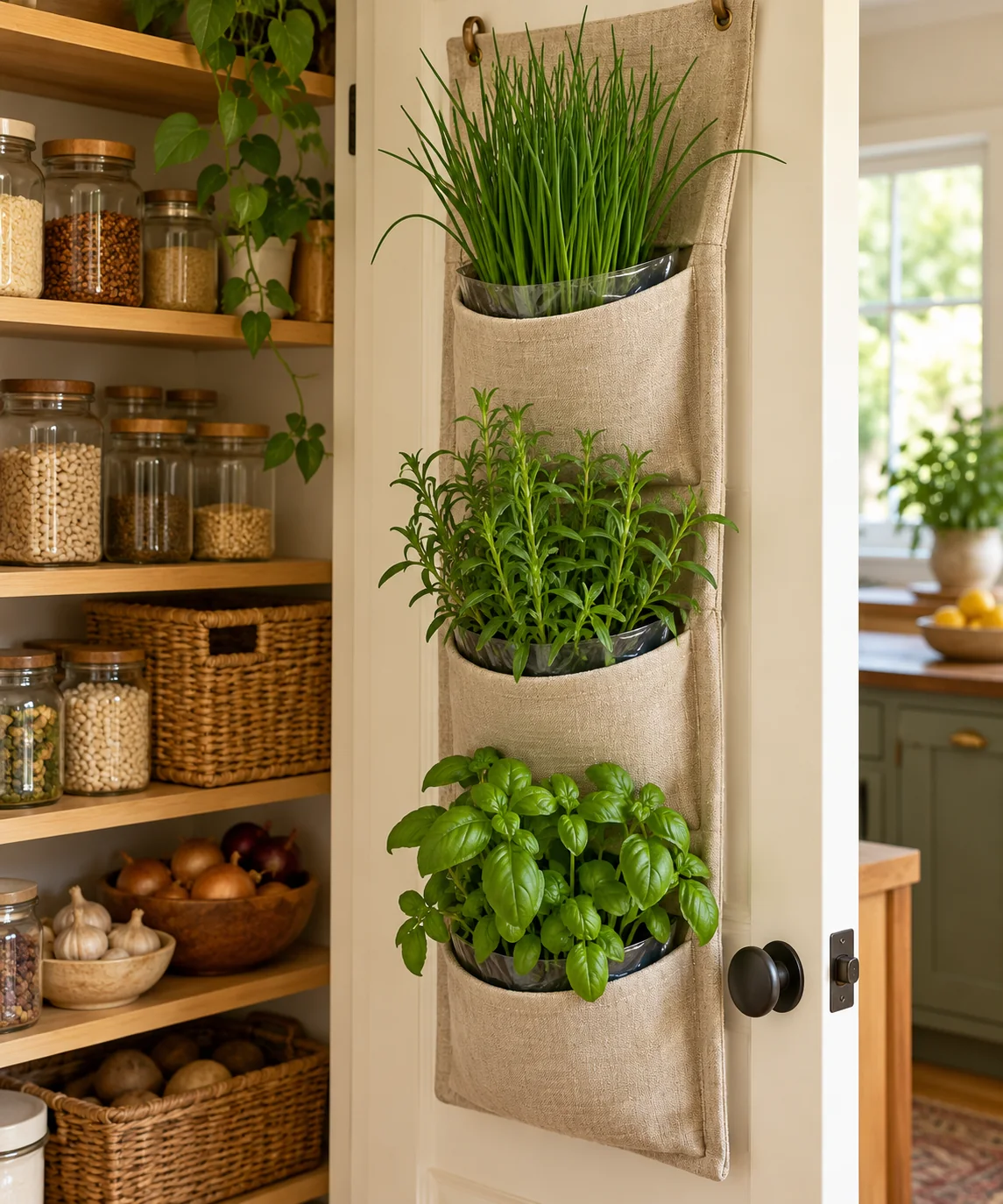
Evaluating Door Construction and Hardware
Before hanging any organizer on an interior door, inspect the hinges, screws, and frame alignment. Standard residential interior doors often feature hollow-core construction mounted with lightweight hardware that is not rated for heavy dynamic loads. Check with the door manufacturer or property maintenance guidelines if load ratings are uncertain, and observe whether hinges show any looseness or gap widening under normal operation. Instead of filling every pocket, start with just two or three small pots to observe how the door handles the added mass. Check that the door continues to swing freely without rubbing against the frame or dragging along the floor, and use soft protective pads behind contact points to reduce surface friction on painted finishes.
Moisture Protection and Pocket Liners
Fabric organizers naturally absorb humidity and allow spilled moisture to wick directly against wood or composite door surfaces. Because trapped dampness can degrade painted finishes or cause veneer delamination, each pocket must be fitted with a sturdy, completely waterproof liner before accepting a potted plant. Rigid plastic inserts or leak-proof container sleeves prevent irrigation seepage from contacting the outer fabric. Never place potting soil or loose media directly into textile pockets. Housing each herb in its own plastic nursery container inside a sealed liner isolates moisture and simplifies periodic cleaning.
Addressing Natural Light Limitations
Culinary herbs such as sweet basil, chives, and flat-leaf parsley require several hours of strong, bright daylight to sustain healthy leaf development. Standard pantry areas are typically shielded from natural light, meaning an organizer hung on a door will only receive adequate illumination when the door is open toward a nearby, unobstructed window or supplemental grow fixture. If the door faces a dim interior corridor or must remain closed for pantry ventilation and food safety, herbs will rapidly stretch, weaken, and drop foliage. Evaluate your kitchen layout realistically, and consider moving pots to a sunny windowsill if the door location does not receive sufficient natural illumination.
Irrigation Care and Runoff Prevention
Watering plants mounted to a vertical surface presents a constant risk of drips onto woodwork or lower tiers. To prevent standing water from accumulating inside pocket liners, avoid pouring water directly into pots while they hang on the door. Instead, lift individual nursery containers out of the organizer and carry them to the kitchen sink for watering. Allow the potting soil to drain thoroughly until all free dripping stops before returning the pots to their pockets. Inspect the base of the liners immediately after watering and wipe away any accidental condensation or stray moisture rather than letting water sit.
Air Circulation and Foliage Maintenance
Enclosed or semi-enclosed door alcoves often suffer from restricted airflow, which can foster fungal issues such as powdery mildew and encourage pests like fungus gnats or spider mites. Leave adequate space between potted tiers rather than packing pockets tightly, allowing ambient room air to circulate freely around foliage. Inspect stems and the undersides of leaves weekly for signs of distress or pests. If an individual plant shows signs of pest infestation or disease, remove it promptly from the organizer for treatment in an isolated, well-ventilated space to prevent issues from spreading to neighboring herbs.
YOUR STARTING POINT
A little checklist.
Original editorial guidance. Images are AI-generated concepts, not photographs of completed projects. Our sources and approach.
Questions to consider
Can I keep the pantry door closed while herbs are inside?
Culinary herbs generally decline in dark, enclosed spaces. If the pantry door must remain closed, the herbs will lack the light and air circulation needed for sustained growth, making a well-lit windowsill or designated plant shelf a more suitable choice.
How do I choose a suitable organizer for hanging on a door?
Look for organizers made from durable woven textiles with reinforced hanging grommets and wide, stable hooks that fit your specific door thickness without pinching the weatherstripping or door frame.
How should herbs be harvested from an over-the-door planter?
Gently lift the individual pot out of its pocket or support the container with one hand while trimming with clean kitchen shears. This prevents swinging the door or putting sudden uneven tension on the hanging hardware.