Household Reset Routines · THE GUIDE
Pantry Shelf Rotation for Studio Kitchen Open Shelving
Open pine shelves in a studio apartment demand consistent visual discipline and realistic stock rotation. Without cabinet doors to conceal mismatched packaging, dried staples quickly accumulate in half-empty bags that invite clutter and pantry pests. Implementing a rotation routine centered on uniform glass canisters preserves the visual calm of an open kitchen while protecting dry grains from moisture exposure. By transferring bulk goods into clear containers and systematically shifting older items toward the accessible front edge, you establish a functional storage pattern that keeps inventory visible, prevents duplicate purchases, and maintains clean vertical display lines.
Jump to the checklist ↓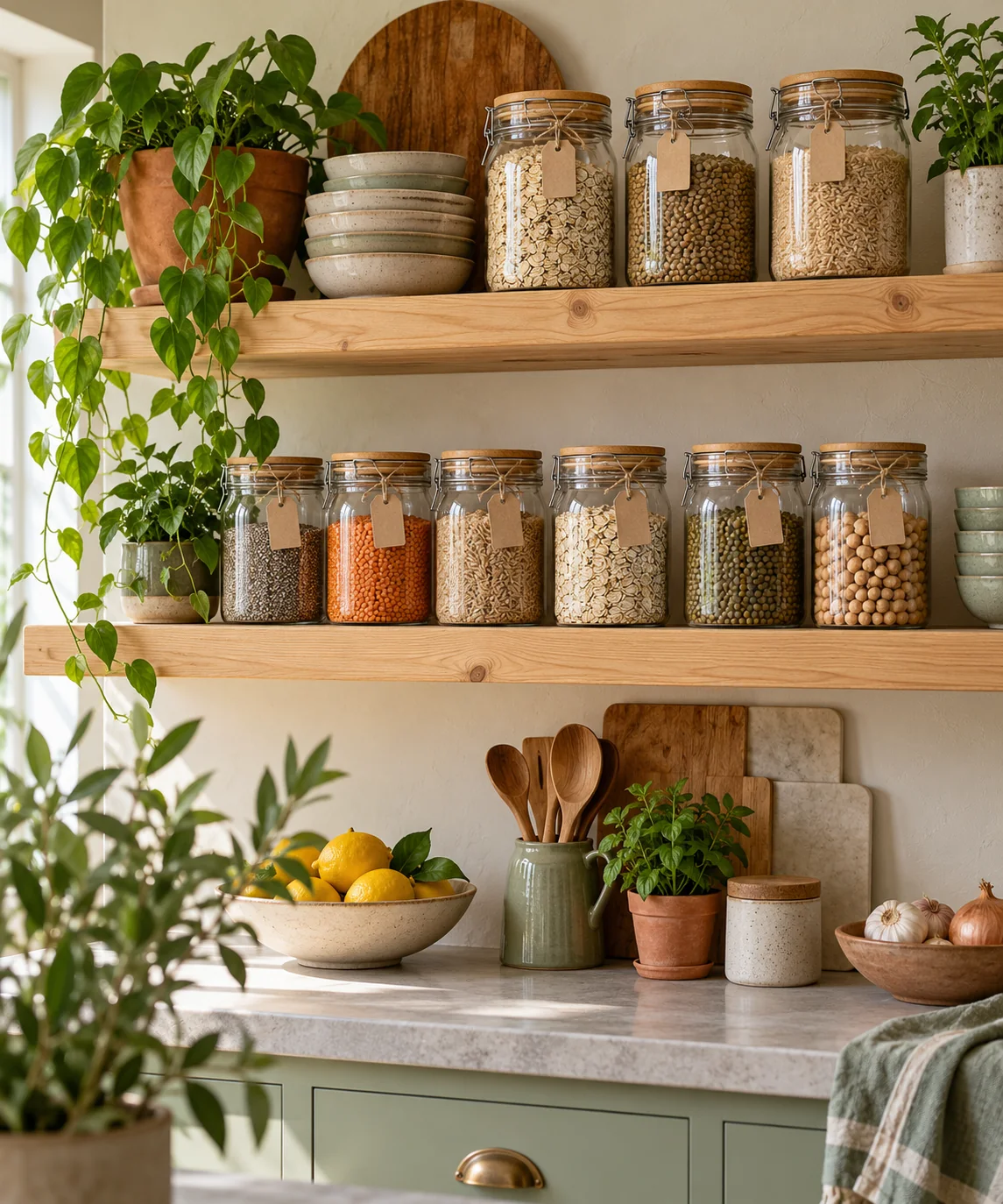
Visual Audit and Surface Preparation
Clear the open shelf completely before beginning the reorganization. Examine the timber for surface residue or dust, wiping the wood with a slightly damp microfiber cloth and drying it immediately to protect unfinished grain from moisture absorption. Inspect all paper bags, cartons, and existing jars for signs of settling dust or pantry pests. Discard any items that show moisture damage or stale odors. Staging the items onto a cleared prep counter allows you to view your total inventory volume before deciding which goods return to the shelf.
Decanting Strategy for Dry Staples
Select airtight glass jars sized specifically for your core staples, such as rolled oats, green lentils, and brown rice. Pour new packages into the jars carefully, leaving adequate headspace below the rubber seal to prevent spills when opening. Label the base or side of the canister with a small paper tag indicating the item name and month of purchase. Decanting eliminates crinkled plastic packaging, reduces visual clutter on open shelving, and keeps grain levels easily visible at a glance.
First-In, First-Out Canister Rotation
Maintain the classic first-in, first-out rotation method whenever refilling staples. If a partial quantity of rice or beans remains in a canister, pour the existing portion into a clean temporary bowl, add the newly purchased supply to the bottom of the glass jar, and return the older portion to the top. This ensures that the oldest grains are consumed first rather than buried under fresh purchases. For back-stock that does not fit into jars, reserve a dedicated small basket elsewhere.
Weight Distribution and Manufacturer Load Verification
Before loading open pine shelving with heavy glass containers, verify the manufacturer load ratings for both the shelf boards and the supporting wall brackets. Rather than overloading an unsupported center span with dense bulk goods, distribute weight evenly across the shelf according to installation specifications. Ensure adequate spacing between jars so your hand can comfortably grip each canister without bumping adjacent glass. Arrange containers in shallow rows where shelf depth allows, ensuring back items remain visible and accessible without risking accidental tipping.
Weekly Maintenance and Light Exposure Management
Open shelves leave pantry staples exposed to ambient kitchen light and airborne cooking grease. Wipe the exterior glass of the jars during weekly kitchen resets to keep surfaces smooth and clear. Because direct sunlight degrades grain quality and oils over time, ensure your jars sit away from windows or direct glare. If natural light reaches your open shelving, rotate stocks more frequently by buying smaller quantities that can be consumed within two to three months, preserving flavor and texture without spoilage.
YOUR STARTING POINT
A little checklist.
Original editorial guidance. Images are AI-generated concepts, not photographs of completed projects. Our sources and approach.
Questions to consider
How do I label glass jars without leaving sticky residue?
Use tied butcher-paper tags around the neck of the jar or water-soluble chalk pens on the glass. Both methods eliminate adhesive residue and can be updated quickly whenever you change the jar contents.
What should I do with bulk bags that exceed jar capacity?
Seal the excess bag tightly with a clip and store it inside a closed secondary storage bin or low cabinet. Never crowd excess plastic packaging behind glass canisters on display shelves.
How often should I wipe down the exterior of open shelf jars?
Wipe jars every two weeks with a dry microfiber cloth to remove airborne kitchen dust. Wash the empty jars thoroughly with mild dish soap and warm water only between complete grain refills.