Kitchen Herb Gardens · THE GUIDE
Pebble Tray Runner for Moisture-Sensitive Butcher Block
Oiled butcher block countertops provide warmth in a kitchen, but standing water from potted culinary herbs can quickly cause dark rings, raised wood grain, and mold. Grouping individual pots directly on wood surfaces creates hidden condensation traps that ruin finishes over time. A shallow zinc pebble tray runner solves this challenge by elevating pots above runoff while consolidating smaller containers into an organized visual line. Resting herb pots on rinsed river stones keeps terracotta drainage holes clear of pooling moisture. This setup protects timber work surfaces while streamlining herb care in bright kitchen preparation zones.
Jump to the checklist ↓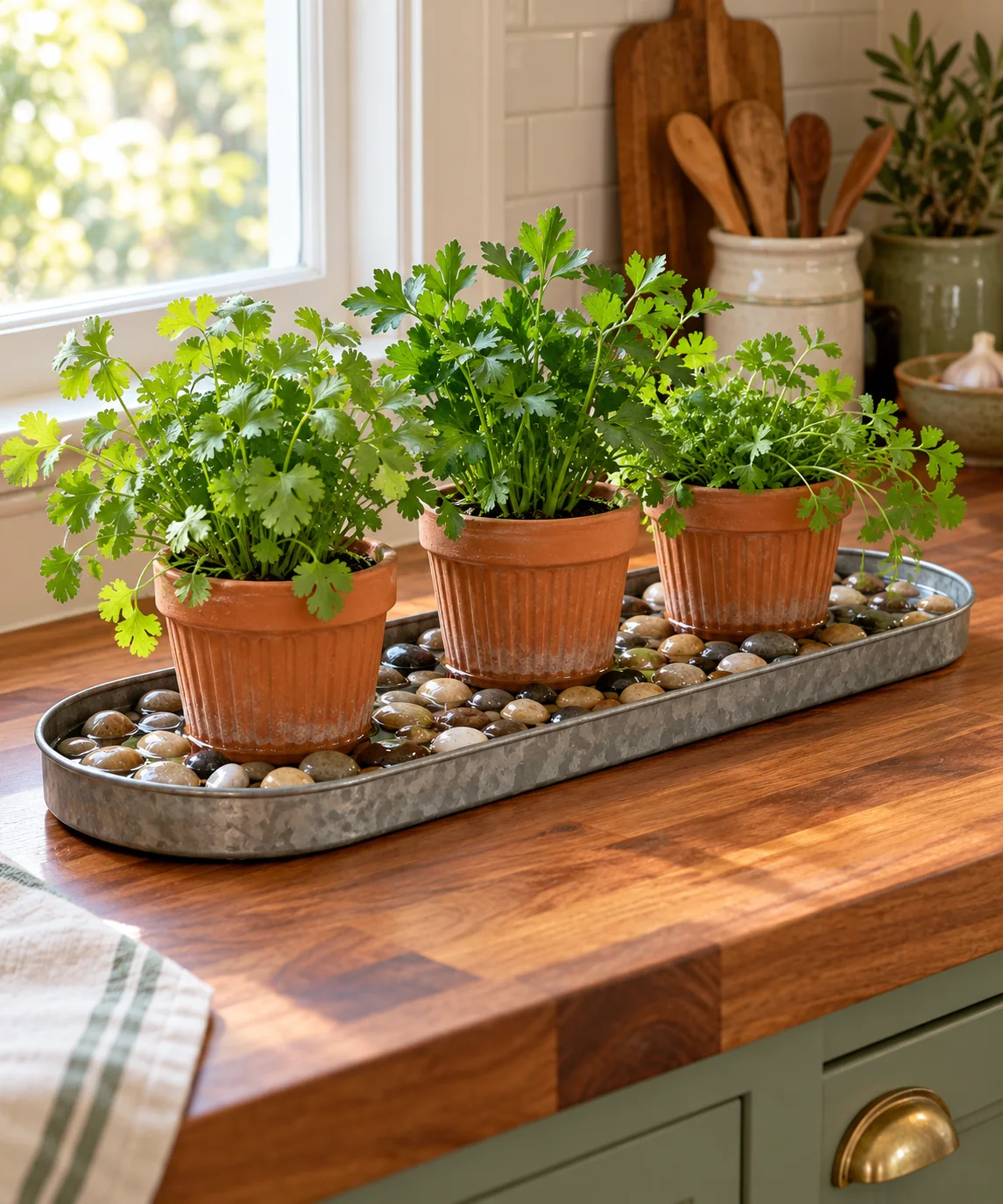
Tray Sizing and Countertop Clearance
Assess your countertop depth alongside cutting boards and daily prep tools to determine a comfortable setback for the tray runner. Rather than adhering to an arbitrary clearance number, position the tray where standard food preparation, washing, and chopping activities remain unobstructed. Choose a narrow runner that rests flush against the backsplash without impeding workflow. Inspect the underside of the zinc container before setting it in place; if the bottom features rough soldered seams or rolled edges, apply non-staining silicone bumpers or thin cork pads to prevent mechanical scratching on the oiled timber surface.
Layering River Stones Correctly
Select smooth, washed river pebbles sized appropriately to create an even, stable resting surface for your planters. Rinse the stones thoroughly in clean water before placement to remove silt, sediment, and fine dust that could otherwise settle into standing runoff. Spread the stones across the zinc basin in a uniform layer. Avoid mounding pebbles unevenly, as containers require a level foundation to remain upright during watering and harvesting. The stone bed elevates container bases above minor drainage accumulation, allowing air to reach bottom drainage holes.
Pot Placement and Drainage Observation
Arrange herb containers across the pebble runner with enough space between pots to accommodate natural plant growth and permit easy handling. Water herbs based on the individual moisture requirements of each species and container volume rather than applying a uniform schedule. When water exits container drainage holes into the pebble bed, confirm that the moisture level remains below the base of the pots. Keeping container bottoms elevated above pooled runoff prevents the growing medium from remaining continuously waterlogged.
Managing Runoff and Basin Water Levels
A pebble runner serves as a localized catchment zone, but accumulated runoff requires regular monitoring. Inspect the water depth between stones after watering sessions to ensure moisture has not reached the pot bases. If water accumulates significantly after watering multiple containers, remove the excess using a clean sponge or suction bulb rather than allowing stagnant liquid to linger. Avoid letting runoff approach the rim of the tray, which risks accidental spillage onto the butcher block countertop.
Routine Countertop Inspection and Timber Care
Periodically lift the entire tray and all containers to inspect the butcher block underneath for signs of trapped condensation, discoloration, or drying wood fibers. Wipe the wood clean with a dry cloth and check whether the finish has become depleted. When the timber appears faded or matte where the runner rested, reapply a food-contact-safe mineral oil or manufacturer-recommended wood conditioner. Allow the conditioning treatment to absorb and dry according to manufacturer guidelines before returning the pebble runner to the counter.
YOUR STARTING POINT
A little checklist.
Original editorial guidance. Images are AI-generated concepts, not photographs of completed projects. Our sources and approach.
Questions to consider
Can I use gravel from my garden instead of river stones?
Washed, smooth river stones are generally preferred over angular garden gravel. Rough gravel can scratch container bases and often contains organic debris or fine clay that clouds runoff in the basin. Ensure any stone used is thoroughly washed before placement.
Does the pebble tray eliminate the need for saucers entirely?
A pebble tray can function as a shared catchment surface for small amounts of runoff, provided water levels are monitored carefully. For plants requiring heavy watering, individual saucers or dedicated sink-side draining remain practical safeguards against overflow.
Will herbs get enough humidity from this tray alone?
Evaporation from the pebble tray provides only minimal localized humidity. Culinary herbs depend primarily on adequate natural daylight, appropriate ambient room temperatures, and well-managed soil moisture rather than elevated humidity levels.