Small Kitchen Organization · THE GUIDE
Pegboard Backsplash for Everyday Utensil Access
In a compact kitchen, crowded utensil drawers often jam and slow down meal preparation. Converting an open vertical wall section into a dedicated pegboard backsplash brings functional tools into immediate view without consuming valuable prep counter real estate. By employing modular hooks, shallow wire baskets, and wooden dowels, you can design a reconfigurable hanging station tailored to your specific cooking routine. Thoughtful planning regarding layout spacing, utensil clearances, and non-porous material selection ensures this active storage surface remains practical, grease-free, and adaptable as your tool collection changes.
Jump to the checklist ↓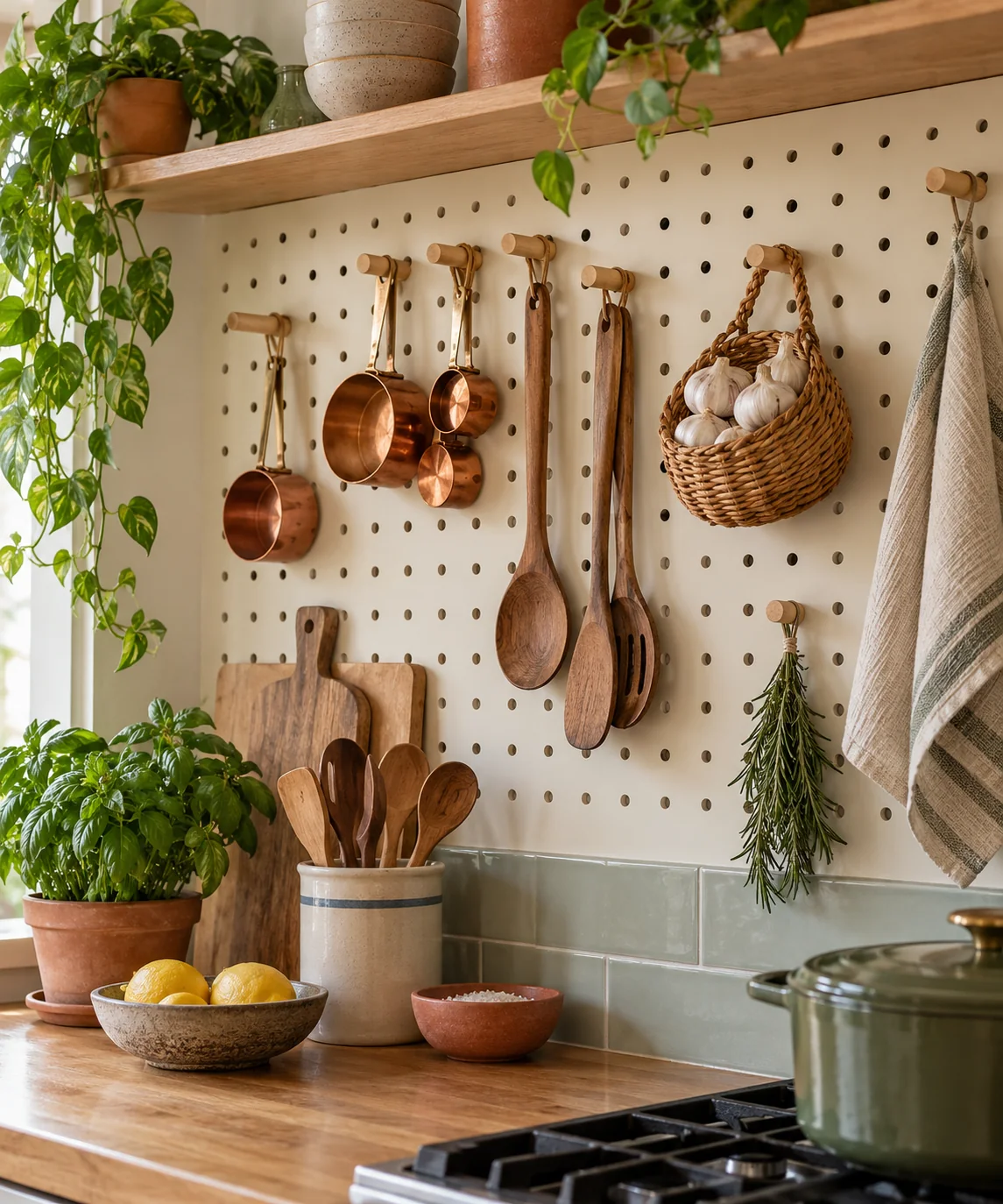
Mapping Working Zones and Wall Space
Identify a section of open drywall or vertical wall space situated convenient to primary food preparation areas, such as adjacent to a prep counter or near pantry storage. Avoid positioning unshielded pegboard directly behind an active range where cooking heat, airborne grease, and open burner flames create maintenance challenges and safety hazards. The selected zone should offer comfortable reach for household cooks without requiring awkward stretching across hot surfaces or delicate countertop appliances.
Selecting Hook Types for Common Tools
Different kitchen implements demand specific hanging hardware to hang securely. Single straight pegs work well for flat items like wooden stirring spoons and silicone turners. Curved hooks or double-prong pegs are better suited for bulky wire whisks, fine-mesh strainers, and kitchen shears. Group similar tools together so you can easily return each item to its intended spot. Shallow wire baskets mounted on peg clips can hold small essentials like kitchen timers, dry measuring spoons, or whole garlic bulbs.
Establishing Clearances Over Prep Counters
When arranging utensils on the board, maintain sufficient vertical space between the lowest hanging tools and the countertop surface. Providing an open buffer helps keep spatula tips and ladle bowls clear of cutting boards, food preparation prep items, and accidental moisture pooling on the counter. Reserve upper and outer peg rows for longer implements, keeping shorter measuring spoons, vegetable peelers, and tongs on lower tiers where they remain well above the working surface.
Reversible Spacing and Layout Testing
Before securing hardware positions on the wall, lay the pegboard panel flat across a clean table or floor space. Place your everyday cooking tools directly onto the panel to explore practical groupings, spacing gaps, and hook types. Lightly mark temporary reference points using removable painter's tape or low-tack labels. This dry trial run lets you verify that tool handles will not tangle, overlap, or block adjacent items before committing to a permanent arrangement.
Ongoing Wipe-Downs and Board Care
Kitchen pegboards require routine surface maintenance to prevent ambient oil and dust buildup. If using a painted or sealed board, wipe it down every two weeks using a soft cloth slightly dampened with warm water and a drop of gentle dish soap. Dry the surface immediately with a clean towel. Avoid abrasive cleaning pads that could strip protective finishes, and inspect the hooks periodically to confirm they remain seated firmly inside the board holes.
YOUR STARTING POINT
A little checklist.
Original editorial guidance. Images are AI-generated concepts, not photographs of completed projects. Our sources and approach.
Questions to consider
Can I hang cast iron skillets on a kitchen pegboard?
Standard decorative pegboard panels and retail pegs are generally rated for lightweight culinary tools rather than dense iron cookware. Always check the manufacturer load ratings for both the board and the mounting anchors before attempting to hang heavy pots or pans.
How do I stop peg hooks from slipping out when grabbing tools?
Fit plastic hook locks over the peg stems, or select hardware featuring integrated locking screws. These retainers secure the hooks in place so they do not dislodge when lifting utensils rapidly during meal prep.
What board material works best in a humid kitchen?
Sealed metal panels or pre-finished moisture-resistant composite boards perform best. Unsealed, raw hardboard tends to absorb ambient steam over time, which can lead to swelling, edge softening, and peeling paint.