Patio Seating Ideas · THE GUIDE
Perimeter Floating Bench Anchored by Heavy Planter Troughs
Renters and townhouse courtyards often feature strict prohibitions against drilling anchors into paving stones, perimeter brickwork, or exterior masonry. Integrating seating alongside perimeter planters offers a space-efficient way to define garden boundaries without permanent building penetrations. However, resting a bench span across freestanding planters introduces significant structural and balance considerations. Planter walls are typically engineered to hold soil pressure rather than support shifting human weight. Approaching this layout safely requires using purpose-built, manufacturer-rated modular planter-bench systems or independent low benches flanked by planters, while always verifying structural weight allowances with property management or a qualified professional.
Jump to the checklist ↓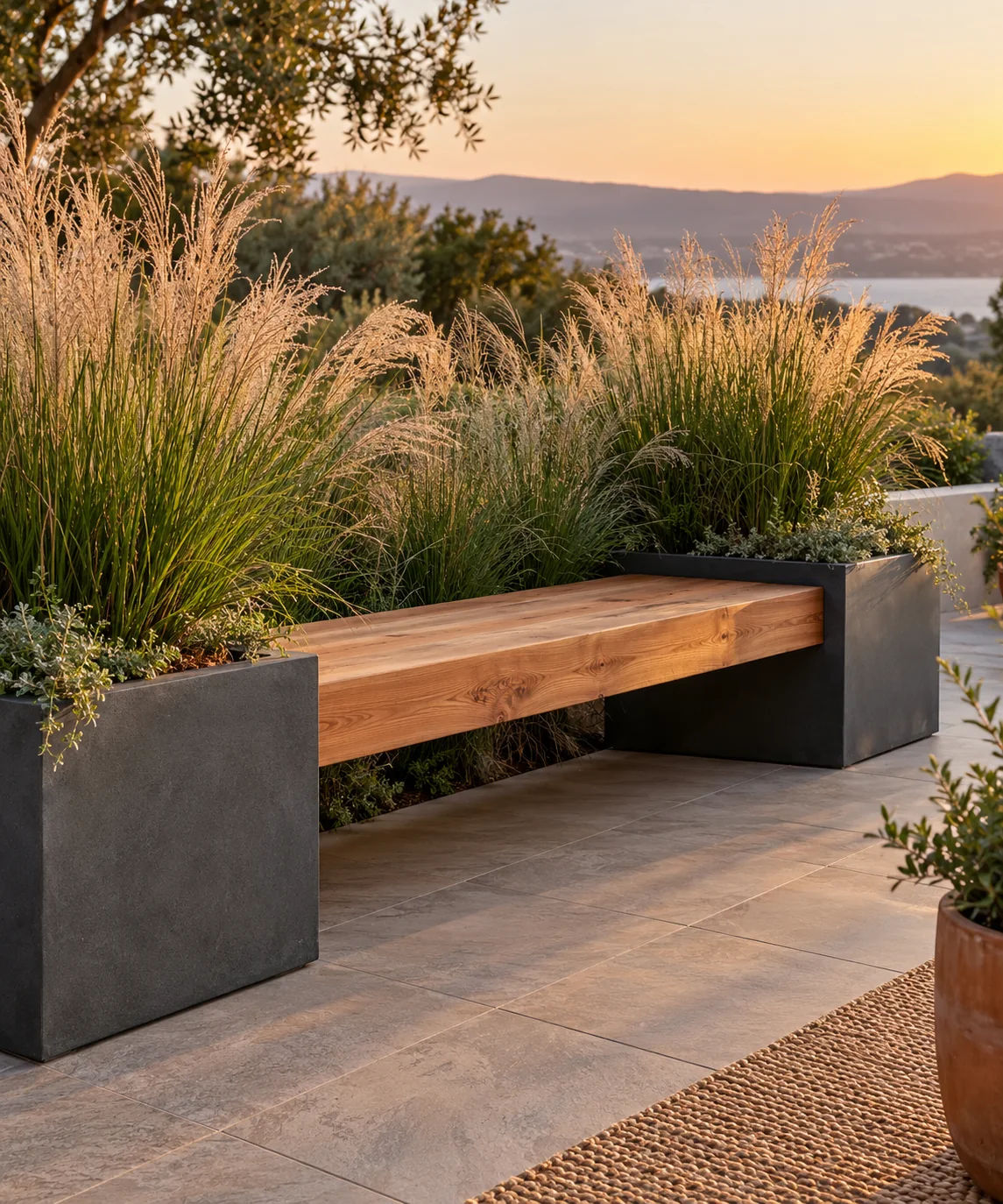
Understanding Structural Limits and Load Distribution
A seat spanned between two containers exerts both concentrated downward force and lateral rotational stress when occupied. Standard garden containers, whether fiber-cement, ceramic, or composite, are rarely designed or warranted to support dynamic horizontal and vertical furniture loads. Never estimate structural ballast or assume damp soil mass creates a safe counterweight against tipping. If you intend to connect seating directly between planter troughs, select commercially engineered modular kits where the planters, internal metal brackets, and bench spans are explicitly tested and certified for human occupancy by the manufacturer.
Verifying Deck and Patio Surface Load Capacities
Pairing large perimeter planters with integrated seating concentrates substantial dead weight (troughs, soil, plants, water) and live weight (seated guests) over a compact surface area. Saturated soil can weigh between seventy and one hundred pounds per cubic foot. On ground-level concrete slabs, bearing capacity is rarely an issue, but on suspended terraces, balconies, timber decks, or over waterproof roof membranes, this combined mass can exceed structural thresholds. Always consult building management, architectural plans, or a structural professional to determine allowable square-foot load limits before grouping heavy planters together.
Freestanding Frameworks Versus Spanning Brackets
When commercially engineered modular systems are not an option, the safest rental-friendly configuration separates seating mechanics entirely from the planters. Position a sturdy, self-supporting low wooden or metal bench directly between two standalone planter boxes. This arrangement provides the flush, cohesive aesthetic of perimeter garden seating without transferring any torsional stress to container walls. It also prevents the risk of sudden container cracking or bracket slippage that can occur when makeshift boards are rested across unrated planter rims or improvised hooks.
Plant Selection, Drainage, and Moisture Separation
Planters placed immediately adjacent to outdoor seating require thoughtful drainage and plant choices. Select upright, non-spiny foliage or architectural grasses that maintain neat vertical habits and will not drop sticky sap, staining berries, or moisture onto the bench surface. Ensure planters feature clear drainage holes and dedicated catchment or drainage channels that direct runoff away from seat contact points and base pavers. Constant contact between moist container rims and wood surfaces accelerates timber rot and paver staining, so maintain clear separation or utilize non-porous spacers.
Seasonal Inspection and Reversible Maintenance
Because modular or paired planter seating systems remain unanchored to paving, regular seasonal inspections are vital. Check container walls periodically for fine stress cracks, warping, or settling caused by ground slope. Inspect bench supports, leveling feet, and fasteners for signs of corrosion or looseness. If using certified integrated brackets, check that rubber gaskets or protective isolators remain intact to prevent friction wear against planter surfaces. Before freezing winter cycles, clear organic debris from between containers and seating frames so expanding frozen moisture cannot dislodge or damage components.
YOUR STARTING POINT
A little checklist.
Original editorial guidance. Images are AI-generated concepts, not photographs of completed projects. Our sources and approach.
Questions to consider
Can standard off-the-shelf garden planters safely support a custom bench plank?
No. Standard consumer planters are engineered to withstand internal outward soil pressure, not concentrated downward and rotational loads from seated individuals. Placing heavy lumber spans onto unrated planter rims can cause container walls to crack, shear, or tip over unexpectedly. Always use purpose-built modular systems designed specifically for integrated seating.
How can I prevent heavy perimeter planters from staining or damaging patio pavers?
Ensure heavy troughs rest on non-staining rubber risers or manufacturer-approved planter feet rather than sitting flush on pavers. Elevating the container base allows air circulation, prevents water from getting trapped underneath, and allows free drainage, significantly reducing the likelihood of efflorescence, algae growth, or stone discoloration.
Is soil weight alone enough to anchor outdoor seating against wind and movement?
While wet soil adds notable static ballast, it does not guarantee mechanical stability or prevent tipping under dynamic lateral forces. Wind resistance and tip safety depend on base width, center of gravity, and properly engineered structural connections. Never rely on improvised ballast calculations; use certified, self-supporting furniture designs.