Household Reset Routines · THE GUIDE
Pet Feeding Corner Mat Scrub and Dry Food Dispenser Wipe
Pet feeding nooks tucked into apartment kitchen corners frequently harbor fine kibble dust, oily residues, and stubborn mineral rings left behind by splashed water bowls. Because these compact stations sit close to footpaths and cabinet bases, neglected food fragments can migrate across the room while moisture seeps beneath non-slip matting. A disciplined cleaning routine restores hygienic conditions without exposing pets to lingering chemical aromas. By cleaning silicone mats and dry food storage surfaces with warm water and mild detergent, you lift stubborn grease build-up, prevent tile discoloration, and maintain a tidy, organized feeding perimeter in tight spaces.
Jump to the checklist ↓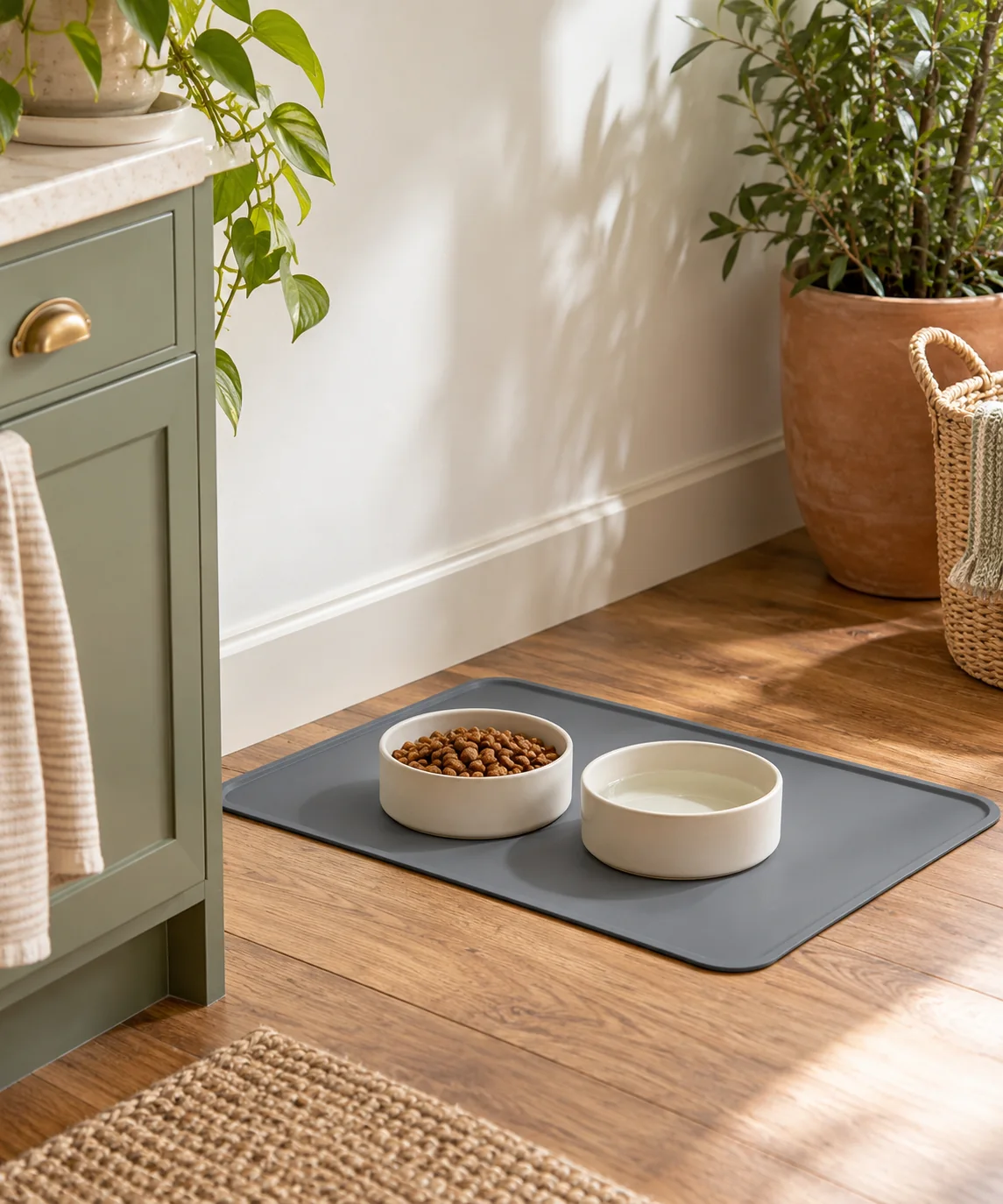
Station Clearance and Spill Assessment
Clear the feeding corner completely before introducing water or cleaning tools. Relocate water vessels, ceramic dishes, and nearby storage bins to a clear kitchen counter. Sweep or vacuum loose dry kibble fragments, shed fur, and stray dust from the perimeter baseboards and the bare mat surface. Check the surrounding floorboards or wall base for water splash marks. Clearing dry solids first prevents them from dissolving into a gummy paste when liquid cleaning agents are applied to the silicone material.
Silicone Mat Deep Cleaning
Transfer the flexible silicone mat directly to the kitchen sink for thorough cleaning. Wash the mat under warm running water using mild, unscented dishwashing detergent and a soft microfiber washcloth. Concentrate along the raised perimeter edge where spilled water collects and leaves cloudy mineral rings. Avoid abrasive scouring pads or stiff plastic scrapers, which can scratch the pliable silicone surface and create tiny crevices that trap food fats. Rinse with clear warm water until suds are gone.
Exterior Wipe of Dry Food Dispensers
Dry pet food dispensers and sealed storage tubs develop an oily exterior film over time from handling and ambient cooking grease. Wipe the outer hopper, lid handles, and dispenser spouts using a clean, damp cloth dipped in warm, soapy water. Pay close attention to measuring scoop handles and dispenser chutes where crumbs collect. Keep moisture strictly away from interior food compartments during routine wipes to prevent dry kibble from absorbing dampness and developing spoilage or clumped residues.
Floor Substrate Drying and Inspection
Inspect the bare floor under the feeding mat while the silicone component air-dries. Trapped splash water can cause grout staining or finish clouding on sealed flooring if left unmonitored. Wash the exposed tile or laminate using a damp floor cloth, then buff the spot entirely dry with a clean towel. Never replace the silicone feeding mat while either the mat or the subfloor remains damp, as trapped humidity cannot evaporate through non-porous silicone and may harm finished surfaces.
Reassembly and Corner Spatial Buffer
Once all components are dry to the touch, return the mat to its kitchen station. Position the mat with a small clearance away from kitchen cabinet toe-kicks and nearby walls to maintain air circulation around the edges and prevent moisture from getting trapped against trim. Set clean ceramic or stainless bowls securely within the designated dish recesses. Ensure the dry food hopper sits on solid, level flooring clear of bowl splash zones, preserving a neat, accessible path for daily refilling and quick spot checks.
YOUR STARTING POINT
A little checklist.
Original editorial guidance. Images are AI-generated concepts, not photographs of completed projects. Our sources and approach.
Questions to consider
How do I remove cloudy white water rings from silicone mats?
White rings represent mineral deposits from evaporated tap water. Soak a microfiber cloth in warm water with a splash of white vinegar, drape it over the marks for ten minutes, then rinse cleanly with fresh water and dry thoroughly.
Why should I avoid heavily scented cleaners near feeding stations?
Dogs and cats possess sensitive olfactory systems and may reject fresh meals if feeding bowls or mats smell strongly of synthetic perfumes. Use simple, unscented dishwashing soaps and warm water to clean mats and surrounding areas effectively.
Can a silicone feeding mat go into a dishwasher?
Many food-grade silicone mats are dishwasher-safe on the top rack. Check manufacturer guidelines first, avoid heated dry cycles that might warp fine rimmed edges, and ensure the mat is positioned flat so it does not collapse over small spray jets.