Small Bathroom Storage · THE GUIDE
Place a Narrow Wooden Slat Stool Beside the Soaking Tub
Navigating compact bathrooms with soaking tubs often means sacrificing flat surfaces for essential bath items like washcloths, pumice stones, and gentle soaps. Incorporating a narrow wooden slat stool directly beside the tub edge creates a practical, mobile shelf without overcrowding floor pathways. Slatted designs encourage natural drainage and air circulation, preventing standing water rings common with solid tables. Because a small stool is completely freestanding, it offers flexible positioning during bath time and easily moves aside when cleaning tiled floors. Careful material selection and thoughtful clearance planning ensure the stool functions seamlessly within wet environments.
Jump to the checklist ↓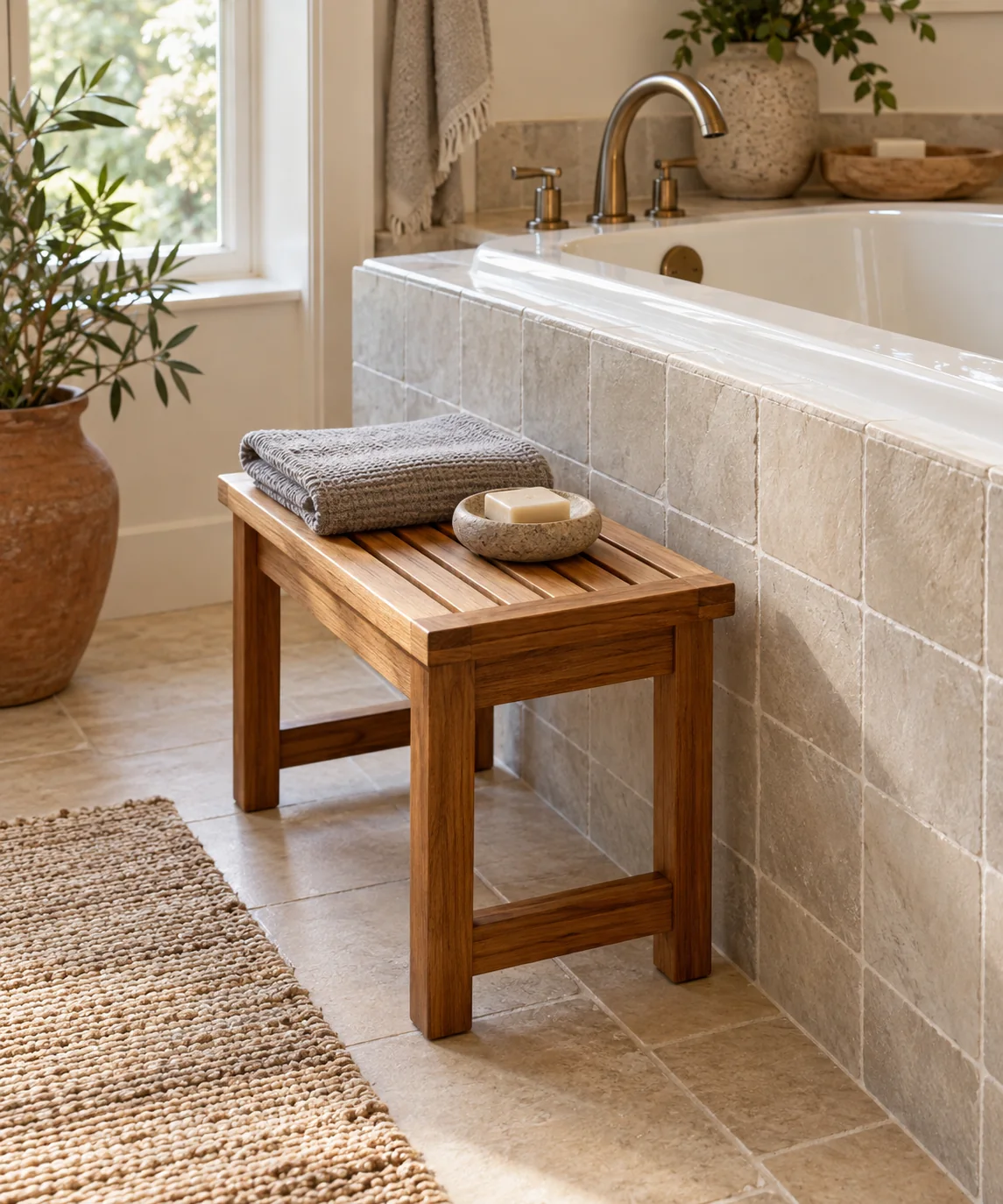
Measuring Walkway Clearances and Stool Footprint
Compact bathrooms require thoughtful spatial planning around tub edges to avoid creating trip hazards. Measure the open floor space between your soaking tub and adjacent fixtures such as vanities, walls, or toilet clearances. Select a stool with a narrow base that preserves comfortable, unhindered foot traffic for anyone entering or exiting the room. Position the stool along the tub rim where items remain reachable while bathing, keeping it completely clear of your primary stepping path out of the water. Stool heights that sit roughly level with or slightly below the tub rim offer straightforward access without requiring awkward reaching.
Evaluating Placement with Simple Mock-Ups
Before purchasing a stool, test whether an object in that location disrupts movement by setting down an empty plastic storage container or inverted laundry basket of similar dimensions. Keep this mock-up beside the tub for a couple of days during standard morning and evening routines. Notice whether you brush against it while walking past or whether reaching for shower controls feels restricted. This trial helps determine whether a rectangular bench, a rounded low stool, or an offset placement near a corner fits the room without narrowing regular walking paths.
Arranging Wet and Dry Bath Essentials
Arrange items across the slatted surface with drainage and stability in mind. Placing pumice stones, bar soaps, or damp wash accessories on a shallow ceramic or stone catch dish keeps soap residue from collecting directly on the timber. Reserve a separate, drier portion of the stool top for folded washcloths or clean essentials so they stay clear of tub splash lines. Spacing items with small gaps between them allows air to reach every side of the timber, helping surfaces dry evenly after each bath.
Managing Wood Care and Moisture Exposure
Regular exposure to bathroom humidity and incidental splashing requires periodic maintenance, even for naturally moisture-tolerant woods such as teak or cedar. Inspect the wood surfaces regularly for persistent water marks, soap film, or mineral buildup. Wiping the slats dry with a clean cloth after bathing prevents standing droplets from settling into joints. Inspect the leg ends where the grain meets bathroom flooring; adding non-porous silicone feet lifts the wood slightly off tile, reducing direct contact with damp floor surfaces.
Weight Limitations and Practical Safety Boundaries
A low slatted accent bench serves strictly as a temporary surface for light bathing items, not as a support structure. Never use a decorative accent stool as a step stool or step-in aid for getting into or out of a soaking tub unless the manufacturer explicitly rates and designs the unit for weight-bearing step use with certified non-skid feet. In tight tub alcoves, confirm that the stool does not bunch shower curtains or push liner edges outside the tub basin, which could cause water to channel onto the floor.
YOUR STARTING POINT
A little checklist.
Original editorial guidance. Images are AI-generated concepts, not photographs of completed projects. Our sources and approach.
Questions to consider
What wood species works best beside a wet bathtub?
Dense hardwoods like teak and acacia, as well as rot-resistant softwoods like cedar, hold up well in humid bathroom settings when properly cared for. Their natural properties handle ambient moisture better than untreated pine or basic fiberboards, provided standing water is wiped away regularly.
How do I keep the stool from sliding on wet bathroom tile?
Apply non-marking rubber or silicone bumper pads to the bottom of each leg. These provide grip on smooth ceramic, stone, or porcelain tile and keep the wood grain slightly elevated above minor water puddles.
Can I use the stool inside the bathtub or shower stall?
Placing an accent stool directly under continuous shower spray speeds up surface wear, washes away natural oils, and encourages soap buildup. Keep the stool along the exterior ledge so items remain accessible without saturating the timber.