Small Bedroom Layouts · THE GUIDE
Placing a Tall Slim Chest in Bedroom Wall Recesses
Architectural chimney breasts and structural wall recesses often create awkward, underutilized pockets of space in period homes and older bedrooms. Rather than letting these alcoves collect dead air or clutter, inserting a tall, slim five-drawer chest takes full advantage of vertical room height. This arrangement establishes deep functional storage without protruding into precious floor area or interfering with bedside walkways. By setting the furniture flush or slightly recessed relative to the chimney breast face, the bedroom maintains clean, rectilinear perimeter lines. Careful dimension checking ensures drawers open completely without scraping neighboring moldings or baseboards.
Jump to the checklist ↓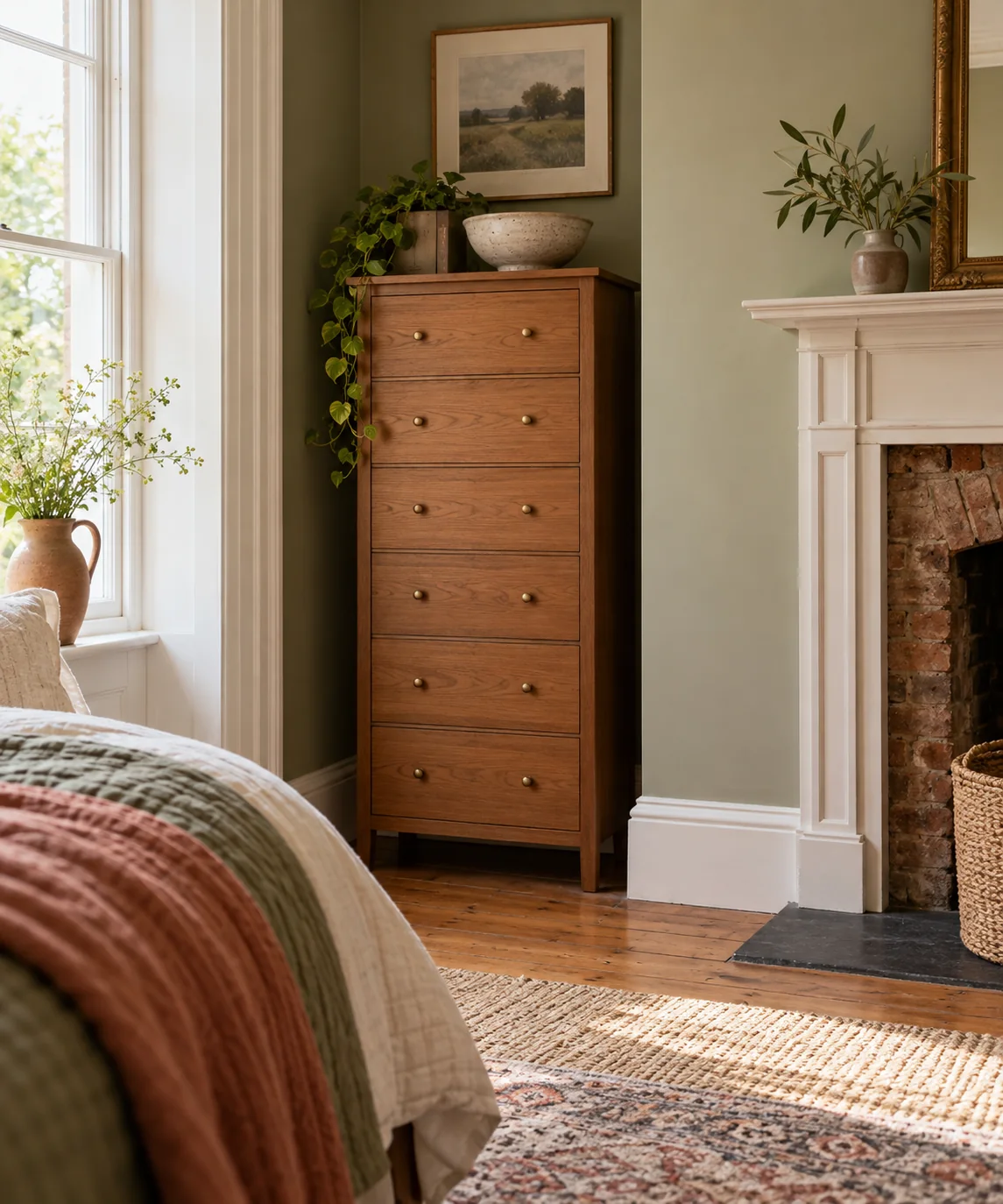
Measuring Three-Dimensional Alcove Boundaries
Alcoves in older properties are rarely perfectly square or plumb. Measure the alcove width at several heights: near the floor, at mid-height, and near the expected top of the furniture. Taking multiple measurements identifies any bowing plaster or inward slant, allowing you to select a chest that fits the narrowest dimension. Depth should also be measured from the rear wall to the forward edge of the alcove or chimney breast, noting how baseboards, picture rails, or electrical faceplates encroach on the usable footprint. Selecting a chest that provides comfortable side margins prevents tight friction fits that could gouge historic plaster or trim during placement.
Drawer Extension and Front Clearances
A narrow vertical chest depends on full drawer extension to access internal volume. Before finalizing furniture selection, verify the drawer slide travel distance and compare it to the available open floor space. Open drawers should leave sufficient room for someone to stand comfortably beside or in front of the unit without colliding with the bed frame, closet doors, or the room entry pathway. Check door swing arcs in the room to confirm that an open bedroom or wardrobe door will not impact the chest frame or block access to lower drawers.
Managing Baseboard and Skirting Obstacles
Standard perimeter skirting boards push flat-backed cabinetry forward, creating an offset behind tall furniture. Examine the lower profile of the chest; pieces raised on legs or designed with recessed bottom plinths can bridge over baseboards and sit closer to the rear wall plane. For solid-sided chests, the rear gap will reflect the baseboard depth. Plan for this forward offset so the front face of the chest remains aligned with or slightly recessed behind the surrounding chimney breast wall, preserving unobstructed room sightlines.
Organizing Vertical Five-Drawer Storage
A vertical five-drawer configuration functions best when weight is distributed with gravity in mind. Reserve upper compartments for lightweight, everyday items such as socks, undergarments, and small folded accessories that benefit from quick visibility. Use middle drawers for medium-weight shirts or everyday clothing. Store heaviest items, such as heavy sweaters, denim, or extra bed linens, in the bottom drawers. Concentrating heavier contents in lower drawers lowers the unit's center of mass and promotes smoother daily operation.
Ventilation and Stability Considerations
Alcoves formed by exterior masonry walls can experience slower air movement and seasonal temperature variances. Maintaining a modest air pocket behind and beside the chest helps encourage ambient airflow around the back panel. Additionally, because tall, narrow chests present a high center of gravity—especially when upper drawers are pulled out—furniture stability requires careful attention. Consult the furniture manufacturer's installation manual and wall-anchoring guidelines to prevent tip-over hazards, and adjust leveling glides or shims beneath the feet so the chest rests squarely on uneven floorboards without wobbling.
YOUR STARTING POINT
A little checklist.
Original editorial guidance. Images are AI-generated concepts, not photographs of completed projects. Our sources and approach.
Questions to consider
How much narrower should the chest be than the alcove opening?
Selecting a unit with at least one to two inches of total side margin helps accommodate out-of-plumb walls and irregular plaster without binding during placement or scratching adjacent woodwork.
Can I place a wide dresser across an alcove opening instead?
A wide dresser that extends past alcove corners can impede walkways, create awkward gaps behind the overhangs, and block natural traffic paths. A slim chest matched to the recess makes efficient use of the vertical volume.
What precautions should be taken with tall furniture in an older alcove?
Older floors may slope or bounce slightly, which can destabilize tall cabinetry. Use leveling feet or shims to steady the base, adhere to the manufacturer's anti-tip restraint instructions, and keep heavier items in the lowest drawers.