Pantry Organization · THE GUIDE
Plan a Compact Beverage Backstock Zone with Stackable Wire Racks
Managing supplementary beverage cans and glass bottles often creates awkward vertical dead space in narrow pantry cabinets. Upright storage limits stacking, while loose horizontal piles risk rolling or crushing cardboard cartons. Introducing modular coated-wire bottle cradles solves this spatial puzzle by laying carbonated waters and tonic cans on their sides. This horizontal arrangement stabilizes round profiles, maximizes shallow shelf heights, and preserves clear sightlines toward back inventory. By establishing a dedicated beverage backstock zone on lower, load-bearing shelving, you keep cold-storage reserves orderly without committing to permanent, built-in carpentry or compromising pantry structural limits.
Jump to the checklist ↓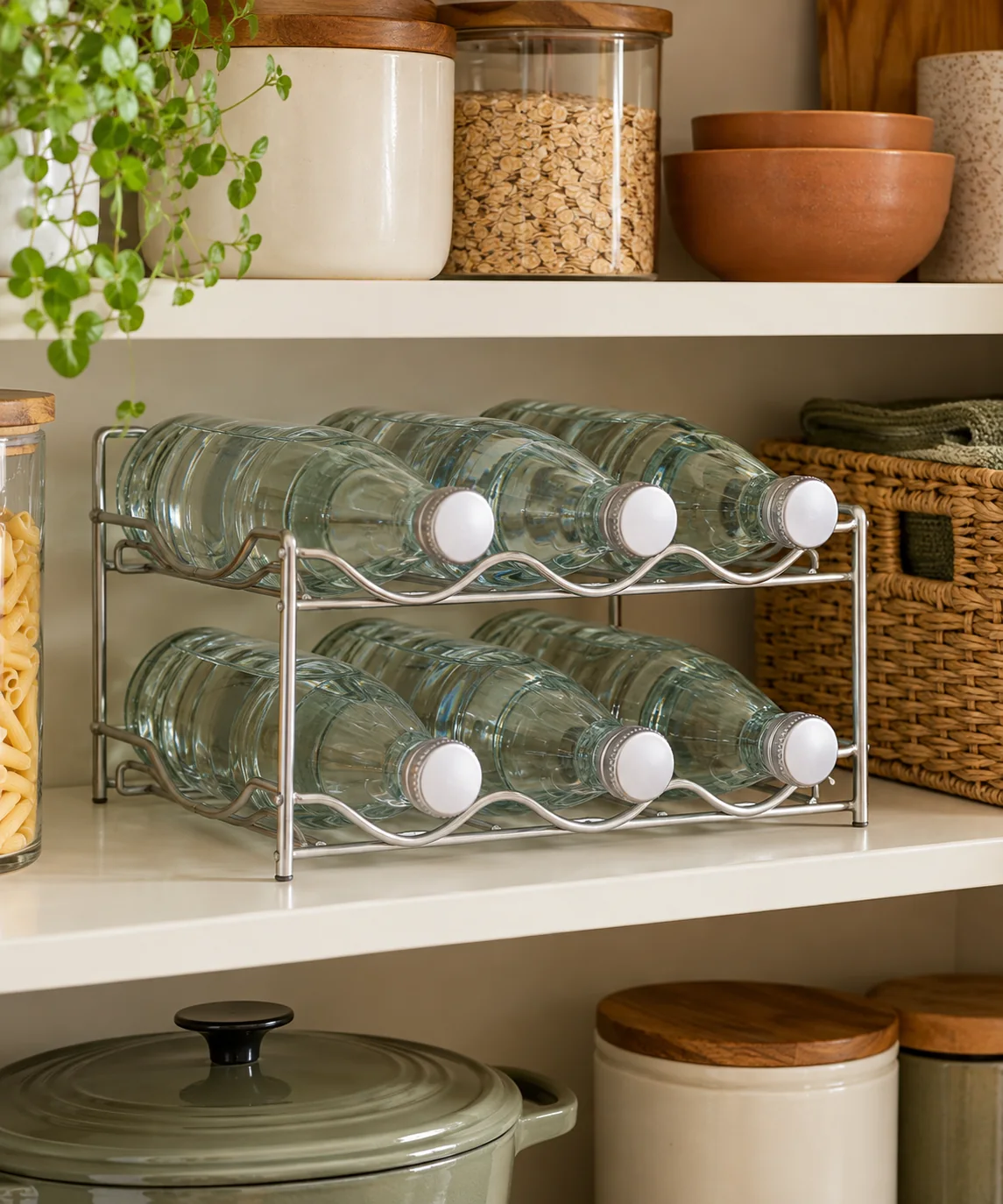
Assessing Vertical Clearance and Shelf Capacity
Measure the usable clearance between pantry shelves before selecting modular wire beverage cradles. Standard canned drinks require sufficient vertical space to rest horizontally without scraping the shelf above, while larger glass bottles require greater clearance. Always leave comfortable overhead clearance so fingers can grip and lift containers smoothly without striking upper cabinet surfaces. Check the shelf manufacturer's published weight limits before assembling a reserve area, as concentrated collections of fluid add substantial weight. Solid wood shelving or reinforced cabinetry bases handle these loads far better than thin adjustable shelves mounted on lightweight plastic pins.
Selecting Coated Wire over Rigid Plastic
Vinyl-coated or powder-coated metal wire cradles provide notable practical advantages over smooth acrylic organizers for horizontal beverage storage. The textured coating offers gentle surface friction, helping smooth aluminum cans and glass bottles stay in place without spinning or sliding forward when adjacent items are removed. Open wire frameworks also promote ambient airflow around stored containers, reducing dust accumulation and allowing condensation to evaporate if bottles arrive cool from transit. The open-grid profile also makes package labels readable from below, simplifying rapid inventory checks.
Arranging the Horizontal Grid Layout
Position wire racks squarely along the shelf surface, maintaining enough distance from cabinet side walls to ensure unhindered hand access. Nest cans base-to-front or label-forward within each cradle curve to allow immediate flavor identification. If you use modular units designed to stack vertically, confirm that the built-in locking tabs or nesting grooves engage fully before loading any containers. Place higher-turnover canned items across lower cradle tiers and reserve upper tiers for lighter containers, keeping the center of gravity stable across the pantry shelf.
Evaluating Stability and Balance
Before fully stocking a multi-tiered arrangement, place several containers into a single rack section to check how the unit responds to everyday handling. Confirm that retrieving a single beverage from the center of the rack does not cause neighboring cans to shift, roll, or unseat from their cradles. On smooth laminate or polished wood shelves, apply small non-skid rubber or silicone bumper pads beneath the wire rack feet to prevent lateral movement during extraction. Avoid stacking modular cradles higher than the manufacturer specifies, and never force incompatible rack brands together.
Managing Stock Rotation and Maintenance Limits
Establish an orderly first-in, first-out rotation system by loading new cans into the rear or upper positions while drawing chilled reserves from the front. Clean coated wire racks periodically using a soft cloth dampened with mild, diluted dish soap, avoiding harsh abrasive scrubbers that could cut the vinyl coating and expose the metal underneath to rust. Recognize the physical boundaries of specialized cradles: standard wire curves are shaped for conventional cylindrical cans and bottles. Unusually wide glass containers or irregular carton packaging should remain upright on flat, dedicated shelf space.
YOUR STARTING POINT
A little checklist.
Original editorial guidance. Images are AI-generated concepts, not photographs of completed projects. Our sources and approach.
Questions to consider
Can standard wire bottle cradles accommodate different can sizes?
Most standard cradles comfortably hold typical 12-ounce beverage cans and slim tonic cans. However, wider craft bottles or narrow energy drinks might rest unevenly. Always test individual diameters against the cradle width to ensure level, stable support.
Why should beverage backstock stay on lower pantry shelves?
Concentrated liquids carry substantial weight that can bow thin upper pantry shelves or pull loose lightweight brackets. Storing dense beverage reserves on bottom shelves lowers the center of gravity and minimizes structural strain on the overall pantry unit.
How do I prevent wire cradles from scratching wooden shelving?
Inspect the rack base for raw wire edges or thin coating seams. Adding stick-on rubber or felt pads beneath contact points buffers friction, prevents cabinet finish wear, and keeps the wire rack securely planted when extracting cans.