Sage and Cream Interiors · THE GUIDE
Plan a Compact Window Plant Bench for Sun-Loving Houseplants
Scattering individual plant pots across narrow window sills creates fragmented sightlines and risks water damage to window trim and sill paint. Installing a dedicated low bench directly in front of an unobstructed window consolidates sun-loving houseplants onto an organized horizontal staging area. A pale cream bench paired with matte sage and natural earthenware containers reflects ambient daylight into the interior while unifying varied plant forms. Careful planning around window glass proximity, seasonal temperature fluctuations, pot base drainage, and clearance for curtain movement ensures a healthy, clutter-free indoor botanical arrangement that remains easy to maintain throughout the year.
Jump to the checklist ↓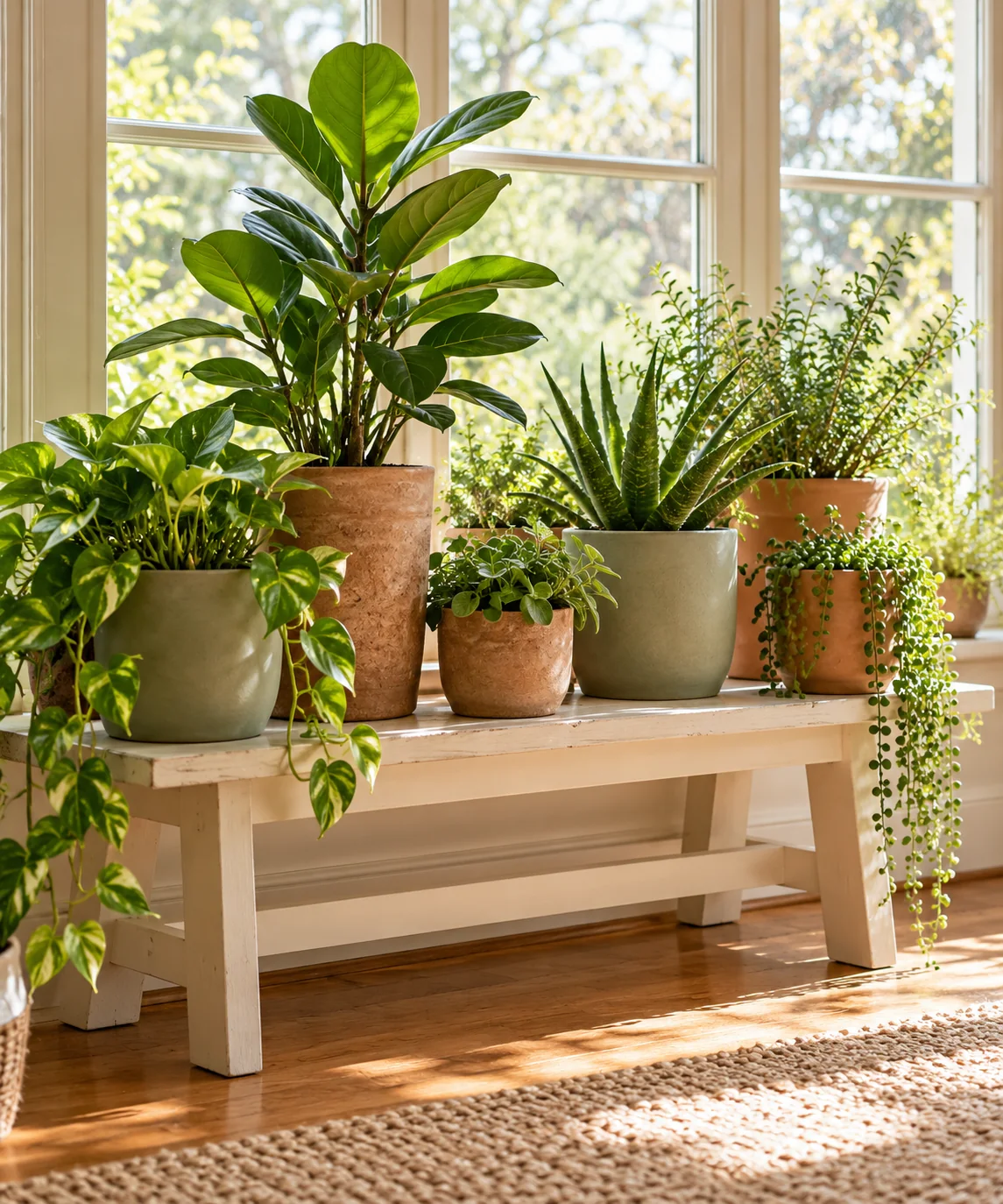
Evaluating Sunlight Exposure and Sill Heights
Houseplants requiring strong natural light benefit from positioning near south- or west-facing windows, though light availability depends on outdoor obstructions and seasonal shifts. Before selecting furniture, measure the height of the window sill from the finished floor. Siting the bench top level with or slightly below the sill ensures containers receive direct exposure without lower furniture rails casting broad shadows. Keep foliage back from direct contact with window panes, as glass surfaces transfer exterior cold during winter months and intensify radiant heat on unshaded summer afternoons.
Choosing Cohesive Bench Materials and Finishes
A streamlined plant display depends on intentional material harmony. A low wooden bench painted in soft cream serves as a neutral base that anchors vibrant green foliage. Apply a clear water-resistant sealer or use shallow waterproof trays under grouped pots to protect painted wood from accidental overflow. Complement the cream base with matte sage ceramic pots and terracotta planters. Limiting the container palette to these paired hues prevents visual clutter while allowing plant form and leaf texture to stand out.
Arranging Pots for Airflow and Light Distribution
Arranging containers on a narrow bench requires balancing light access with adequate ventilation. Organize pots by height, placing taller specimens toward the outer edges of the bench and positioning compact varieties across the center. This stair-stepped configuration prevents dominant foliage from shading smaller companion plants while preserving sightlines into the room. Allow enough physical separation between foliage perimeters so leaves dry between waterings and air circulates freely, rather than expecting grouped foliage to meaningfully alter ambient room humidity.
Establishing Safe Watering and Runoff Protocols
Preventing moisture damage is vital when staging multiple plants on painted indoor wood furniture. Every container must feature a bottom drainage hole paired with a deep, non-porous saucer or glazed ceramic tray. Avoid porous unglazed terracotta saucers directly against wooden bench tops, as moisture readily migrates through raw clay. Inspect saucers shortly after watering and empty collected runoff to protect root health and surface paint. Keeping a small microfiber towel and watering can stored neatly nearby streamlines regular plant care while preventing standing moisture spills.
Managing Window Treatments and Walkway Clearances
A functional window bench must coexist with existing window coverings and room traffic. Verify that floor-length curtains or roman shades can operate cleanly without snagging on outer foliage or knocking lightweight pots aside. Pull the bench far enough into the room so drapery panels stack smoothly beside the glass frame without crushing stems. Check that the bench depth maintains comfortable walkway clearance in small rooms so household members can move past without brushing against delicate plant stems.
YOUR STARTING POINT
A little checklist.
Original editorial guidance. Images are AI-generated concepts, not photographs of completed projects. Our sources and approach.
Questions to consider
Can culinary herbs be grown on an indoor window bench successfully?
Most culinary herbs demand intense direct sun, requiring at least six hours of unobstructed south-facing window light. If window orientation provides filtered or northern light, prioritize lower-light tropical houseplants instead of edible herbs on the bench.
How do I protect the cream bench surface from soil stains?
Line the bench top with a clear silicone mat or use wide glazed ceramic staging trays underneath individual pot saucers. These barriers catch spilled potting mix and prevent abrasive grit from scratching painted wooden finishes.
What bench depth works best for compact apartment living rooms?
A depth between ten and twelve inches accommodates standard six- to eight-inch nursery pots while keeping interior floor encroachment minimal. This slim profile preserves essential perimeter walking clearance in modest apartment footprints.