Container Vegetable Gardens · THE GUIDE
Portable Cold Frame Cloche over Container Greens
Growing early spring salad greens in patio containers often stalls when lingering overnight frosts chill the soil and damage delicate new foliage. A portable wooden-framed cloche with glass or acrylic panes transforms a standard outdoor planter box into a protective microclimate. By trapping daytime solar radiation and sheltering seedlings from desiccating spring winds, this simple cap accelerates germination for spinach, lettuce, and Swiss chard. Sizing the cloche to fit the container rim, managing daily ventilation, and knowing when to remove the structure entirely ensures steady, unburned leaf production during fluctuating shoulder-season weather.
Jump to the checklist ↓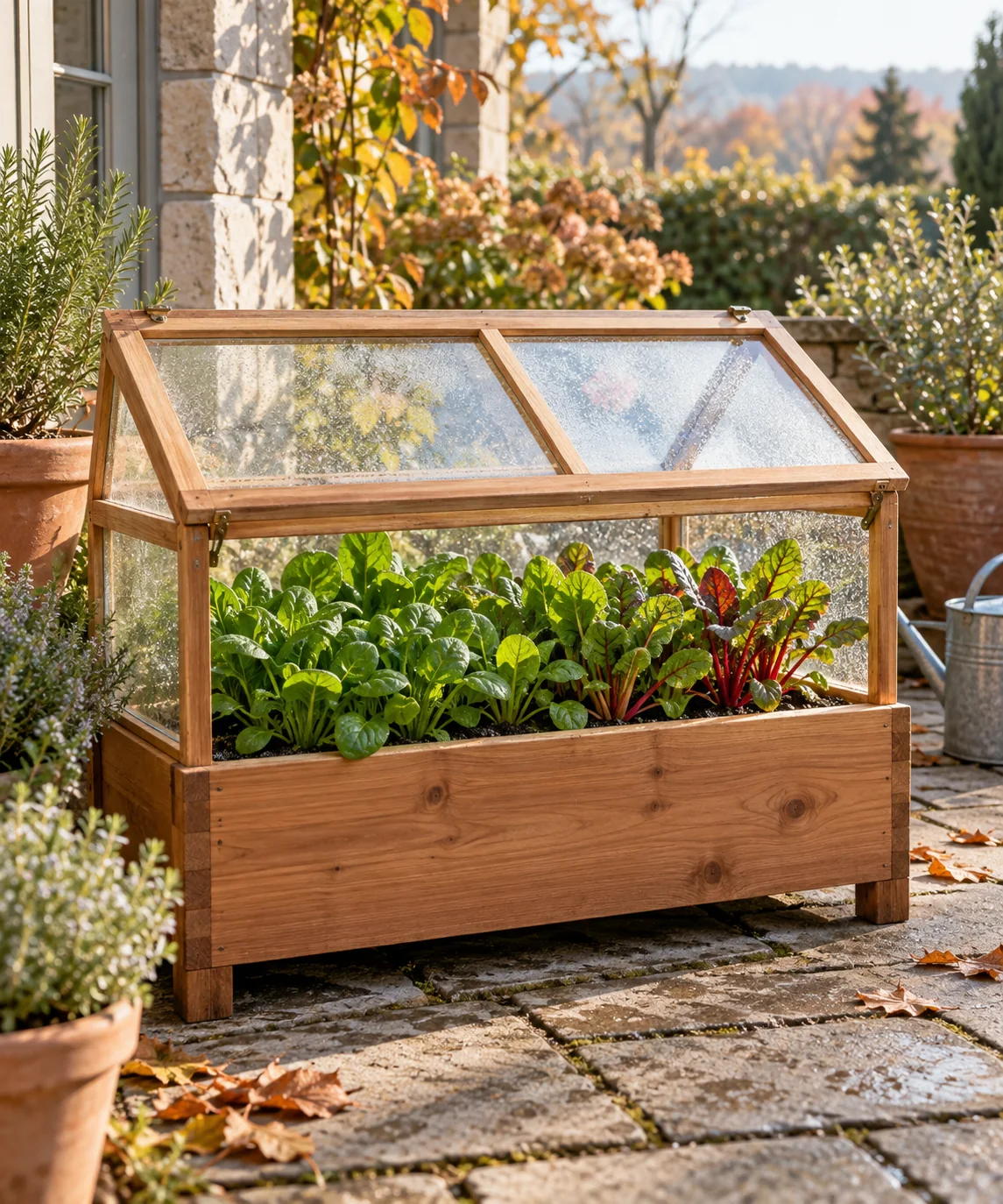
Dimensions and Rim-Fit Planning
A container cloche should rest securely on the planter box rim rather than resting on internal soil or hanging over edges. Measure the outer perimeter of your rectangular planter so that any protective frame aligns closely with the exterior dimensions. An angled or pitched lid helps shed pooling rain and admits low-angle early spring sunlight. Adding small wooden locator cleats to the underside corners helps keep the cloche aligned during routine handling, though gusty conditions may still require temporarily weighting, lashing, or storing the unit to prevent shifting.
Glazing and Material Considerations
Glass panes offer clarity and substantial self-weight, whereas clear acrylic or polycarbonate sheets provide break-resistant alternatives for high-traffic patio settings. Naturally decay-resistant timber such as cedar or cypress can be left unsealed or treated with plant-safe finishes suitable for edible container environments. Avoid heavily treated industrial timbers or lingering chemical sealants that could off-gas inside an enclosed canopy. Secure corners with exterior-rated fasteners and water-resistant wood glue to maintain structural squareness through repeated thermal expansion and damp outdoor cycles.
Ventilation Protocols for Sunny Days
The primary risk for early-season container greens under cover is rapid daytime heat accumulation. On clear mornings, interior temperatures under glazing can rise quickly, stressing cool-season seedlings such as spinach and lettuce even when ambient air remains brisk. Utilizing an adjustable prop stick or removable spacer allows excess heat to escape. Opening the lid during sunny midday hours provides crucial air exchange, while lowering it in late afternoon helps retain residual warmth as overnight temperatures decline.
Moisture and Condensation Management
Enclosed cloches reduce surface evaporation, meaning container greens generally demand less supplemental watering than exposed plantings. Heavy interior condensation signals high humidity, which can promote fungal issues such as damping off or leaf spots. Gardeners should check substrate moisture manually by touch before watering rather than adhering to an unvarying calendar schedule. Deliver water directly to the root zone with a narrow-spout watering can, keeping foliage dry to minimize moisture stagnation before replacing the cover.
Seasonal Transition and Storage
Once overnight temperatures settle reliably into mild ranges and greens reach harvestable maturity, remove the cloche completely to prevent heat stress and allow natural airflow. Leaving covers on during warmer weather can overheat container root zones and restrict natural rain distribution. Wipe glazing panels clean using water and a non-abrasive cloth to remove surface grime and pollen before storage. Store the unit upright in a sheltered garage, shed, or storage closet away from heavy impacts to protect the transparent panels until the following season.
YOUR STARTING POINT
A little checklist.
Original editorial guidance. Images are AI-generated concepts, not photographs of completed projects. Our sources and approach.
Questions to consider
Can I leave the cloche closed continuously while away for a weekend?
Only during consistently overcast, cold conditions. If the sun emerges, solar radiation will rapidly overheat the sealed volume and scorch young greens. If unmonitored weather is uncertain, leave a one-inch ventilation gap propped open.
Will this cloche prevent deep winter soil freezing?
No. A cold frame moderates mild frosts and daytime ambient air, but cannot insulate exposed container root balls during prolonged sub-freezing weather. Use it strictly for early spring starts and late autumn harvest extensions.
Which greens perform best under an early spring cloche?
Cold-hardy greens such as spinach, claytonia, mache, and butterhead lettuce thrive best. These cultivars germinate in cool soil, tolerate slight temperature dips, and benefit greatly from the wind protection and increased humidity inside the frame.