Small Balcony Layouts · THE GUIDE
Position a Clamp-On Parasol for Targeted Midday Shade
Providing shade on an exposed balcony requires balancing solar comfort against building regulations and wind safety. While compact clamp-on parasols are frequently marketed for small footprints to avoid floor stands, fastening accessories to railings introduces structural and liability concerns. Balustrades are engineered as life-safety barriers rather than mounting anchors for wind-catching canopies. Before considering any railing-mounted accessory, residents should consult property management, review tenancy or association rules, and evaluate whether non-invasive, freestanding, or interior-mounted shading solutions provide safer, fully compliant relief from midday sun.
Jump to the checklist ↓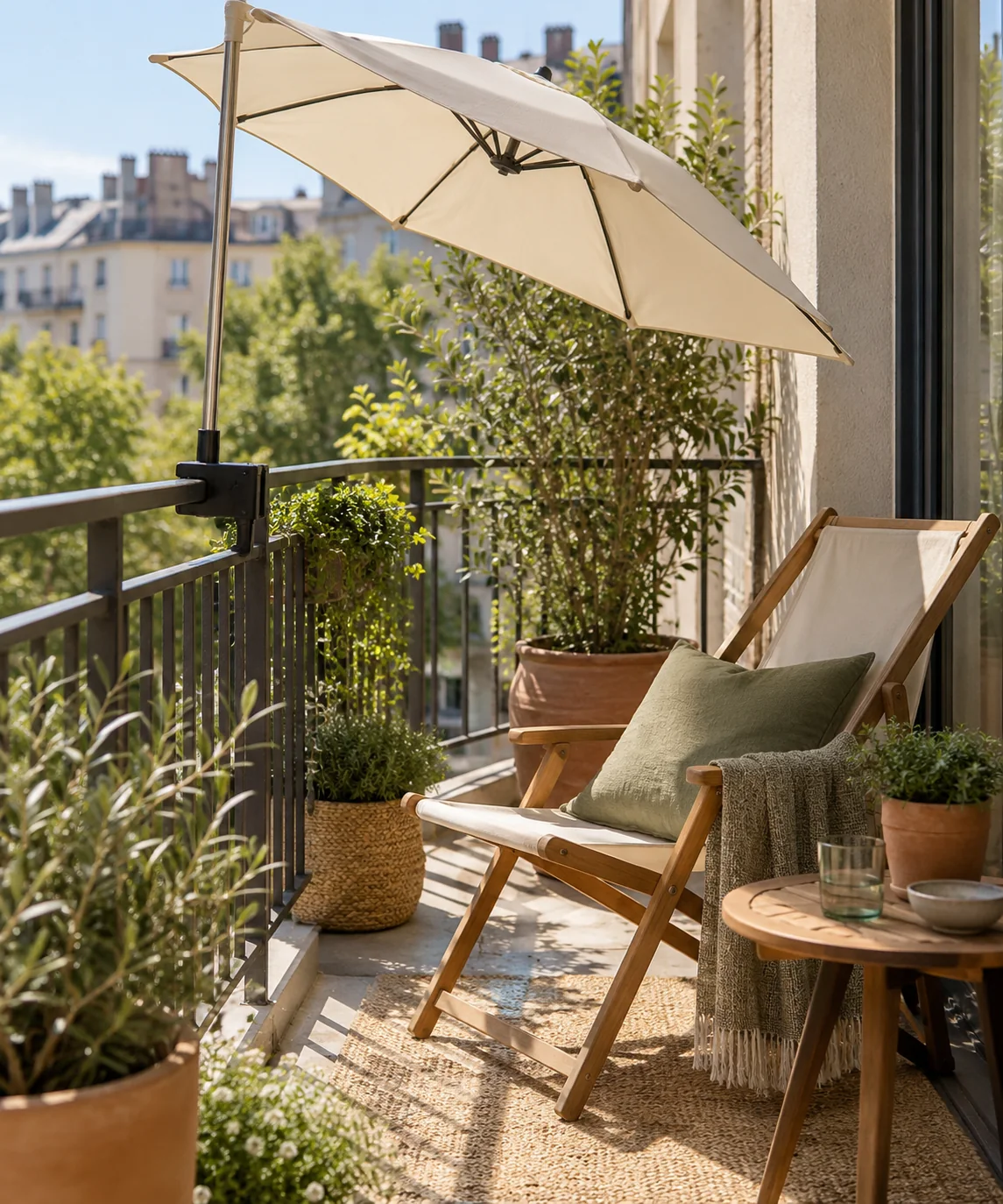
Reviewing Property Rules and Balustrade Purpose
Balcony railings and parapets are critical safety components governed by local building codes and property bylaws. Many residential multi-family buildings explicitly prohibit clamping or mounting fixtures to exterior railings due to structural fatigue and falling-object risks. Even when an aftermarket bracket claims universal compatibility, mechanical clamps can scratch protective paint, crush metal pickets, or compromise anchor points. Always consult property management or homeowners' association documentation before purchasing or attaching any hardware to an exterior barrier.
Understanding Wind Forces and Lever Arm Torque
Canopies function like sails, catching natural air currents that accelerate at higher elevations and around building corners. When a parasol canopy is attached to a vertical post or railing, incoming wind exerts substantial lateral torque—a lever effect—against the rail's structural anchors. This force can quickly exceed balustrade design tolerances, potentially loosening fixings or warping posts over time. Clamping mechanisms and friction pads cannot ensure structural stability during unexpected thermal drafts or sudden squalls.
Evaluating Compliant Shading Alternatives
If building regulations or safety concerns rule out railing attachments, consider approved, reversible shading alternatives. A low-profile, freestanding parasol base set squarely on the deck distributes force across the floor, though its weight must still comply with your building's allowable live-load thresholds. Alternatively, temporary indoor solar blinds, portable folding shade panels, or UV-blocking outdoor curtains hung from pre-existing, building-approved tracks can filter direct light without transferring wind loads onto external railings.
Supervision and Immediate Retraction Protocols
Any temporary shade system used on a balcony must be treated as an actively supervised amenity. Unlike sheltered ground-level gardens, elevated spaces are vulnerable to sudden atmospheric shifts. Never leave any shade canopy open while unattended, overnight, or when regional forecasts indicate rising winds. Ensure the canopy mechanism allows for immediate collapse, secure strapping, and rapid relocation indoors whenever breezes pick up or when the balcony is not actively occupied.
Routine Inspection and Seasonal Storage
Outdoor materials exposed to sun, humidity, and temperature variations degrade over time. If using approved portable shade furnishings, inspect poles, adjustment knobs, and canopy fabric periodically for hairline cracks, fastener corrosion, or fabric thinning. When autumn arrives or stormy seasons begin, clean the canopy thoroughly, allow it to dry completely, and store the unit inside an interior closet. Keeping equipment indoors protects materials from moisture damage and eliminates the risk of unsecured items becoming storm hazards.
YOUR STARTING POINT
A little checklist.
Original editorial guidance. Images are AI-generated concepts, not photographs of completed projects. Our sources and approach.
Questions to consider
Why do many residential buildings ban railing-mounted parasols?
Balcony railings are engineered specifically to prevent falls, not to absorb the rotational wind loads created by open canopies. Clamping fixtures to balustrades can damage protective finishes, loosen structural mountings, and create serious liability if items become detached.
Can rubber shims make a railing clamp safe in windy conditions?
Rubber shims protect railing surfaces from scratches and increase grip friction, but they do not reduce the structural wind load or lever-arm torque transferred to the railing anchors. They cannot guarantee safety against wind-induced failure.
How can I find out the safe weight allowance for a freestanding umbrella base?
Do not attempt to estimate load limits independently. Review structural limits listed in your building's engineering documentation or contact property management directly to confirm allowable live and dead loads for your balcony.