Small Balcony Layouts · THE GUIDE
Position a Shade Sail Canopy over a Sunny Exposed Balcony
Unshaded south- and west-facing balconies often absorb intense afternoon heat, prompting residents to seek overhead sun protection. While fabric shade sails offer attractive coverage, installing tensioned canopies on residential balconies involves strict building codes, structural considerations, and severe wind liabilities. Balcony enclosures and exterior building envelopes rarely permit drilling or anchoring into shared walls, soffits, or railings without prior engineering approval. Understanding property regulations, evaluating temporary or freestanding alternatives, and prioritizing quick-release wind protocols allows you to explore shade options thoughtfully while respecting community rules and structural boundaries.
Jump to the checklist ↓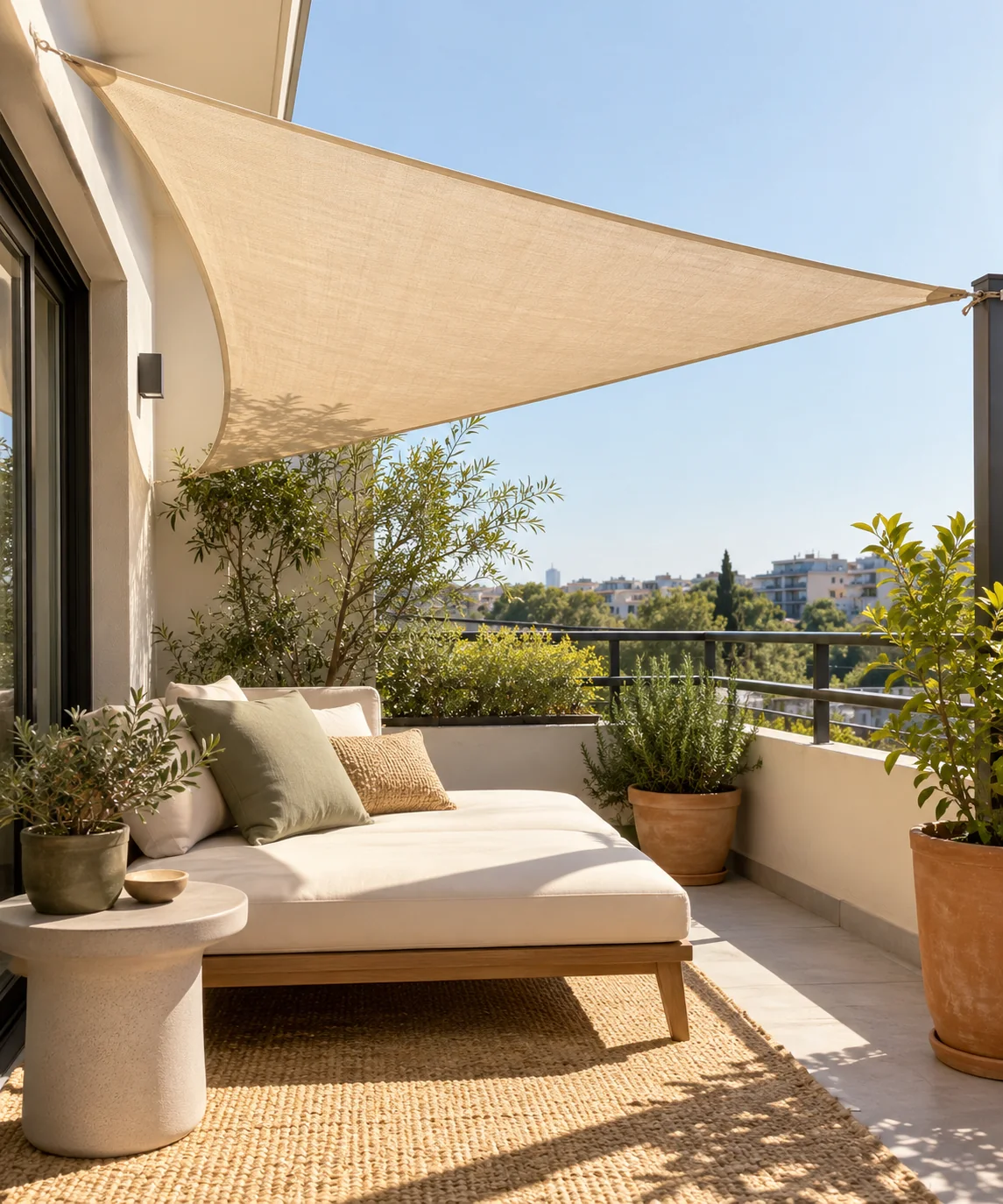
Reviewing Property Rules and Structural Restrictions
Before considering any overhead shade installation, review your building bylaws, lease agreements, and local property rules. Most multi-unit residential buildings prohibit drilling into exterior facades, stucco, masonry, or overhead balconies due to water ingress concerns and structural integrity. Exterior alterations often require written board permission or landlord consent. Even where decorative additions are tolerated, tensioned sails place dynamic pull forces on attachment points that standard residential trim, fascia, or railing posts were never engineered to bear. Verifying property guidelines first prevents costly lease violations or safety hazards.
Understanding Wind Load and Canopy Physics
Shade canopies act much like sails on open water, catching breezes and amplifying lateral pull across every corner. Elevated balconies often encounter wind speeds substantially higher than ground-level patios due to urban wind canyons and height exposure. In gusty conditions, a rigid or semi-tensioned fabric creates sudden uplift and drag, exerting significant leverage on surrounding structures. Relying on makeshift fasteners or untested attachment hardware introduces the risk of hardware failure or airborne debris. Observing local wind patterns during peak afternoon hours helps determine whether an overhead fabric solution is realistically viable for your specific floor height.
Evaluating Freestanding and Reversible Alternatives
When permanent or tensioned wall anchoring is prohibited, consider reversible and non-invasive shading strategies. Freestanding shade solutions, such as weighted half-canopies or modular, collapsible sun visors designed for outdoor use, eliminate the need to drill into exterior walls. Ensure any freestanding frame adheres strictly to manufacturer assembly guidelines and building management policies regarding wind-rated bases. Alternatively, interior-mounted UV-filtering roller blinds positioned on the balcony-facing side of patio doors can significantly diminish thermal transfer without altering exterior architecture.
Selecting Porous Fabrics and Monitoring Sun Paths
If your building allows approved temporary shade textiles, material selection plays a critical role in comfort and air circulation. Densely woven waterproof fabrics trap rising hot air and pool rainwater, creating sagging hazards that stress structural supports. Open-weave, breathable high-density polyethylene textiles permit warm air to escape upward while screening direct solar glare. Track the sun's trajectory across your balcony across different months to identify where shade is genuinely required, avoiding oversized fabric runs that obstruct neighboring sightlines or emergency pathways.
Prioritizing Quick-Release and Weather Monitoring
Any temporary fabric canopy deployed in an outdoor environment must feature an immediate, uncomplicated takedown mechanism. Make it an inflexible routine to strike or retract shade canopies whenever breezes pick up, during forecasted squalls, and whenever the balcony is unattended. Hardware should permit rapid, tool-free release so the textile can be taken down and stowed indoors at a moment's notice. Never leave temporary fabric suspended overnight, as sudden storms can develop when you are unable to respond quickly.
YOUR STARTING POINT
A little checklist.
Original editorial guidance. Images are AI-generated concepts, not photographs of completed projects. Our sources and approach.
Questions to consider
Can I attach shade sail hardware to balcony railings or balusters?
Balcony railings and vertical balusters are engineered strictly for fall protection and lateral safety codes, not for dynamic uplift or tension loads. Attaching canopies to railings can bend metal spindles, crack base welds, and compromise balcony safety while violating building regulations. Direct all structural attachment queries to qualified building maintenance staff.
Are tensioned shade sails suitable for high-rise balconies?
High-rise balconies frequently experience severe turbulence and localized wind sheer that make tensioned fabric sails hazardous. The higher the elevation, the greater the risk of rapid gusts ripping fabric or dislodging hardware. Freestanding or interior shading solutions approved by building management are generally safer for elevated spaces.
What is the safest way to store temporary shade fabrics when not in use?
Dry the fabric completely to prevent mildew growth along the seams, roll it loosely rather than sharply creasing tensioned webbing, and stow it inside a dedicated indoor storage closet. Keeping textiles indoors protects attachment clips and fabric fibres from continuous ultraviolet breakdown and prevents wind from dislodging stored components.