Laundry Space Organization · THE GUIDE
Position a Shallow Lint Bin with a Magnetic Backing
Clearing the lint screen after every drying cycle is an essential laundry habit, but discarding the debris often means walking across the room to a central wastebasket. In compact utility rooms, floor trash cans waste floor space and get bumped by laundry baskets. A shallow, magnetically backed lint bin adheres directly to the side of your metal dryer casing, establishing a direct, zero-footprint disposal station. This placement encourages immediate lint removal, reduces airborne debris, and keeps floors completely clear, optimizing laundry operations without drilling holes or rearranging furniture.
Jump to the checklist ↓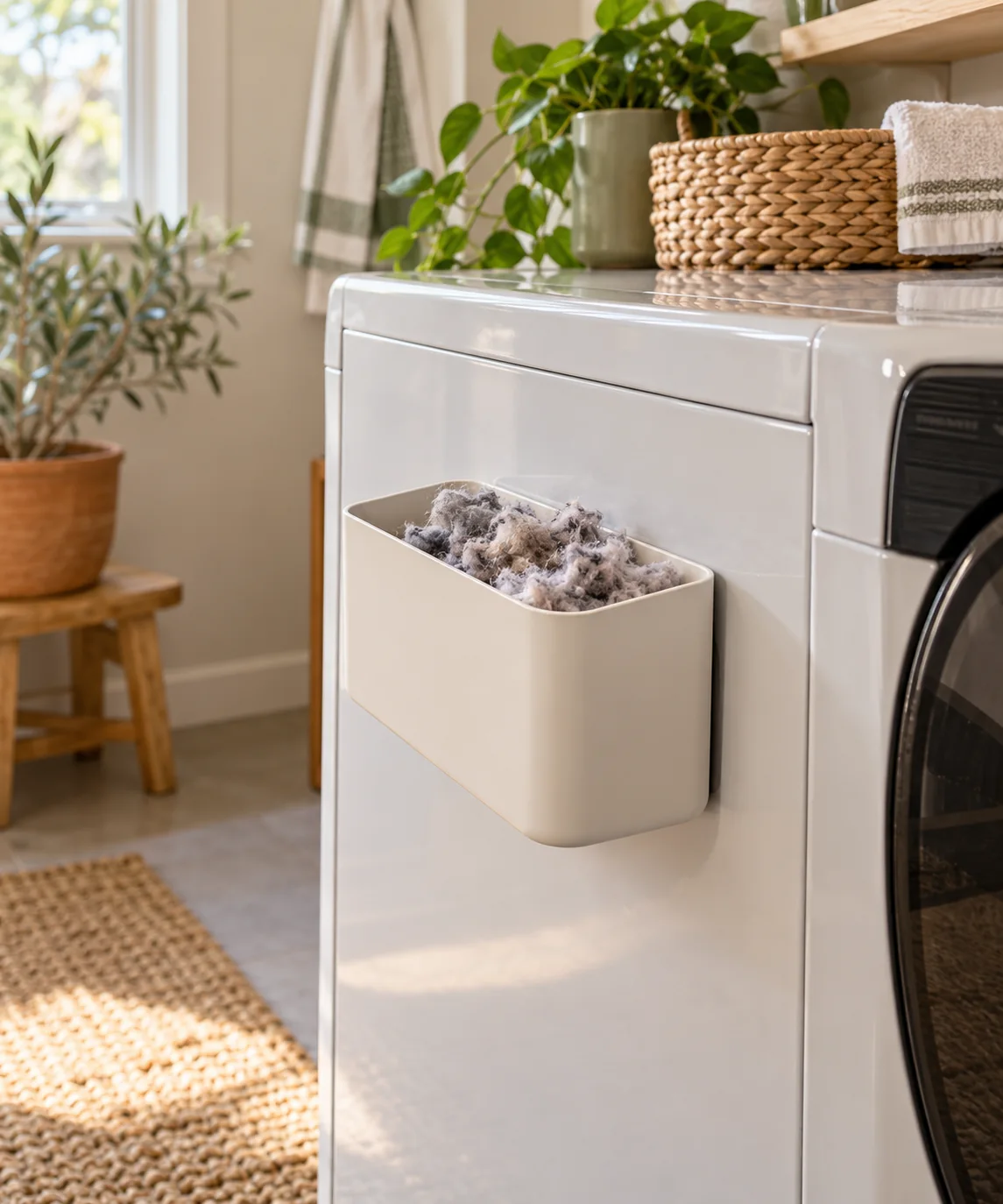
Evaluating Appliance Side Clearance and Surface Contact
Dryer casings are commonly constructed from ferrous sheet steel that accepts magnetic fixtures, but available side clearances vary between homes. Review your appliance manufacturer's documentation for required minimum side and rear clearances before placing any accessories along the casing. Inspect the side panel to locate a flat area free of deep structural stamping ridges, vents, or raised seams that could diminish magnetic surface contact. Measure the depth of your chosen bin against the corridor between the dryer and adjacent walls or appliances to ensure the accessory will not obstruct regular movement or rub against neighboring surfaces during operation.
Placement Height for Natural Workflow
Position the magnetic bin at a comfortable working height adjacent to your dryer's lint screen housing. Placing the container close to the filter cavity helps establish an immediate routine of wiping the mesh and disposing of gathered debris before reinserting the screen. When deciding on placement, check that opening nearby appliance doors, pedestals, or overhead cabinets will not collide with the bin. Keeping the bin within natural sightlines also makes it straightforward to monitor fill levels before each laundry cycle.
Managing Static Cling and Emptying Ease
Dryer lint carries static charge that often causes loose fibers to cling to interior bin surfaces. Choosing a container with a smooth, powder-coated or non-porous interior allows collected lint to release more freely when inverted over a waste receptacle. You can also place a small paper liner or lightweight removable bag inside the bin to lift the gathered debris out cleanly without dispersing fine fibers. Alternatively, gently detach the entire magnetic container from the appliance panel to empty it directly into your primary household trash can.
Dedicated Maintenance and Sweep Accessories
Some magnetic utility bins include integrated side clips or hooks designed to hold slender cleaning accessories. Keeping a flexible vent and trap brush alongside the bin makes it convenient to clean deeper within the lint filter cavity as part of regular appliance upkeep, avoiding the need to locate tools stored elsewhere. A small soft-bristled brush kept on hand also helps gently sweep stray textile fuzz, hair, and dust from delicate mesh screens directly into the bin without scattering debris across the laundry room.
Capacity Limits and Appliance Heat Considerations
Shallow magnetic bins have limited holding capacity and require frequent emptying to prevent overflow. Because accumulated lint is highly combustible, it must never be allowed to build up excessively or remain near potential heat sources, appliance vents, or electrical connections. Check your dryer during a typical cycle to ensure the chosen mounting area does not experience elevated surface temperatures, avoiding spots near the rear heater housing or exhaust ducting. Using a bin with a fitted lid or high lip helps prevent room airflow or exhaust currents from blowing loose fibers back into the room.
YOUR STARTING POINT
A little checklist.
Original editorial guidance. Images are AI-generated concepts, not photographs of completed projects. Our sources and approach.
Questions to consider
Will dryer vibration cause the magnetic bin to slide?
Magnetic hold varies depending on magnet strength, surface finish, and machine vibration levels. While magnets hold steadily under normal conditions, intense spin cycles or unbalanced loads can cause movement. Cleaning the contact panel thoroughly and placing a thin non-slip rubber or silicone pad behind the magnet helps improve grip.
Can I attach this bin to a stacked laundry unit?
Yes, provided the side metal panel is accessible and made of ferrous steel. Mount the bin at an easily reachable height on the dryer panel, taking care to avoid appliance seams, structural stacking brackets, or ventilation openings.
Can collected dryer lint be composted in home gardens?
Composting dryer lint is generally not advised. Even loads of natural fabrics contain detergent residues, fabric softeners, chemical finishes, and microplastics from stitching or mixed garments. Collected dryer lint should be disposed of in standard household trash.