Warm Neutral Living Rooms · THE GUIDE
Position a Swivel Base Armchair to Bridge Garden and TV Views
In a compact living room, allocating space for separate viewing zones often creates clutter and impedes foot traffic. A swivel base armchair solves this layout challenge by acting as a dynamic visual bridge between your media screen and outdoor garden views. Rather than committing to a rigid seating direction, placing a single rotating seat along the perimeter allows you to smoothly transition from watching television to admiring the landscape outside. With careful attention to turning radii and fabric selections, you can establish an adaptable lounge that preserves open floor space.
Jump to the checklist ↓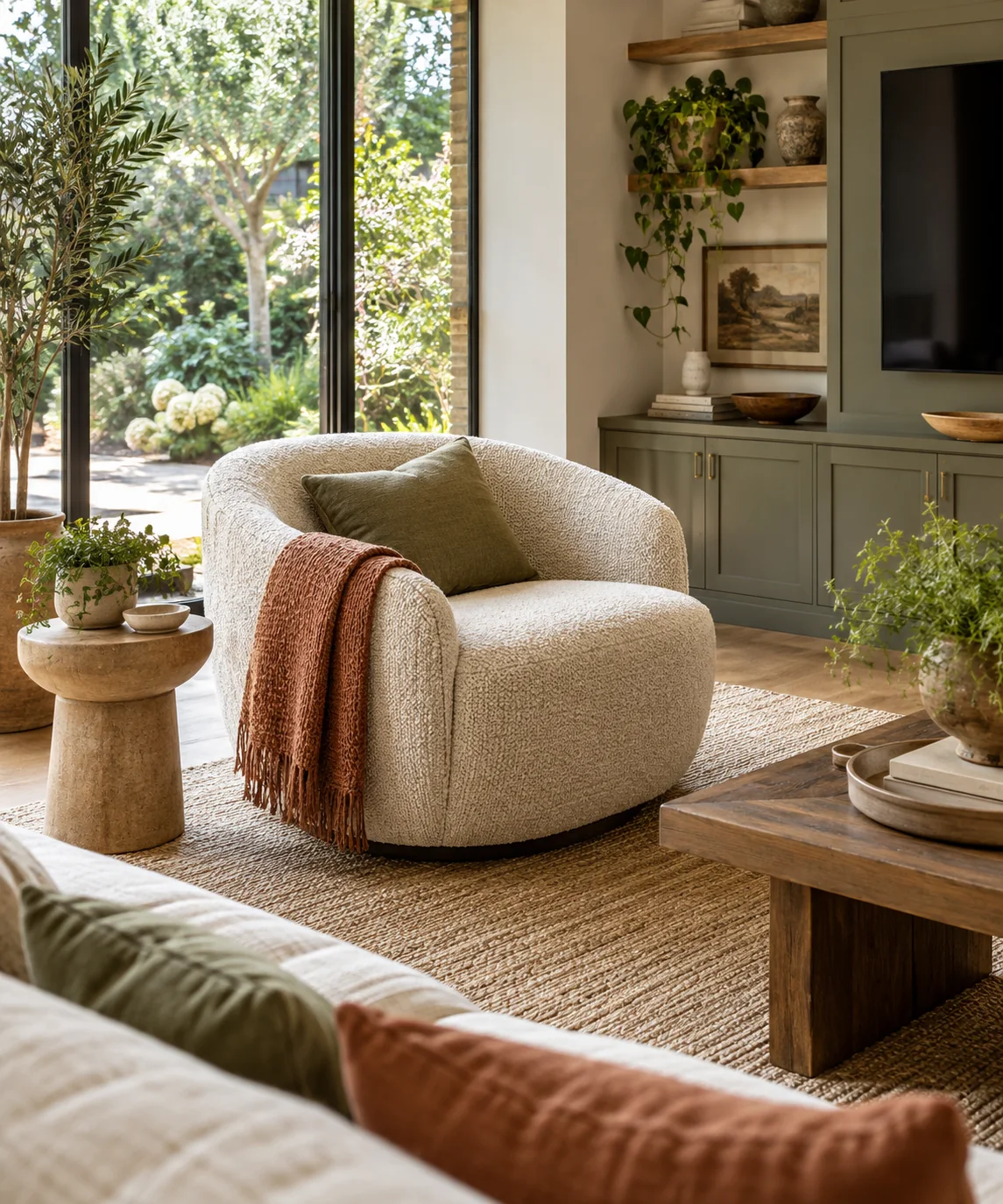
Locating the Pivot Point
Position the armchair in an open area where sightlines to both the television and the primary garden window remain direct and comfortable. The placement should allow natural foot traffic to pass through the living room without forcing occupants to maneuver around the chair. Before selecting a final position, try setting a temporary chair in the intended spot to test turning angles, sightlines, and access to nearby doorways or walkways.
Assessing Rotational Clearance
A swivel armchair requires an open circular envelope that accounts for the chair's widest points, including flaring arms, reclining mechanisms, and an occupant's legs. Walk completely around the chair while slowly rotating it to check that it moves freely without striking side tables, walls, or nearby seating. If the chair sits near an area rug, check that the entire base rests securely on the rug or flat on the bare floor to prevent uneven tilting during rotation.
Preserving Daylight and Sightlines
Choose a low-back or curved barrel-style silhouette to keep natural light flowing smoothly into the room. Taller chair designs can interrupt sightlines toward exterior greenery and cast deep shadows across smaller living room layouts. Upholstery in warm neutral tones like oatmeal, sand, or unbleached linen reflects indirect daylight gently while tying together the indoor seating area with the view outside.
Protecting Floors and Managing Surrounding Surfaces
Swivel mechanisms transfer rotational movement down into the base, which can create localized friction against finished flooring. Inspect the underside of the base and use manufacturer-recommended protective felt rings or glide pads on hardwood or laminate to reduce the risk of scuffing. Keep the immediate floor perimeter clear of cords, low charging cables, and stray objects that could catch in the turning hardware or create a tripping hazard.
Balancing Surrounding Furniture and Lighting
Surround the swivel chair with flexible, appropriately scaled furniture that supports easy rotation. If using a companion side table, select a stable, compact design positioned outside the chair's immediate turning path. Avoid placing floor lamps directly in the swing zone where an unexpected turn could bump a shade; instead, rely on wall sconces, ceiling fixtures, or securely placed table lamps to provide balanced ambient light.
YOUR STARTING POINT
A little checklist.
Original editorial guidance. Images are AI-generated concepts, not photographs of completed projects. Our sources and approach.
Questions to consider
Can I use an armchair with an ottoman on a swivel base?
An ottoman pairs well if positioned with adequate room to step between pieces and outside the chair's turning arc, allowing the chair to rotate freely without requiring constant repositioning.
How do I prevent the swivel chair from scratching wood floors?
Check the underside of the base for burrs or abrasive edges, apply dense felt or non-marking glides designed for your base type, and sweep the area regularly to prevent trapped grit from abrading the finish.
What fabric choice works best near a sunny garden window?
Tightly woven neutral textiles, including performance blends or solution-dyed yarns, resist noticeable sun fading better than delicate natural silks or dark dyes while maintaining a soft, comfortable texture.