Small Balcony Layouts · THE GUIDE
Position a Tiered Plant Ladder Against a Solid Brick Sidewall
Balcony gardening requires balancing container ambition with everyday access, particularly along narrow footprints where floor-standing pots can quickly crowd doorway thresholds. Positioning a tiered plant ladder against a solid brick sidewall makes practical use of vertical space without monopolizing central walking areas. Solid masonry offers an upright backing that limits wind exposure from one direction compared to open railings. By organizing containers vertically rather than across the floor plane, you can cultivate culinary herbs while preserving a clear exit route. However, freestanding leaning ladders must be chosen and positioned thoughtfully, respecting container weights, manufacturer load limits, and building policies regarding outdoor furniture.
Jump to the checklist ↓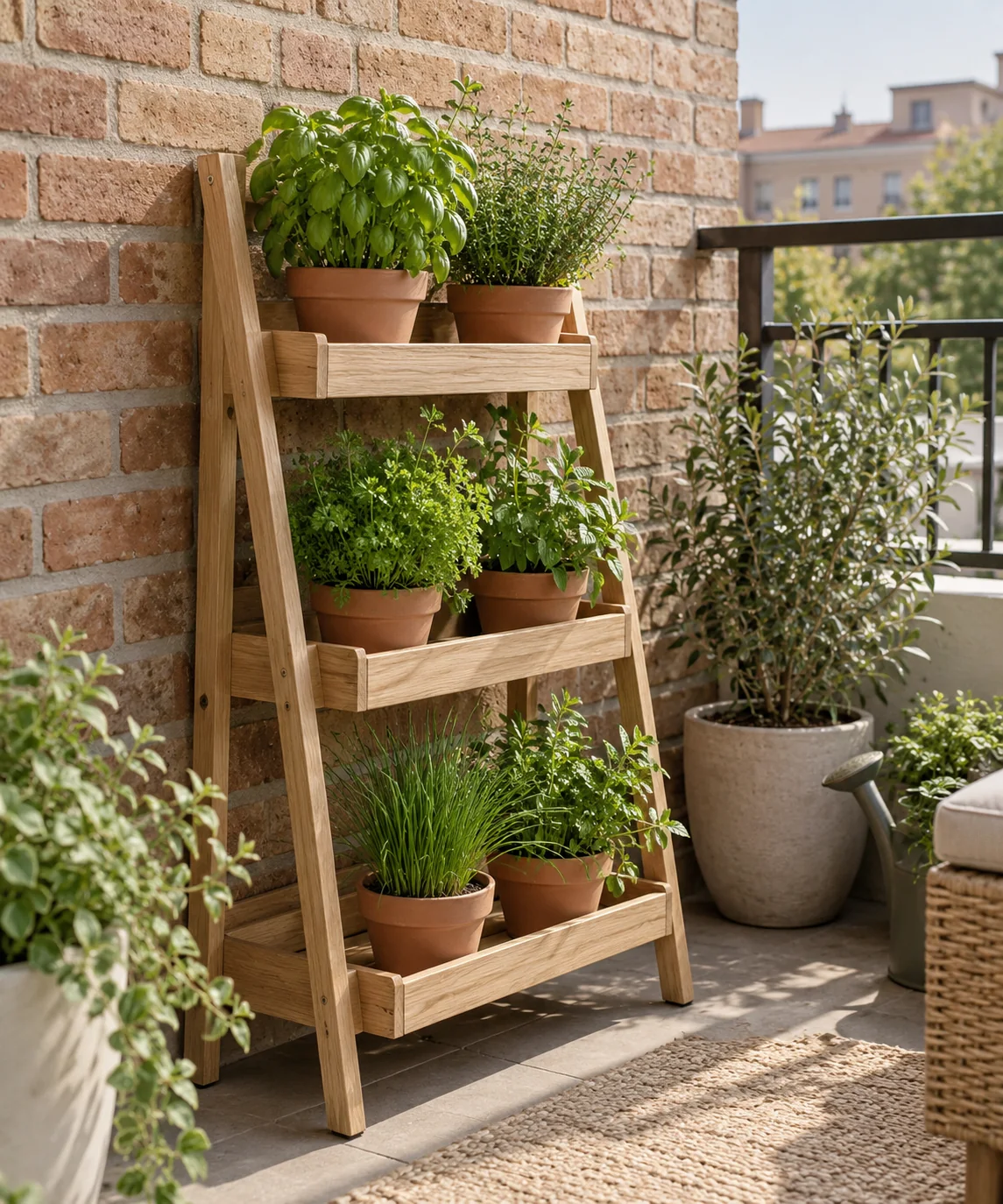
Assessing Balcony Footprint and Door Clearances
Before placing a leaning ladder unit, assess your balcony's usable width and regular circulation paths. Measure the footprint of the ladder base when set at the manufacturer's recommended leaning angle, verifying that exterior doors can swing through their full arc without catching the ladder legs or bottom shelf. Solid sidewalls often provide a practical boundary outside primary foot traffic. Rather than relying on arbitrary clearance numbers, confirm that you have sufficient space to walk comfortably and reach utility fixtures or emergency exits without turning sideways or brushing past foliage.
Arranging Potted Herbs by Natural Light
Solid masonry sidewalls cast shifting shadows as the sun moves across the sky. Track how daylight hits the wall throughout the day before filling the tiers. Sun-demanding herbs such as rosemary, thyme, and oregano generally perform best on the uppermost shelf, where shade from the wall structure is reduced. Mid-level and lower rungs can accommodate herbs that tolerate partial or dappled light, such as chives, mint, or flat-leaf parsley. Adjust pot arrangements gradually if foliage shows signs of stretching toward the light or drying out unevenly.
Managing Tier Loads and Pot Selection
Multi-tiered plant ladders have distinct weight limits specified by the manufacturer for each shelf and for the total structure. Wet potting mix, clay pots, and mature plants add substantial weight. Place wider, heavier pots on the lowest shelf to keep the combined center of mass lower, but do not rely on pot weight alone to guarantee stability in gusty conditions. Select lightweight plastic, resin, or thin composite pots for upper rungs to avoid exceeding rated shelf limits. If you have concerns about overall balcony structural capacity, consult building management or a qualified professional before concentrating multiple large containers in one area.
Drainage Management and Surface Protection
Irrigating containers set against exterior brick requires careful water containment to prevent damp marks, efflorescence, or runoff spilling toward neighbors below. Ensure every pot is equipped with a dedicated saucer or uses a sealed cachepot with an inner nursery liner. Allow air to circulate between the pots and the brickwork rather than pushing moist surfaces flush against the wall. Empty excess drainage water from saucers after watering to prevent root rot and avoid standing water that could attract pests or seep onto the balcony floor.
Stability Limitations and Seasonal Awareness
Freestanding leaning ladders rely on friction at the base and top contact points. Use non-marking, non-slip rubber pads on the ladder feet to reduce the chance of shifting on wet concrete or smooth decking. In elevated or wind-prone locations, leaning ladders may still be vulnerable to sudden gusts, regardless of pot arrangement. When strong storms are forecast, temporarily move pots to the floor and lay the ladder flat. If building rules permit permanent hardware, tethering may be considered, but renters and owners alike should always confirm lease or HOA regulations before attempting any structural fixings.
YOUR STARTING POINT
A little checklist.
Original editorial guidance. Images are AI-generated concepts, not photographs of completed projects. Our sources and approach.
Questions to consider
Can a plant ladder tip over in strong balcony winds?
Yes, wind gusts on elevated balconies can overturn leaning stands even if heavier pots are placed on lower tiers. Monitor local weather forecasts, fit non-slip foot pads, and move containers to ground level or store the ladder flat during high-wind advisories.
How can I prevent moisture damage on brick walls behind plant stands?
Maintain a small air gap between the ladder frame, pots, and the masonry surface to allow ventilation. Always use saucers beneath containers to catch drainage water, and pour off excess standing runoff rather than letting it spill onto the balcony slab.
Are leaning plant ladders permitted on all apartment balconies?
Regulations vary widely by property management and municipal fire codes. Many residential buildings require clear egress routes or restrict tall, unanchored outdoor furniture. Consult your building management or tenancy agreement before installing multi-tiered outdoor stands.