Dining Nooks · THE GUIDE
Position a Tiered Plant Stand Beside a Breakfast Table for Fresh Greens
Integrating a compact vertical tiered plant stand beside a breakfast table establishes an organic transition between cooking and dining zones while keeping culinary greens accessible. Compact dining nooks frequently suffer from stark, abrupt boundaries where tables press against walkways. Placing a tiered stand introduces soft foliage height without demanding deep floor space. Because most culinary herbs require strong natural sunlight, locating this arrangement next to a sunlit window ensures plant vigor while framing meals naturally. With thoughtful clearances, deep saucers, and proper tier assignments, you can introduce living texture without complicating daily seating movements.
Jump to the checklist ↓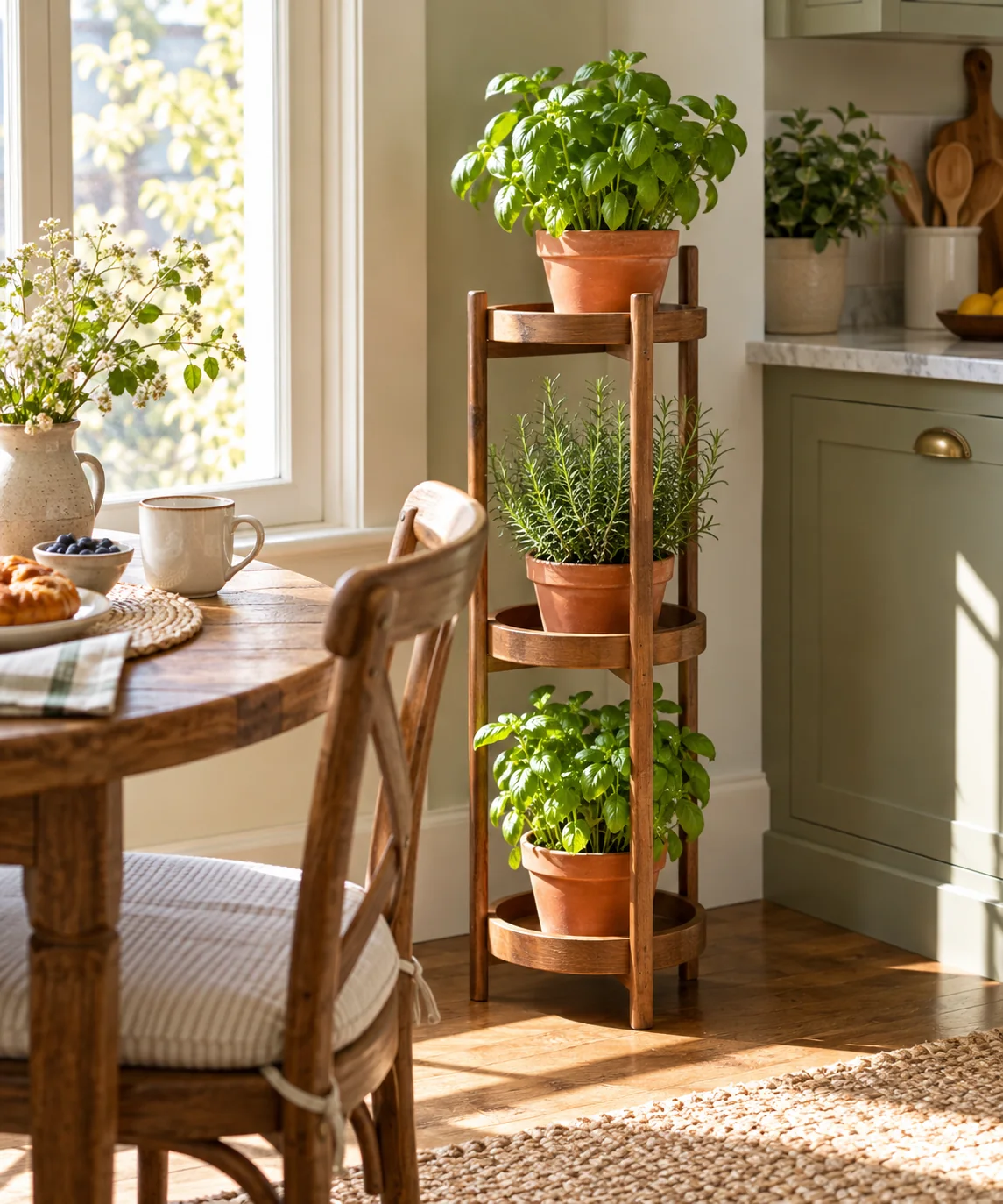
Evaluating Window Light Exposure
Culinary herbs like rosemary, thyme, and basil demand several hours of direct, strong sunlight each day to remain compact and aromatic. Before choosing a plant stand, confirm your breakfast nook receives ample sun exposure from an adjacent window. Positioning greens in low light results in spindly stems, weak foliage, and premature decline. If natural light reaches only certain spots during specific hours, select a freestanding stand that shifts easily across the floor, allowing you to realign tiers directly into the sun path without permanently locking down furniture arrangements.
Calculating Seating Clearances
A dining chair requires roughly twenty to twenty-four inches of push-back clearance from the tabletop to let diners stand comfortably. Place the tiered stand just outside this active travel zone, ensuring diners do not brush against foliage or tip light pots during routine movement. Measure the stand's base footprint beforehand; narrow three-tier ladder frames or corner-profile pedestals consume minimal square footage. Keeping twelve inches of breathing room between the outer edge of the chair back and the nearest foliage prevents soil spills and keeps pathways completely navigable.
Staging Heights and Weight Balance
Arranging potted containers across multiple levels demands careful weight distribution to maintain balance. Place wider, heavier pots containing robust herbs on bottom shelves to establish a grounded center of gravity. Reserve upper tiers for small, lightweight containers or upright varieties like chives and young basil. Always use pots with proper drainage holes seated inside watertight, individual saucers. Avoid gravel drainage layers inside pots, as true drainage relies entirely on well-aerated potting mix passing surplus moisture cleanly out through bottom openings into deep collection saucers.
Mocking Up with Existing Furniture
Before purchasing a dedicated vertical plant stand, test the physical footprint using everyday household items. Position an existing narrow end table, step stool, or folding plant caddy alongside your breakfast nook chairs for several days. Observe whether diners bump the surface when rising or if elbow movement feels constricted during breakfast. This temporary trial reveals whether the nook can accommodate vertical foliage or whether a single windowsill tray serves your room proportions better, preventing costly layout errors before committing to permanent furniture additions.
Routine Care and Debris Containment
Living greenery inevitably sheds dried leaves, blooms, and stray potting mix, particularly when herbs undergo regular kitchen snipping. Keep a small handheld brush and dustpan near the nook for rapid sweep-ups rather than letting debris accumulate around dining chair legs. Water each pot using a narrow-spout watering can to direct moisture squarely into the soil, keeping the stand's wooden or metal framework dry. Empty drainage saucers twenty minutes after watering to prevent root rot and protect timber surfaces from persistent, trapped moisture.
YOUR STARTING POINT
A little checklist.
Original editorial guidance. Images are AI-generated concepts, not photographs of completed projects. Our sources and approach.
Questions to consider
Can I grow culinary herbs in a shaded dining nook?
Culinary herbs require strong, direct sunlight to thrive indoors. In a shaded dining nook lacking bright natural light, herbs rapidly become leggy and weak. Reserve the plant stand for bright window exposures, or choose non-edible shade-tolerant foliage plants instead.
What type of pots work best on tiered stands?
Lightweight terracotta or glazed ceramic pots featuring bottom drainage holes work well. Match pot diameters precisely to shelf depths, and pair each container with a waterproof saucer to prevent water from dripping onto underlying tiers and flooring.
How do I prevent water from ruining wooden plant shelves?
Always sit pots in non-porous ceramic, metal, or plastic saucers that contain overflow. Wipe down wooden tiers immediately after watering, and avoid overfilling pots so soil-stained water never splashes over saucer rims onto the framework.