Small Bedroom Layouts · THE GUIDE
Positioning a Bed Opposite the Entry Door to Maximize Sightlines
In tight bedroom layouts, first impressions dictate how spacious the interior feels. Placing the bed directly opposite the doorway establishes an immediate, deliberate focal point upon crossing the threshold. Rather than confronting an awkward furniture corner, a cramped walkway, or an untidy desk, the eye travels directly toward a balanced, well-proportioned sleeping zone. This deliberate sightline organizes the room around its primary function. Achieving this spacious effect requires careful management of passage dimensions, headboard scale, and textile selections so that the view feels open rather than imposing.
Jump to the checklist ↓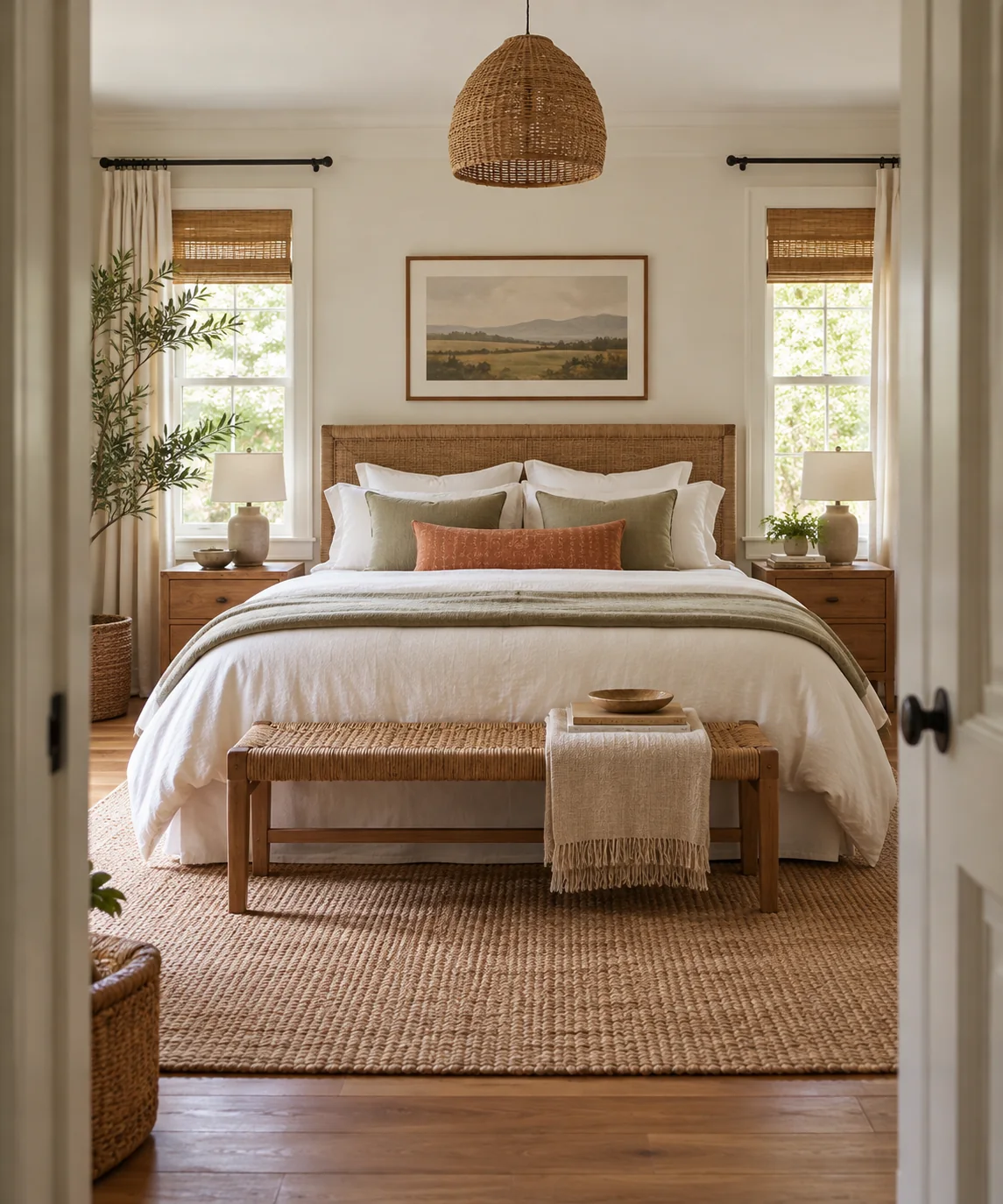
Establishing the Central Axis
Align the center of the headboard with the line of sight from the fully opened door. This straight-on orientation draws the gaze deep into the room, creating an optical perception of length. Verify that the clearance pathway between the foot of the bed and the doorway frame remains at least seventy-five centimeters. If the doorway swings inward toward the room, confirm the door edge clears the bed corner by at least fifteen centimeters without clipping bedding.
Selecting an Unobtrusive Bed Profile
A bed directly on the entry axis should avoid high, heavy footboards that truncate sightlines. Choose a low-profile platform frame with exposed slim legs or a minimal recessed base. Elevating the mattress visually while keeping the lower perimeter open allows floor surfaces to remain visible underneath, expanding the perceived room volume. Keep the headboard relatively low and streamlined so it anchors the back wall without swallowing the room's limited vertical height.
Styling for Immediate Order
Because the bed commands full visibility from the hallway, disciplined styling is necessary. Use smooth, solid-colored duvet covers in neutral tones, which reflect ambient daylight better than dark, busy patterns. Tuck top layers cleanly around the mattress perimeter to maintain crisp lines. Limit decorative cushions to two simple accents alongside standard sleeping pillows; excessive bedding piles quickly clutter the primary view and diminish the intended architectural order of the entry vista.
Flanking the Sightline with Symmetry
Support the central view by positioning low, matched bedside surfaces on either side of the mattress frame. Symmetrical arrangements generate calm visual structure that stabilizes the view from the door. Keep these side tables clear of tall decor that could pinch the vista. If space alongside the walls is tight, use narrow floating ledges rather than boxy tables, keeping lower floor planes visible all the way to baseboards.
Addressing Functional Constraints
Positioning a bed opposite the door reduces privacy if the bedroom door remains open during gatherings. In drafty homes, entry alignment can also channel hallway air currents directly across the mattress. Test your sensitivity to sound and drafts before committing to this layout. If floor clearances drop below seventy centimeters, navigating the room in darkness becomes hazardous, indicating the bed must shift to an adjacent, less central wall.
YOUR STARTING POINT
A little checklist.
Original editorial guidance. Images are AI-generated concepts, not photographs of completed projects. Our sources and approach.
Questions to consider
Does placing the bed directly opposite the door compromise privacy?
Yes, anyone walking past an open door will see directly into your sleeping area. If household foot traffic is high, keep the door partially latched or use a lightweight folding screen to softly deflect external views.
What if my room lacks the length for adequate foot clearance?
If you cannot achieve at least seventy centimeters of clearance at the foot of the bed, reposition the frame against an adjacent side wall. Cramping the entry path creates frustration and ruins the intended open sightline.
Should the headboard be tall or short for this layout?
Opt for a low-to-medium headboard with clean horizontal lines. A soaring headboard can overwhelm the entrance sightline, making the ceiling feel lower and shrinking the perceived scale of a compact room.