Household Reset Routines · THE GUIDE
Potting Bench Tool Tidy and Seed Packet Filing
A dedicated potting bench easily turns chaotic when active gardening introduces loose soil, mismatched hand tools, and crumpled seed envelopes across its work surface. Organizing this station creates calm efficiency and prevents seed loss or premature spoilage from stray moisture. By sorting seed packets into seasonal filing dividers and wiping clean soil-caked spades and trowels, you protect valuable gardening supplies for subsequent plantings. A structured bench reset routine keeps tools within reach, controls outdoor debris, and ensures every seed variety remains properly cataloged and dry in its designated storage container.
Jump to the checklist ↓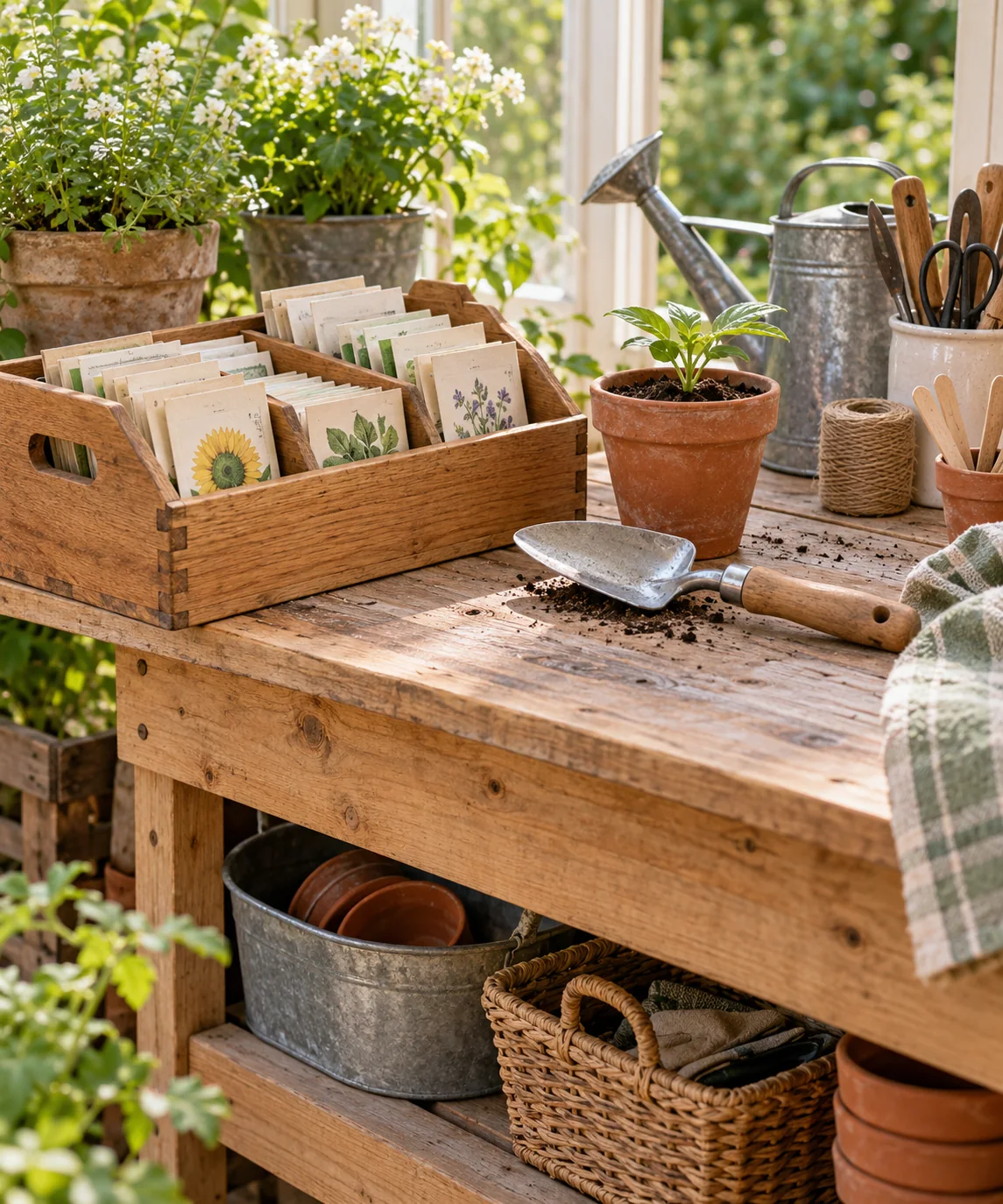
Clearing and Sweeping the Working Surface
Begin by relocating all loose items off the bench deck into temporary sorting boxes on the floor. Use a stiff hand brush to sweep loose potting soil, dried perlite, and root fragments toward a bucket held at the bench edge. Avoid wetting dry soil on raw wood surfaces, which creates sticky mud in the grain. Thoroughly clearing the primary deck first provides an unobstructed, clean surface to safely evaluate seed packets without exposing paper packaging to residual moisture.
Wiping and Conditioning Hand Tools
Hand trowels, weeders, and cultivators accumulate soil crusts that trap humidity against metal surfaces. Scrape hardened soil off blade faces using a wooden paint paddle or stiff nylon brush over a waste bin. Wipe metal shafts and wooden handles thoroughly with a dry shop rag to remove residual grit. Check tool joints for looseness or splintering. Storing hand tools clean and completely dry inside hanging tool organizers keeps blades functional without premature surface degradation.
Sorting Seed Envelopes by Sowing Season
Gather scattered seed packets and organize them logically by their intended planting windows: cool spring, warm summer, and late autumn intervals. Discard empty packets or torn sleeves where seeds have spilled loose. Check that partially opened envelopes are securely folded and clipped closed with small paper clips or adhesive tape. Grouping envelopes into chronological sections eliminates frantic searching when short seasonal sowing windows open, ensuring seeds are planted while germination vigor remains optimal.
Filing Packets into Moisture-Safe Containers
Place seasonal seed bundles into a rigid storage caddy or divided wooden filing box rather than leaving them exposed on open shelves. Ensure the storage box stays shut to protect seeds from bench splashes, wind gusts, and ambient potting humidity. Position divider index tabs clearly labeled by planting month or crop type for fast visual scanning. Keep this filing container stored in a cool, sheltered interior closet rather than leaving delicate seeds in uninsulated outdoor heat.
Restoring Order to Bench Storage Shelves
Conclude your routine by restocking your cleaned hand tools, spare nursery pots, and plant labels onto lower shelves or wall racks. Stack pots by size with drainage holes open to dry, avoiding unstable vertical towers that might topple. Keep frequently used measuring scoops and snips in an open desktop caddy for easy retrieval. A clearly zoned potting bench maintains reliable workflow, reduces repetitive tool searches, and extends the operational life of all gardening equipment.
YOUR STARTING POINT
A little checklist.
Original editorial guidance. Images are AI-generated concepts, not photographs of completed projects. Our sources and approach.
Questions to consider
How should opened seed packets be stored to maintain viability?
Fold packet tops securely and secure them with a paperclip. Store packets inside an airtight plastic container or divided wooden filing box placed in a cool, dark, dry interior closet away from greenhouse humidity.
Why avoid using water to clean wooden potting benches?
Washing dry potting mix with water drives wet soil into the wood grain, creating stubborn mud and promoting rot. Sweeping with a stiff, dry hand broom removes debris cleanly without dampening wood surfaces.
What is the best way to categorize seed packets?
Sort seed envelopes by seasonal planting calendar, grouping early spring greens, warm-season crops, and autumn plantings together. Sub-divide groups alphabetically or by plant family using labeled index cards for rapid selection.