Patio Seating Ideas · THE GUIDE
Potting Table with Integrated Pull-Out Step Stool
A dedicated potting zone often demands both comfortable seating for detailed seed sowing and elevation to reach upper shelves or hanging brackets. Integrating a low, nesting step stool directly beneath a standard-height potting table provides this dual function without permanently occupying open floor space. On a compact patio or porch, floor clearance remains critical for safe movement. By designing or choosing a bench that slides fully between the table support legs, you maintain clean walkways when potting tasks end. This dual-purpose arrangement converts a purely utilitarian workstation into a flexible sit-stand gardening station tailored to smaller outdoor footprints.
Jump to the checklist ↓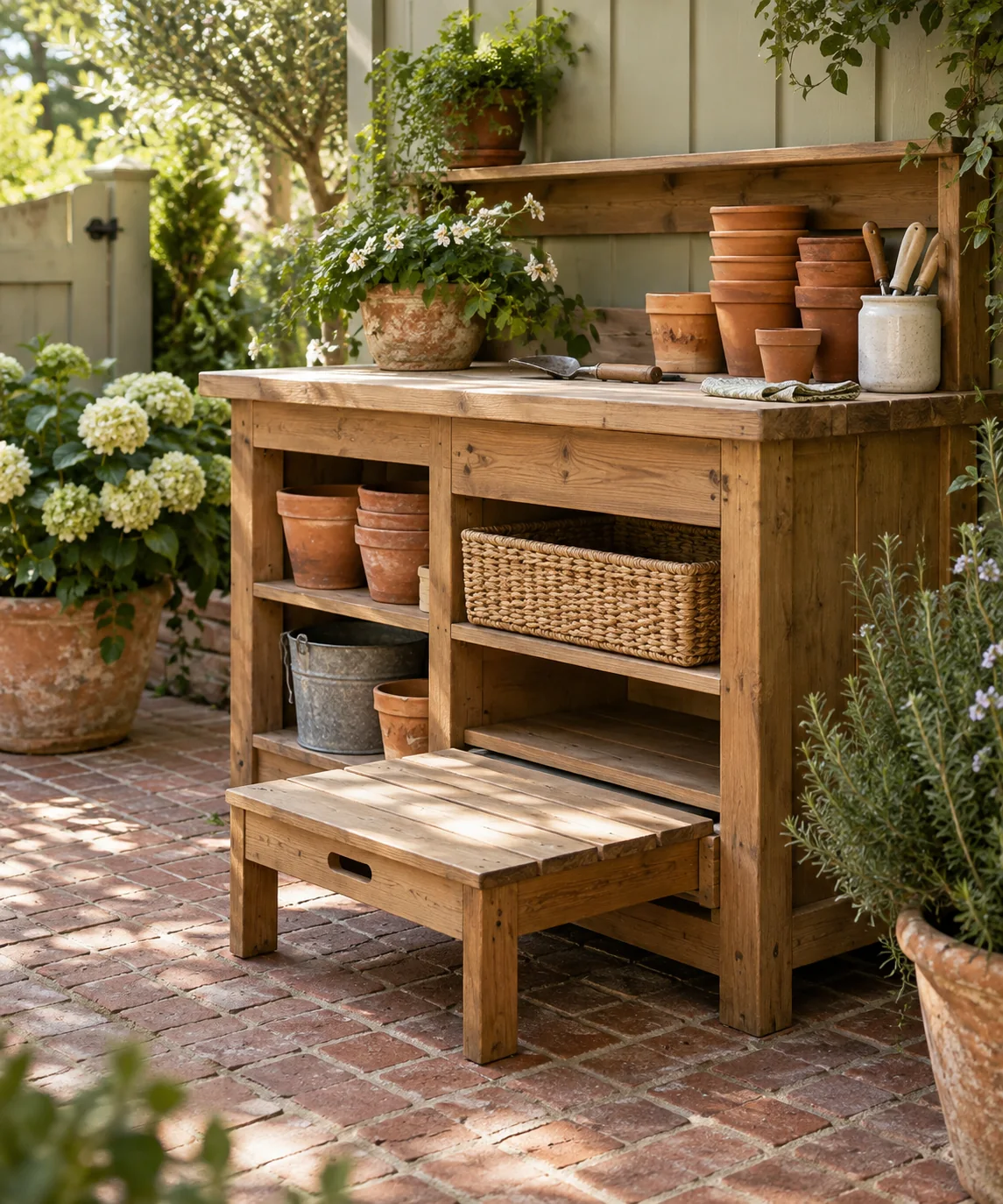
Dimension Clearances and Leg Spacing
Before choosing or building a step stool to nest beneath a potting table, measure the internal clearance between the table legs and under the front apron. Outdoor utility tables vary widely in height and leg placement, so checking available vertical and horizontal space prevents tight fits. Aim for a stool size that slides smoothly between the table legs with comfortable clearance on each side. This margin avoids pinched hands during stowage and prevents the stool feet from catching on uneven paver joints or decking seams.
Sitting Versus Stepping Stability
A dual-purpose step stool requires different stability considerations than standard casual seating. Because shifting your weight while stepping upward can cause narrow furniture to tip, look for a design featuring splayed legs, a broad footprint, or a solid box-style base. A seat that is deep enough for comfortable seated tasks like potting seedlings should also have a textured, non-slippery surface for secure footing when stepping up. Lightweight, unweighted frames can slide across smooth outdoor paving, so prioritize designs with adequate mass and ground contact.
Evaluating Ergonomics with Existing Furniture
Before committing to a specific furniture combination, test the arrangement using a standard household step stool or a sturdy wooden box placed beneath your current work surface. Work at the potting station across several sessions to evaluate legroom, reach, and circulation paths around the patio. Observe whether your knees strike the table apron or lower shelf while seated. If seated space feels restricted, angling the stool slightly outward during detailed potting tasks can improve comfort without blocking main patio pathways.
Surface Care and Debris Management
Potting tasks routinely scatter damp soil, grit, and water that collect around furniture joints and base recesses. Regularly brushing out the storage recess prevents accumulated sand from abrading frame finishes when the stool is slid in and out. Treat exterior timber components according to the finish manufacturer's instructions to protect against weathering from seasonal dampness. Fitting stool and table legs with protective synthetic glides or rubber pads helps keep the wood ends slightly elevated, reducing moisture uptake from wet patio slabs.
Storage Trade-Offs and Working Limitations
Storing a pull-out stool directly under a potting bench uses space that would otherwise accommodate soil bags, large nursery pots, or tall garden buckets. Plan alternative ground-level storage, such as a separate deck box or corner storage shelf, for bulkier gardening supplies. Remember that a low utility stool is intended only for seated bench tasks or reaching low hanging planters; it should never serve as an improvised ladder for high pruning, exterior roof cleaning, or elevated home maintenance.
YOUR STARTING POINT
A little checklist.
Original editorial guidance. Images are AI-generated concepts, not photographs of completed projects. Our sources and approach.
Questions to consider
How much clearance should I leave between the stool and table legs?
A practical gap of several inches along the sides and top gives enough room to slide the stool in and out smoothly without scraping knuckles or catching on uneven ground surfaces.
What exterior finishes help protect a wooden potting stool?
Exterior-grade penetrating wood stains, exterior sealers, or outdoor furniture oils formulated for outdoor conditions help protect the timber. Reapplication intervals depend on local sun exposure, seasonal rainfall, and product manufacturer recommendations.
Will a nested stool interfere with normal standing work at the table?
When the stool is sized properly and pushed fully under the table, it remains recessed beneath the front overhang. This allows you to stand directly at the work surface without your feet bumping into the stool frame.