Container Vegetable Gardens · THE GUIDE
Privacy Screen Trellis Planter for Pole Beans
Balcony and patio gardening often involves balancing openness with the desire for visual separation. Using deep trough planters fitted with climbing trellises allows you to grow vigorous annual pole beans that form a temporary living partition. These fast-growing legumes produce broad foliage and attractive flowers throughout the summer months while providing an edible harvest. Because freestanding trellis planters do not require permanent attachment to building walls, they offer a reversible arrangement for rental properties and shared residential decks when installed with proper attention to wind exposure and weight limits.
Jump to the checklist ↓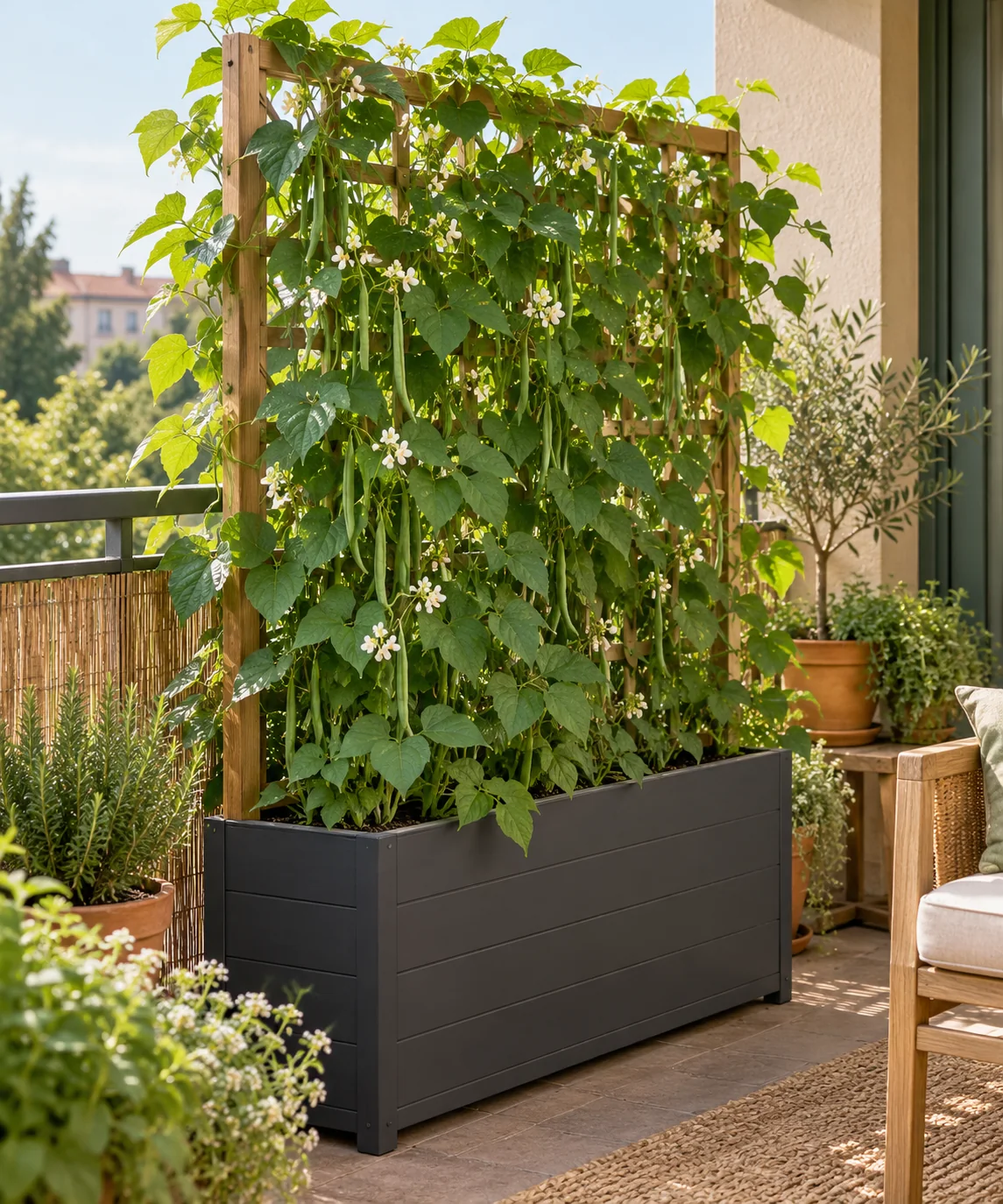
Trough Proportions and Stability Factors
A freestanding trellis planter must maintain a wide, stable footprint to handle the mechanical leverage created by tall climbing vegetation. Choose a sturdy trough with sufficient base width and depth to support the intended climbing structure. Keep the climbing trellis within reasonable heights, generally not exceeding five feet from the container base, to reduce the risk of tipping. Never rely on the planter weight alone to withstand strong gusts; inspect the setup regularly and be prepared to take temporary stabilization measures during stormy periods.
Substrate Choice and Balcony Load Limits
Balconies and elevated decks have strict weight capacities that must be respected. Wet potting soil, heavy planters, water, and full-grown plants create substantial loads. Before purchasing and filling large trough planters, consult property management, local building codes, or a qualified structural engineer to confirm permissible deck capacity. Fill the trough with a commercial container potting blend rather than heavy field soil, ensuring bottom drainage openings remain unblocked to prevent standing water from adding unnecessary weight.
Grid Selection and Vine Training
Select a durable trellis material, such as powder-coated metal, rigid composite lattice, or cedar framing with integrated mesh. Ensure openings are large enough for twining stems to wrap around comfortably. Direct emerging pole bean shoots toward the lower climbing rungs as soon as they produce their first true leaves. Climbing beans naturally twine as they grow, but periodic guidance helps distribute the foliage evenly across the trellis face to create consistent seasonal screening.
Sun Exposure and Canopy Management
Pole beans require regular direct sunlight to maintain healthy foliage and continuous flower set. Insufficient lighting produces sparse, leggy growth that reduces screening effectiveness. Monitor vine development throughout early summer, gently weaving wayward shoots back through open sections of the trellis grid. Once vines reach the top edge of the support, trimming the leading tips redirects growth into secondary side shoots, helping fill lower and middle sections of the canopy.
Wind Precautions and End-of-Season Teardown
Dense living screens create broad surface resistance against passing air currents. While locating planters near existing boundaries may provide some shelter, high-rise balconies and open decks can experience unpredictable turbulence. Secure or lower high elements when severe wind events are forecast. At the end of the growing season, cut bean vines at soil level, let the stems desiccate for easier removal from the grid, and clear out spent roots to prepare the container for winter storage.
YOUR STARTING POINT
A little checklist.
Original editorial guidance. Images are AI-generated concepts, not photographs of completed projects. Our sources and approach.
Questions to consider
Which climbing bean types work well for temporary summer screening?
Scarlet runner beans and vigorous pole bean varieties provide extensive leaf coverage and summer blossoms. Choose varieties matched to container growing and supply consistent moisture to sustain their foliage density.
How frequently do large trellis planters require watering?
High-leaf-area climbers in exposed locations transpire water quickly during hot weather. Check soil moisture daily during summer peaks, watering whenever the top few centimeters feel dry while ensuring surplus water drains freely.
Are freestanding trellis planters safe on high-floor balconies?
High balconies frequently experience strong winds that can displace tall items. Verify building rules regarding balcony fixtures, use robust containers with low centers of gravity, and secure or dismantle vertical panels ahead of severe weather.