Small Kitchen Organization · THE GUIDE
Pull-Out Waste and Recycling Setup in a Compact Base Unit
In compact kitchens where floor area is at a premium, placing a freestanding waste bin in main walkways can create congestion. Converting a standard lower base cabinet into a dedicated pull-out waste station conceals refuse containers while keeping circulation paths clear. A dual-compartment arrangement allows sorting general refuse from recyclables or organic scraps in one coordinated action. Planning interior clearances, checking hardware weight limits, and maintaining clean glide tracks ensures the system functions reliably during routine meal preparation.
Jump to the checklist ↓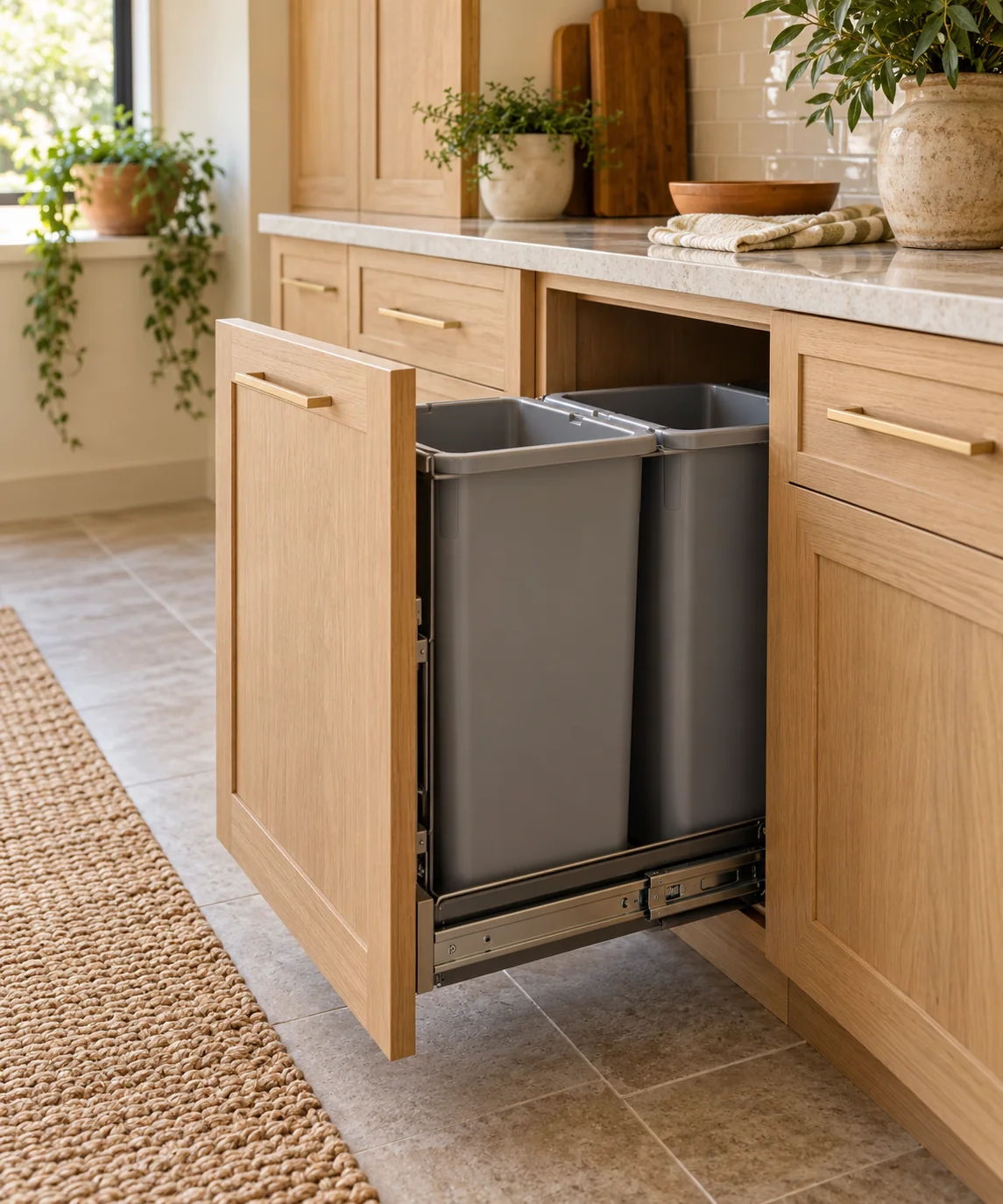
Measuring Usable Clearances and Obstructions
Before choosing hardware, verify the clear interior width and depth of the cabinet opening. On face-frame cabinets, measure from the narrowest inside edge of the frame rather than the outer carcass walls. Inspect the interior for rear obstructions such as sink drainage pipes, water supply stops, electrical boxes, or low-hanging structural braces. Compare these dimensions directly against the manufacturer clearance specifications for your intended slide assembly, making sure to account for door hinge swing and handle projection into adjacent walkways.
Selecting Container Configurations and Profiles
Dual containers can be positioned side by side in wider openings or tandem front-to-back in narrower layouts. Slender bins maximize vertical space while leaving perimeter room so the carriage operates without rubbing against cabinet sidewalls. Reserve the most accessible front bin for high-frequency kitchen waste or food prep scraps, placing dry recyclables in the rear. Check that the combined height of the bins sitting in the carriage allows sufficient overhead clearance to lift full liners out without catching on the cabinet face frame or countertop overhang.
Hardware Ratings and Movement Clearances
Pull-out assemblies rely on bottom-mount or side-mount runners designed for specific weight thresholds. Review the manufacturer load rating to confirm the mechanism can handle the combined weight of the carriage, bins, and expected refuse, particularly if sorting heavy paper or glass. Follow the manufacturer template and guidance for mounting rather than improvising runner placement. Ensure the cabinet door opens fully clear of the opening—often requiring wide-angle hinges if the door is not attached directly to the pull-out frame—so the carriage glides out freely.
Moisture Management and Liner Maintenance
Enclosed base cabinets can trap moisture and odors if refuse containers are neglected. Using bins with fitted lids or integrated gasket seals helps limit odor transfer into surrounding cabinetry. Fit each bin with correctly sized liners that secure over the rim without draping into the slide mechanism below. Removing organic scraps on a regular daily schedule helps control humidity and odors within the cabinet interior, and promptly cleaning the container rims prevents dried residues from building up.
Routine Cleaning and Runner Care
Food particles and dust can occasionally fall into the base of the cabinet during food prep. Periodically remove both bins to inspect the cabinet floor and runner mechanisms. Use a dry cloth or soft brush to clear loose crumbs away from the slide tracks, as liquid cleaners can displace factory lubricants within mechanical ball bearings. Wipe interior cabinet surfaces with a slightly damp cloth, allowing the wood or laminate to dry fully before replacing the bins to avoid moisture buildup.
YOUR STARTING POINT
A little checklist.
Original editorial guidance. Images are AI-generated concepts, not photographs of completed projects. Our sources and approach.
Questions to consider
Can a pull-out waste setup fit into an opening narrower than twenty-four inches?
Yes. Cabinets with openings between twelve and fifteen inches typically accommodate tandem front-to-back arrangements. These configurations use narrower, deeper containers to fit within restricted widths, though overall holding capacity per bin is correspondingly lower.
How can food scraps be kept from falling into the slide tracks?
Select bins with wide rims that cover the slide brackets, or use a model with an integrated top cover plate. Prepping food directly over the center of the bin and ensuring liners wrap securely around container edges also prevents loose scraps from dropping into the hardware.
How do you determine if glides will support heavy recycling loads?
Consult the manufacturer specifications for the slide hardware's maximum static and dynamic weight limits. Also examine the cabinet floor construction; thin bottom panels may require structural reinforcement or professional installation guidance before supporting heavy loads of glass or paper.