Container Vegetable Gardens · THE GUIDE
Railing Planter System for Cut-and-Come-Again Greens
Growing salad greens on an exterior deck or balcony requires balancing floor space with container management. While perimeter railings are often eyed as convenient locations for shallow-rooted produce, placing containers along elevated perimeters introduces serious structural, drainage, and safety factors. Before introducing any containers, growers must review lease agreements, homeowner association bylaws, and local building codes, as many jurisdictions strictly regulate or prohibit items resting on railings. When permissible, selecting freestanding or properly specified saddle planters suited to leafy greens allows gardeners to harvest fresh salads while keeping central walking pathways clear, provided total saturated weight and drainage runoff are responsibly managed within verified property guidelines.
Jump to the checklist ↓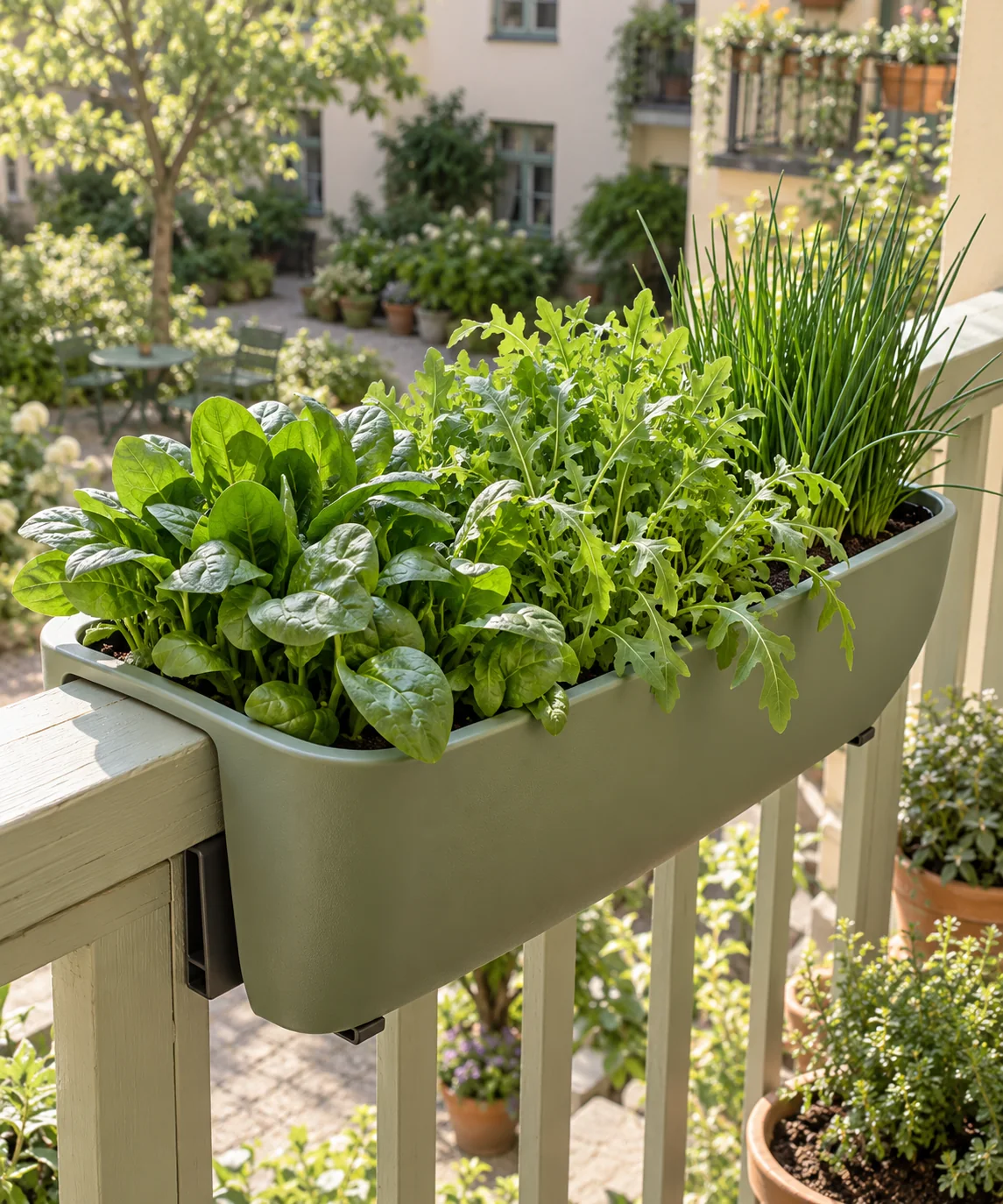
Reviewing Rail Profiles and Building Regulations
Before acquiring containers designed to rest on a balustrade, verify that property guidelines permit items on perimeter edges. Multi-family buildings and rental properties frequently ban railing-mounted pots due to falling object risks over lower pathways or common grounds. If permitted, measure the width, depth, and contour of the top rail across several sections, since exterior materials often warp or vary. Commercial saddle units are engineered around specific rail widths and require completely flat horizontal surfaces. Never attempt to adapt units to curved, beveled, or undersized handrails where the planter cannot sit plumb and stable under its own footprint.
Reversible Placement and Manufacturer Specifications
Avoid improvising mechanical attachments, drilling, or driving aftermarket fasteners into exterior railings, which can compromise weather seals, corrode wood, or void composite warranties. Instead, choose containers specifically engineered with integrated, non-destructive stabilizing mechanisms designed by the manufacturer for your exact rail dimensions. Follow all manufacturer assembly instructions precisely, ensuring all shims or non-penetrating retention clips are engaged to reduce accidental shifting during light contact. If a container cannot sit solidly without rocking or drifting, it is unsuitable for that railing profile and must be relocated to a stable ground-level bench.
Managing Soil Volume and Saturated Container Weight
Leafy crops such as loose-leaf lettuce, baby spinach, and chives have relatively shallow root zones, functioning well in modest substrate volumes. However, water weight accumulates rapidly after irrigation or rainfall. Potting mediums formulated with peat moss, coconut coir, and perlite hold significant moisture, causing overall container weight to rise dramatically compared to dry soil. Do not attempt to estimate railing capacity independently; check manufacturer limits and consult property management or structural guidance to confirm load limits. Distribute growing mix evenly between both troughs to keep the unit centered and avoid one-sided imbalances.
Evaluating Sunlight and Environmental Exposure
Perimeter railings often catch strong ambient light, which supports rapid regeneration in cut-and-come-again greens. Leafy vegetables typically need four to six hours of reliable daytime light to sustain ongoing harvest cycles without stretching. However, elevated perimeters also encounter elevated wind speeds and rapid thermal swings that quickly dry out potting substrates. Observe sun patterns across the growing season and monitor soil moisture daily. During unseasonably hot spells, leafy crops may bolt or develop bitter flavors if exposed to prolonged midday heat, making movable ground-level containers a more adaptable choice in extreme microclimates.
Harvest Techniques and Water Runoff Control
Harvesting salad greens sustainably involves trimming only the outer foliage with clean snips roughly two inches above the soil line, keeping the central growing crown intact for secondary leaf production. Managing drainage is equally critical on an elevated railing. Unfiltered runoff can stain painted balustrades, discolor underlying deck boards, or drip onto neighbors below. Select containers equipped with internal collection wells or controlled drainage paths that prevent uncontrolled overflow, and apply water gently at the root zone with a narrow-spout can rather than drenching the entire container surface.
YOUR STARTING POINT
A little checklist.
Original editorial guidance. Images are AI-generated concepts, not photographs of completed projects. Our sources and approach.
Questions to consider
How do I determine if my railing can support the weight of planters?
Consult your building management, landlord, or a qualified structural professional to determine weight allowances. Never assume an exterior balustrade can safely support saturated planters based solely on its visual appearance or material type.
What should I do if my greens begin to bolt during hot weather?
High temperatures trigger leafy greens to produce flowers and turn bitter. If heat rises significantly, harvest remaining foliage promptly, provide temporary shade cloth where allowed, or transition to warm-season herbs like basil until cooler autumn temperatures return.
How do I prevent drainage water from dripping to lower decks or walkways?
Select planter models that include enclosed overflow reservoirs or controlled plug systems. Water slowly and monitor moisture absorption to keep drainage contained within the vessel rather than allowing muddy water to spill outward.