Patio Seating Ideas · THE GUIDE
Recessed Nook Bench Beneath a Wooden Climbing Arbor
Large, open patios often feel exposed without defined zones that encourage quiet rest. Framing a compact two-seat wooden bench beneath a climbing arbor creates an architectural focal point that structures open exterior space. By providing an overhead vertical frame, this arrangement introduces a sense of shelter and privacy without constructing permanent perimeter walls. Climbing foliage can weave through the trellis posts, casting dappled shade across the seating surface during bright afternoons. This freestanding patio retreat establishes an intentional seating nook while maintaining comfortable circulation routes around existing garden containers and patio pathways.
Jump to the checklist ↓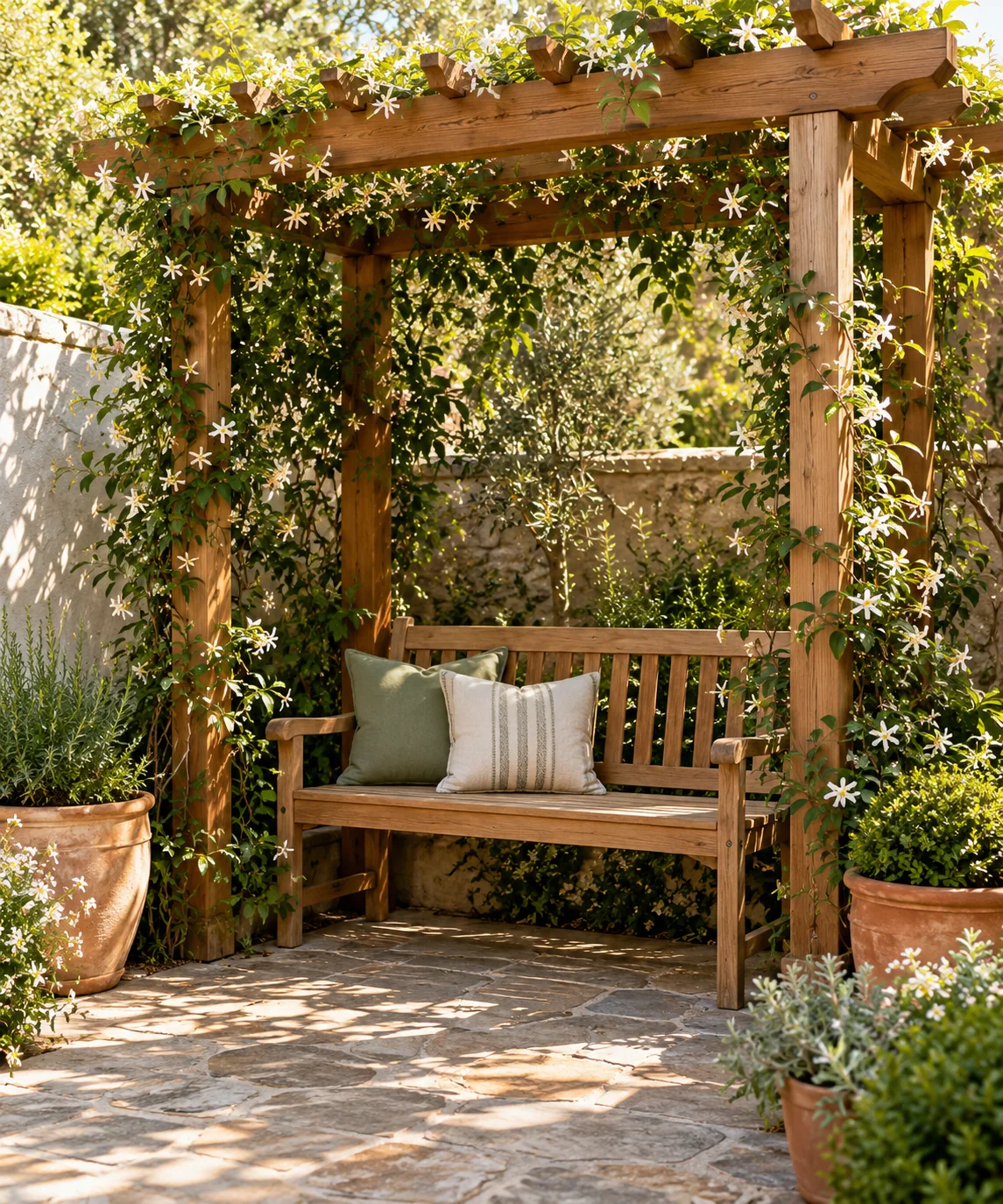
Assessing Layout and Patio Circulation
Position the arbor bench retreat along a perimeter boundary or against an established garden bed rather than across main transit paths. Measure the overall footprint of both the bench and the outer arbor posts before deciding on a final location. Ensure there is generous clearance in front of the seat so that seated occupants do not impede walkway flow. Overhead beams should comfortably clear standing height for household members and guests, following manufacturer specifications to avoid awkward transitions or head strikes.
Framework Proportions and Foliage Weight
In a patio setting, excessively heavy timbers can overwhelm the surrounding space and reduce natural light, while undersized frames may sag under the weight of mature vines. Select an arbor sized appropriately for your available area, checking the manufacturer's rated capacity for supporting climbing plants. Slender lattice side panels provide structural paths for twining stems while preserving an open, airy feeling across the patio. Aligning the bench neatly within the rear posts helps integrate the seating into the arbor frame without crowding adjacent garden features.
Evaluating Microclimates with Temporary Seating
Before anchoring or assembling a permanent arbor, evaluate daylight and exposure using a portable garden chair or folding bench. Set the temporary seat in your intended location and observe it across various hours of the day. Note how sun angles affect seating comfort and check whether nearby tree canopies drop sap, heavy seed pods, or debris onto the seating zone. This trial ensures your designated relaxation nook avoids late-day glare, direct downspout splash zones, or uncomfortably windy corridors.
Plant Selection and Canopy Management
Living vines add natural texture to the arbor but demand consistent seasonal guidance to protect the bench seating area. Direct climbing shoots upward along the exterior posts using flexible plant ties, training growth across the upper crossbeams. Prune lateral stems periodically to prevent leaves and thorny shoots from invading the seat back or snagging clothing. Avoid dense foliage that presses directly against the wood seating surface, as trapped moisture promotes mildew and accelerates finish breakdown.
Moisture Protection and Ground Contact
Patio pavers and stone flags retain surface moisture beneath timber footings after rainfall or irrigation. Elevate the arbor posts and bench legs using non-porous composite shims or durable rubber pads. Isolating end-grain timber from standing water reduces capillary absorption and prolongs the lifespan of the wood. Inspect joints periodically, checking hardware for seasonal movement and refreshing the timber with a breathable exterior finish to protect against moisture intrusion and surface checking.
YOUR STARTING POINT
A little checklist.
Original editorial guidance. Images are AI-generated concepts, not photographs of completed projects. Our sources and approach.
Questions to consider
Which plants are suitable for a patio arbor bench?
Light to moderate twining climbers such as star jasmine or annual flowering vines work well without imposing excessive structural weight. Heavy woody climbers like mature wisteria or aggressive bignonia can distort slender framework joints and drip sticky sap or debris onto the seat.
How should a freestanding arbor bench be secured against wind?
Freestanding garden arbors catch wind readily, especially once covered with dense leaves. Consult the manufacturer's anchoring instructions for recommendations tailored to your paving material. In exposed locations, mechanical surface anchors or qualified installation may be necessary rather than relying solely on planter ballast.
Can outdoor seat cushions remain beneath the arbor year-round?
Cushions should not remain outside indefinitely. Shaded arbor environments trap falling leaves and morning dew, leading to fabric staining and mildew. Store cushions in a dry location or inside a weather-tight patio storage box when not in use.