Container Vegetable Gardens · THE GUIDE
Recessed Porch Nook Microgreen and Sprout Station
A sheltered porch alcove provides an optimal environment for cultivating quick-turnaround microgreens and sprouts without sacrificing indoor counter surfaces or blocking outdoor pathways. Recessed architecture buffers young cotyledons from drying gusts while catching bright indirect daylight. By organizing shallow germination flats on a slender, multi-tiered metal baker's rack, growers can maintain a continuous, high-volume production cycle within a modest two-foot footprint. Establishing a clean system of bottom-watering trays, staggered sowings, and protective covers converts an underutilized exterior architectural nook into an orderly, pest-resilient workstation that delivers fresh salad greens from early spring through autumn.
Jump to the checklist ↓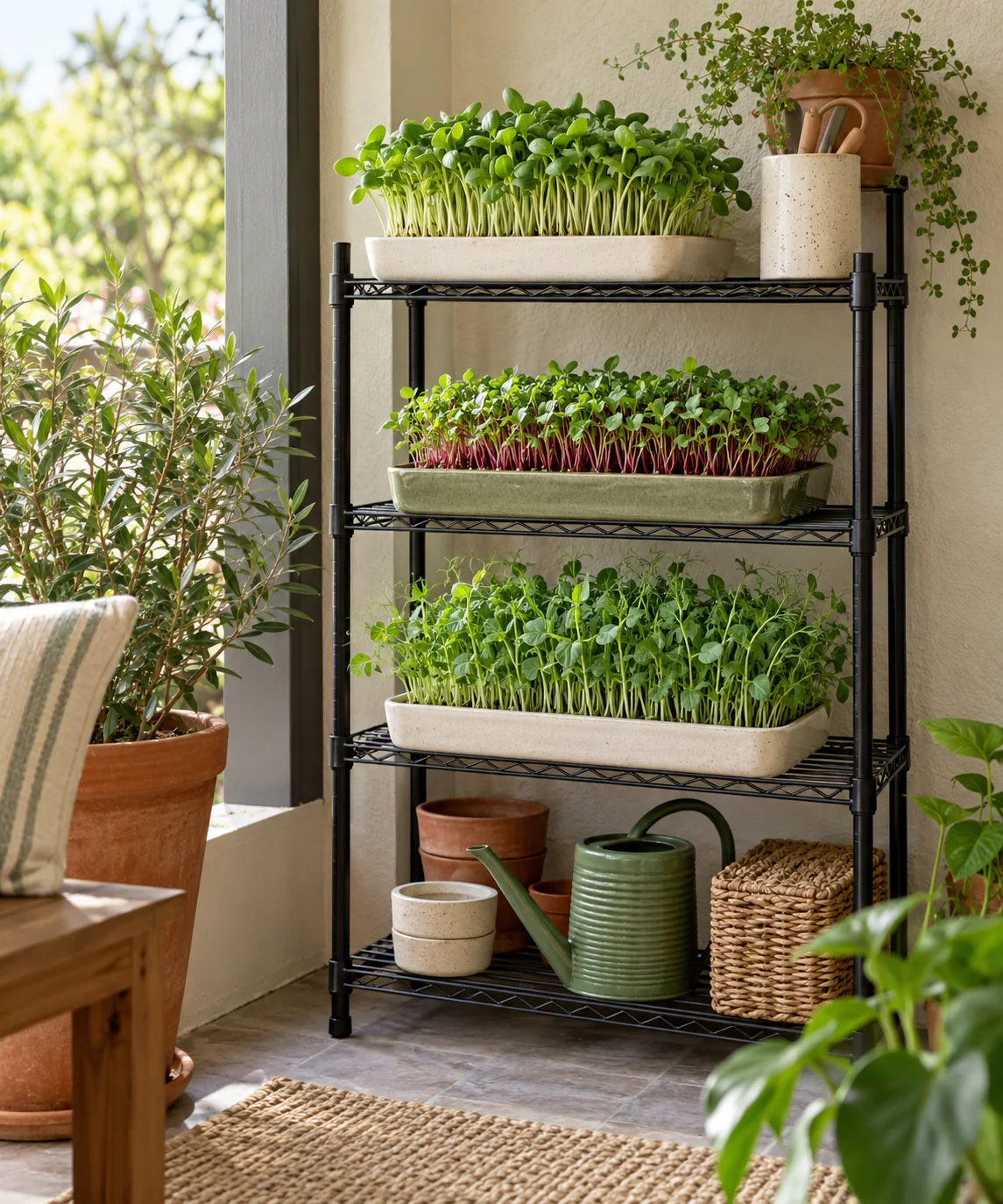
Measuring the Porch Alcove
Begin by assessing the physical dimensions of the recessed porch nook to plan an efficient layout. Measure the alcove width, depth, and the swing arc of any adjacent doors or screens to ensure unhindered daily access. Select a compact, freestanding wire baker's rack sized to fit your available floor space and standard seed trays without encroaching on walking zones. Open wire shelving promotes vertical airflow around delicate seedlings and allows natural ambient light to filter down through every shelf level, helping keep moisture levels balanced across all flats.
Selecting Shelving and Trays
Organize shelving with dedicated seed trays configured for reliable bottom hydration. Using solid outer leak-proof trays paired with perforated inner seed flats enables efficient bottom watering without dislodging delicate seeds or eroding fine potting media. Choose durable, food-safe plastic or ceramic vessels that can be thoroughly cleaned and sanitized between crop cycles. Position slower-growing crops like brassicas and herbs on upper shelves where natural light is strongest, while reserving lower or shaded tiers for newly sown flats undergoing early germination.
Natural Airflow and Light Exposure
A recessed porch nook helps shelter tender flats from gusty winds and intense midday sun, but stagnant air can invite mold growth across dense seedling canopies. Position the shelving unit slightly away from exterior walls to promote passive air circulation around all sides of the trays. Orient the rack toward open porch exposures that receive bright, indirect natural light or gentle early morning sun. Intense, direct afternoon sunlight can scorch tender microgreen leaves, requiring temporary fabric shading or repositioning flats toward more sheltered shelf zones.
Bottom-Watering Protocol
Overhead watering can flatten fragile microgreen stems, dislodge shallow roots, and foster fungal damping-off within dense seedling trays. Instead, manage moisture through consistent bottom watering. Add clean water directly into the solid lower reservoir tray, allowing the growing medium in the perforated upper flat to absorb moisture upward through capillary action until evenly damp. Empty any remaining standing water from the base tray after the soil has hydrated to prevent root saturation, keep upper foliage dry, and encourage strong downward root development.
Thermal Variations and Cold Drafts
Outdoor porch alcoves experience sharper temperature shifts than indoor growing spaces, which can directly affect germination rates and seedling vigor. Cool night drafts can stall emergence, while unseasonably warm afternoons dry shallow media quickly. Monitor local weather forecasts to adapt your planting routine to seasonal fluctuations. During unseasonably cool nights, drape lightweight horticultural frost cloth over the rack to buffer against cold drafts, and move active flats indoors whenever temperatures approach freezing to protect tender tissues from frost damage.
YOUR STARTING POINT
A little checklist.
Original editorial guidance. Images are AI-generated concepts, not photographs of completed projects. Our sources and approach.
Questions to consider
Can microgreens grow on an outdoor porch without supplemental grow lights?
Yes, provided the porch receives ample bright, indirect daylight for at least four to six hours. Avoid placing flats in harsh direct sun, which heats shallow trays too quickly and wilts delicate young stems.
How do you stop outdoor pests from devouring microgreen trays?
Drape fine insect netting over the baker's rack, securing it with clips to the frame. The mesh prevents insects, birds, and wandering squirrels from accessing tender sprouts while allowing essential airflow and light to pass through.
What is the best growing medium for outdoor microgreen flats?
Use a finely screened, peat-free seedling mix or sterile coco coir blended with perlite. Avoid garden soil, which packs down too densely in shallow trays and introduces weed seeds or soil-borne pathogens to the crops.