Container Vegetable Gardens · THE GUIDE
Rectangular Resin Planters Arranged for Wind Protection
Balconies on upper floors often experience gusty, swirling airflow that increases evaporation and stresses potted vegetable crops. Rectangular resin planters placed thoughtfully along structural floor zones can help organize container arrangements without introducing the deadweight associated with masonry or stone. While no container arrangement can eliminate wind forces or guarantee structural deflection, grouping sturdy planters on the floor can create more stable conditions for compact vegetable varieties. Successful balcony container gardening requires consulting building policies for permissible balcony loads, keeping pathways clear, and selecting plant varieties adapted to exposed conditions.
Jump to the checklist ↓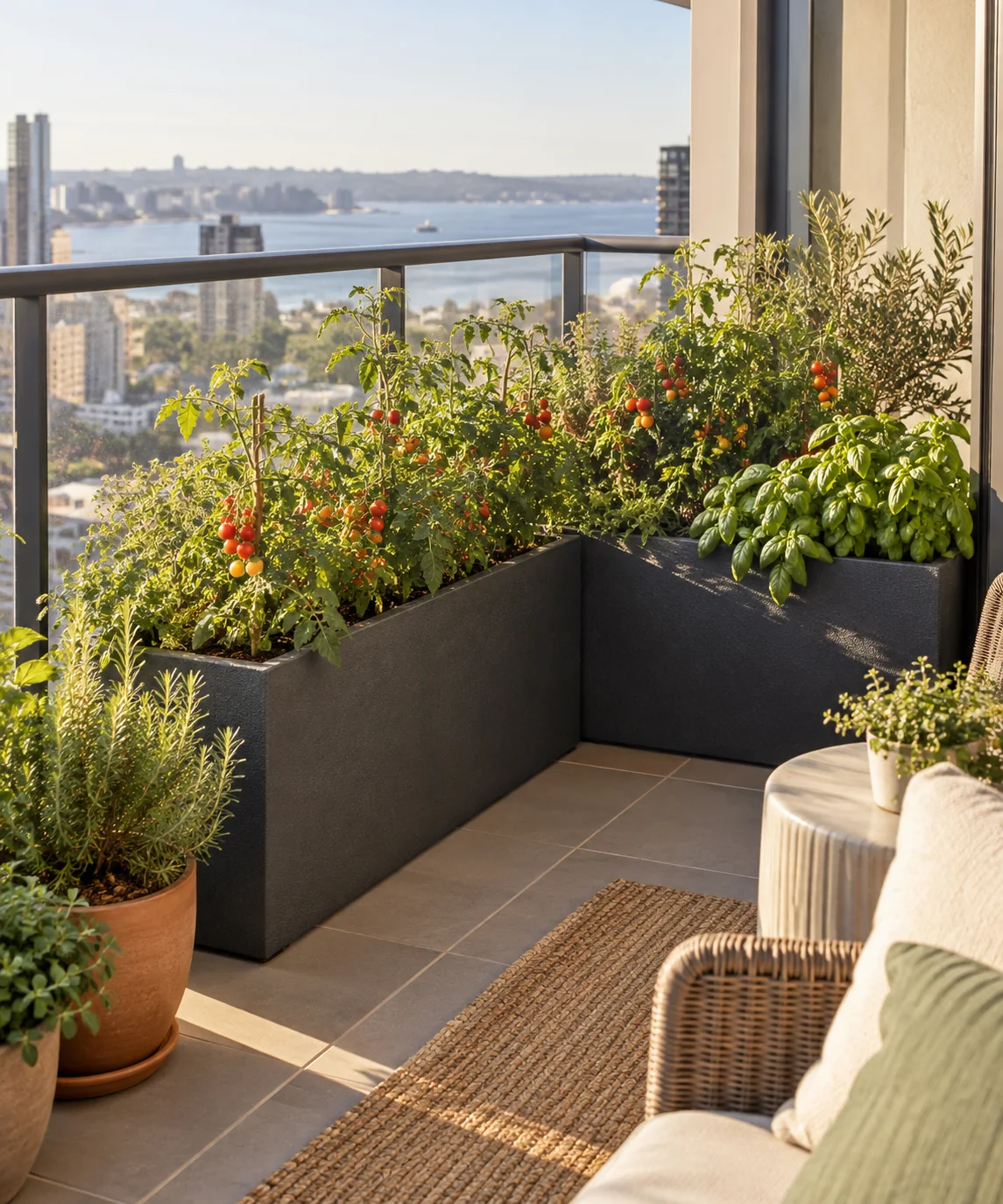
Understanding Exposure and Balcony Load Limits
Upper-floor balconies encounter variable air currents that accelerate around building corners and facade edges. Before assembling large container groupings, obtain structural weight limitations from property management or qualified building professionals. Balcony weight capacities vary significantly by construction type and age. Even lightweight resin containers hold substantial weight once filled with moist potting medium, roots, and water, making documented structural capacity the first factor to establish before arranging pots.
Perimeter Floor Placement and Access
Arrange rectangular planters directly on the balcony floor, keeping containers away from railing tops or elevated stands. While grouping containers in corner areas can help organize outdoor space, ensure that placement does not obstruct perimeter scuppers, drainage weep holes, or required emergency egress routes. Maintain accessible clearance around the containers so you can safely water, inspect foliage, and navigate the balcony without stepping over or crowding edges.
Drainage Function and Container Medium
Resin containers require functioning drainage openings to prevent water from saturating roots during sustained rainfall. Check that manufacturer drainage holes or knockouts are fully open before adding soil. Fill planters with a well-aerated, lightweight potting mix formulated for container vegetables, incorporating components like perlite and peat or coir. Avoid placing stones or gravel at the base, as these reduce usable root volume and add unnecessary weight without improving drainage dynamics.
Plant Selection for Windy Exposures
Tall or brittle-stemmed vegetables struggle in gusty microclimates where stems can snap and tall foliage catches wind like a sail. Choose naturally compact, dwarf, or determinate bush varieties that stay close to the container rim. Sturdier herbs like rosemary or compact bush peppers tolerate air movement better than tall indeterminate tomatoes. Grouping plants of similar height together provides mutual support while keeping the overall profile manageable in open conditions.
Monitoring Moisture and Container Stability
High-exposure balconies accelerate moisture loss through wind-driven evapotranspiration. Check soil moisture frequently by testing the root zone, as surface soil can dry out while lower layers remain damp. Although wide-based rectangular planters provide a broader footprint than narrow vertical urns, high winds can still rock top-heavy foliage. In the event of severe weather warnings or gale-force conditions, move tall or vulnerable plants to sheltered floor areas or indoors.
YOUR STARTING POINT
A little checklist.
Original editorial guidance. Images are AI-generated concepts, not photographs of completed projects. Our sources and approach.
Questions to consider
Can container arrangements protect balcony vegetables from strong wind damage?
Planters cannot block or eliminate strong wind on an open balcony, and air currents often swirl around structural corners. Choosing compact, dwarf cultivars and keeping containers on the structural floor helps minimize wind stress compared to placing tall plants in elevated positions.
How should balcony weight limits be determined for large resin planters?
Review your building lease, condominium association bylaws, or consult a qualified structural engineer to determine permissible live loads. Do not attempt to calculate structural deck capacity independently based on planter material or appearance.
Do resin planters require additional weighting in outdoor conditions?
Rectangular resin containers typically gain sufficient functional mass from damp potting mix and root systems for ordinary seasonal breezes. However, during severe wind warnings, containers should not be relied upon to withstand severe gusts; vulnerable plantings should be relocated to sheltered areas.