Container Vegetable Gardens · THE GUIDE
Recycled Wooden Pallet Herb Rack for Narrow Balconies
Using an upright wooden rack for herbs can organize culinary greens along balcony perimeters where floor area is tight. Narrow terraces require careful planning to balance accessibility, plant vitality, and structural loading limits. Sourcing clean, untreated timber components and positioning planters directly on sound balcony flooring can create practical tiers for compact herbs. Because culinary herbs demand adequate light and consistent moisture management, thoughtful site selection and reversible placement remain essential. Before introducing wooden vertical structures, consult property management rules regarding balcony attachments, overall load limits, and clear walkway access.
Jump to the checklist ↓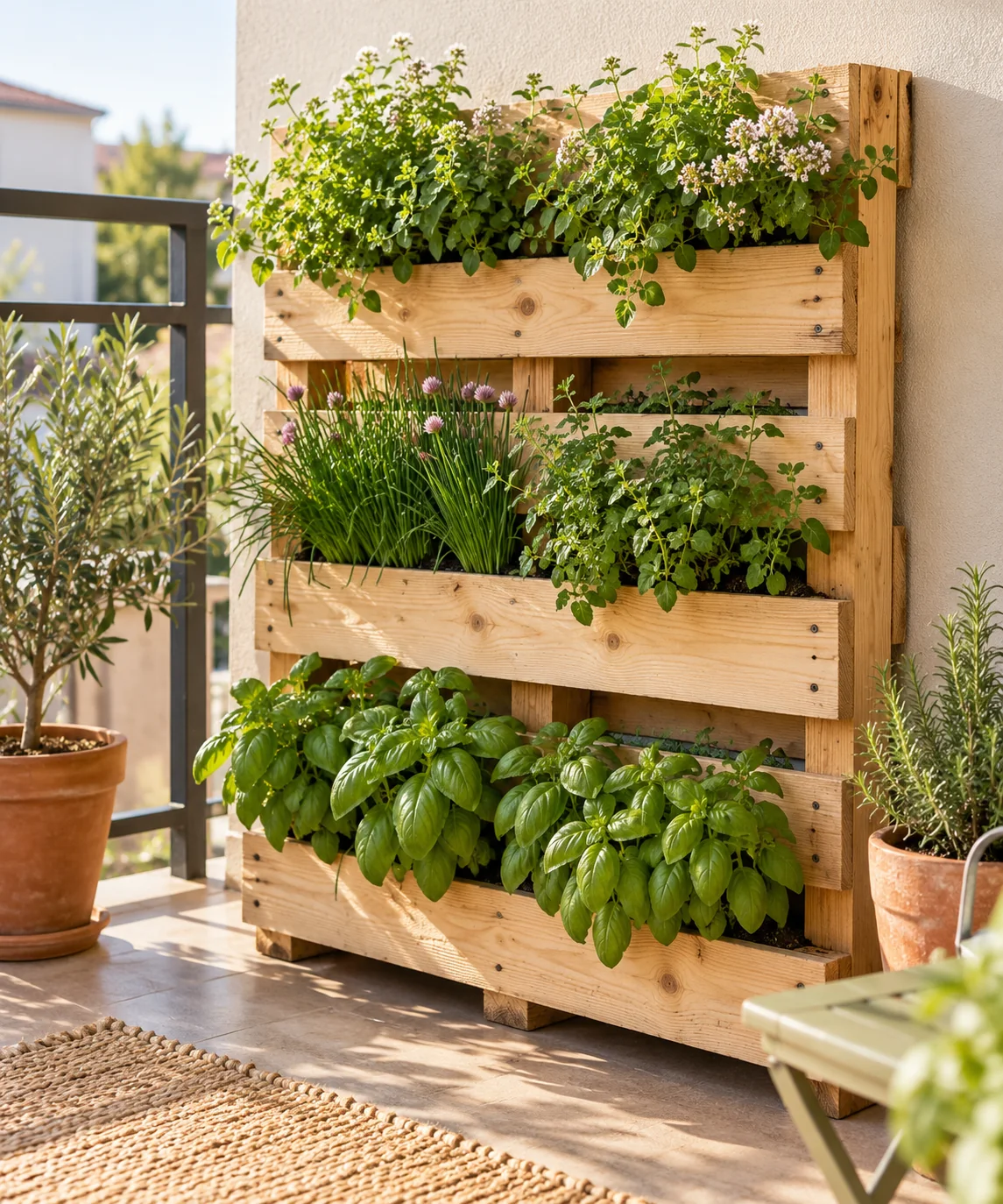
Material Inspection and Wood Safety
When utilizing reclaimed timber components such as pallets or crates for edible plants, careful inspection is critical. Look for stamps indicating heat treatment rather than chemical fumigation, but recognize that stamps do not account for subsequent industrial contamination, chemical spills, or mold exposure during transit. Avoid any wood with chemical odors, oily discoloration, or signs of dry rot. Ensure fasteners are sound and sand down coarse edges to reduce splinters before handling or placing containers.
Planning Freestanding Planting Troughs
Creating soil-holding compartments on a vertical wooden frame requires careful containment that does not trap moisture directly against raw timber. Rather than placing damp soil directly against reclaimed boards, consider using self-contained rectangular window boxes or fitted trough inserts set into the horizontal bays. If lining openings with permeable landscape fabric, confirm that structural joints can hold the moist soil mass without sagging, and verify that the assembly remains structurally sound when fully saturated.
Balcony Siting and Pathway Clearances
Place any vertical herb rack squarely on a flat, structural floor surface against a solid perimeter wall. Confirm with building management or local lease agreements that vertical floor stands are permitted on your balcony. Avoid any attempts to attach, hang, or balance heavy wooden frames on balcony railings or balustrades. Maintain a clear, unobstructed path to doors and emergency exits in compliance with building guidelines, avoiding placement that narrows regular access routes.
Herb Selection for Modest Soil Depths
Shallow horizontal troughs or modular boxes offer limited root volume, making them best suited for compact, shallow-rooted herbs. Thyme, oregano, chives, and dwarf parsley adapt reasonably well to restricted soil depth if watered consistently. Vigorous growers or woody perennial herbs may become root-bound quickly and require frequent repotting. Use a lightweight, commercially formulated potting mix rather than heavy garden soil to support root aeration and avoid unnecessary dead weight.
Moisture Management and Wood Longevity
Balcony plantings in shallow wooden troughs dry out quickly in sunny, breezy conditions, yet chronic water contact can degrade the frame and stain deck finishes below. Use drainage trays or catch basins beneath planter compartments to manage runoff, and inspect the balcony floor periodically for trapped moisture. Elevating the frame base slightly on non-porous floor shims promotes airflow beneath the wood. Empty spent potting soil and clean components thoroughly at the end of the season.
YOUR STARTING POINT
A little checklist.
Original editorial guidance. Images are AI-generated concepts, not photographs of completed projects. Our sources and approach.
Questions to consider
Can any shipping pallet be used safely for edible herb gardening?
No. Many shipping pallets are exposed to industrial spills, chemicals, or outdoor weathering that makes them unsuitable for edible gardening. Heat-treated marks indicate the original processing method but do not guarantee that the timber remained clean throughout its operating life.
How should stability be addressed for an upright pallet planter?
An upright wooden planter holds considerable weight when filled with damp soil and can tip if top-heavy or exposed to strong drafts. Keep the heaviest soil and plant volume on the lowest tiers, verify the base rests level, and check building policies regarding freestanding outdoor items.
How often do shallow vertical herb troughs require watering?
Shallow planters dry out rapidly in outdoor air, especially when elevated and exposed to sun. Check soil moisture daily with a tactile check at the root zone, watering when the top inch feels dry while ensuring drainage holes are not blocked.